Popular Posts

Showing posts with label Bookclub. Show all posts

Thursday, October 10, 2013

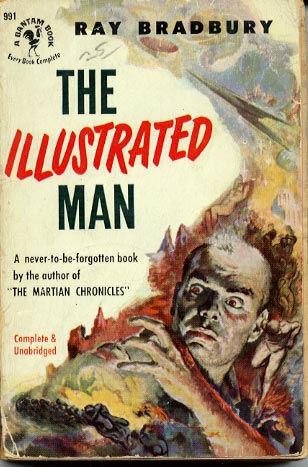
The Illustrated Man – Ray Bradbury

Another short story compilation, but tweaked slightly to present a set of stories told by a drifter that all relate to his unfortunate condition. Aside from the massive Everyman’s Library omnibus of short stories, this is the third novel-length and novel-published book of Bradbury’s I have read that is actually more of a collection of short stories: The Martian Chronicles and Dandelion Wine being the other two.

The other two are also much stronger. This one has some great stuff, I enjoyed quite a few of the stories, but for the most part the book seemed to drag on and on without actually providing much suspense or any reason to keep reading more. So it took me a long time to finish. Some of the stories had suspense – like the one about the astronauts in the explosion who are all drifting through space alone until they crash into something or are taking out by something (speaking of which, isn’t that the plot for the new George Clooney/Sandra Bullock movie?) – but they were all over so quickly.  

Nothing felt really gripping, or profound. Just a bunch of stories that all featured a rocket in some way or another. The one about the Rocketman who does not want his son to grow up to be one like him was probably the closest thing to the profound story that I have come to associate with Bradbury. Either that or the final story about the Illustrated Man himself. They were both kind of fucked up. But for the most part, everything felt kind of meh. Sort of feel indifferently about this one, but I am glad I am at least tearing through the Bradbury section of my library.
Also of note, just after I finished this book, the Simpsons released their latest Halloween special “Treehouse of Horrors” episode, which featured an opening sequence directed by legendary horror/thriller filmmaker Guillermo del Toro. Why is this of significance? See if you can spot why:


Monday, September 30, 2013

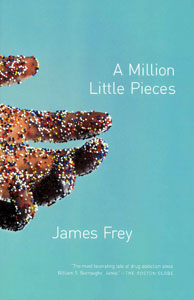
A Million Little Pieces – James Frey

If you're Oprah, don't read this. I have had this book targeted on my shelf for ages and have long been debating my near-term To Read List so that it may be included. I do not know why I kept pushing it off, but I have finally come around to read the biggest story of the year 2007!
I enjoyed it, it had some great stuff to offer. It also had some stuff that buggered me. In all, though, I am glad I finally took the time.
It starts out without giving the reader any sort of back story. Just a drunk/drugged out junkie going through a bit of withdrawals maybe that force his breakfast, lunch, and dinner to be poured out all over his clothes, sopping them no matter where he may find himself. Turns out his parents picked him up at the airport and are delivering him to a rehab facility, the best in the country.
He is inexplicably shitty. Not just covered in vomit, and later his own poo, but because he has no interest in getting better. He is shit, just totally burned out from crack and alcohol and glue and gas and anything else. I was almost disappointed at the things he has left out that could have also worked to get him high. Like Pledge. Or fingernail polish.
He is also told that he is in such horrible shape, and his body is rejecting sobriety through withdrawals so vehemently, that he will literally die the next time he hits the crackpipe. Pretty damn sure, at least. Sure enough to say that if he goes out into the world he will be dead within days. And as if this weren't shit enough, he has to get a couple fillings and root canals because he has not exactly taken care of his Chiclets during his stint as a Whitney Houston impersonator. The catch here is that because he is undergoing treatment for substance abuse, he has to do it without any help from anesthetics or pain killers. Having your ass-rapist shout “I'm going in dry!” behind your back comes to mind.
So that's him. But to counter all of this, he has a heroically awful, anti-hero personality. He is unequivocally fierce, with a stubbornness and temper that set up incomprehensible violence and cataclysmic meltdowns. His stubbornness is also so deeply rooted that he absolutely refuses, at all levels, anything to do with the Twelve Steps. “They won't work on me,” his mantra reminds his captors throughout. We need no reminding, because we get it the first fucking time he says it.
That is really one of the very few things I disliked about the book. The repetition. The repeating of word or words. Mostly word. Repetition. Repeating. Repetition. Repeating.
Repeating.
Repeating.


Repeating.
Repeating.
Repeating.
See how annoying that is? It happens, and happens often in this book. But I gritted past it. It wasn't “I'm going in dry!” level of unbearable.
The other thing I disliked was the bit about the Catholic Priest in the end. Seemed unnecessary. We get it, dude. You are a badass and no one messes with you. Especially when you were high. Got it. You don't have to lay down how tough you are or slip one in at the end about how nobody crosses you.
I really do feel like it completely matters not – as in zero part of me cares – whether this book is factual or a fictional biography. I do not think it affects the reader's experience of it one bit. I went in not caring and came out not caring, with no opinion on how much I would be affected if it is 99% true or 1% true. Point being, Oprah is a twat. I believe she believed everything she was reading was factual, then berated James Frey simply because its not being completely factual made her out to look a fool. Don't she know?

Friday, August 2, 2013

Darkness at Noon

I can’t, I mean I really cannot, believe how good some people are at writing sometimes. I know writing is a craft and I have mad respect for anyone who gets a non-Vlad-the-Impaler-loins-fucker book published, but every once in a while you come across authors who can just fucking write. And this is one of them. I have no way of telling you how much I abhor certain political beliefs. I am a Libertarian and Robert Anson Heinlein taught me at a young age that there is no such thing as a Libertarian who is not hard headed and devout in his/her philosophy.

The same appears to be true for Communism, I am learning. That is a political belief I abhor, also. But, I maintain, I can hear a political ideal without immediately having an opinion on it; I can hear someone out and then take time to reflect upon what they are saying. Even still, Communism is difficult for me to grasp. But Koestler’s book is all about presenting to the reader both sides of an extremely difficult political system. And not only does he tell you the sides that are in opposition of each other, he explains the context, to illustrate how a man of reason and logic may fall into a seemingly extreme and violent Party due to the nature of absolute truth and absolute rights and absolute wrongs.

For example, if someone is loyal to the party and works their whole life for improving the lives of everyone, which pure Communism is intended to do, sacrifice individuality for the greater good, but learns later that a (government provided) product is destructive to the greater good and an innovative new product would be better for everyone….that person, scientist, engineer, business owner, political figure, will be liquidated. That is the term used in this history. Liquidated. Probably because “murdered” sounds way too harsh and not quite as productive. Executed would work, but people didn’t have that joy of knowing how well “executable files” work so the word had a very murdery connotation to it. The reason for these happenings is that all majour products that serve the public, by definition of Communism, also serve the state due to the nationalizing of companies who provide majour services for the people (like auto industry, mining, and in the book’s example of this scenario, agriculture). So this person and 30 of his friends find that a product is better than the status quo, says so, and is shot along with all of his friends/coworkers because that technically counts as speaking out against the Government. Against the Party. Against that force that required desperation and extreme, indiscriminant summary justice in order to survive, to have a chance against the Imperialistic White Guard.

Again though, Koestler gives you context, not one-sided views on how great one system could be and how shitty the opposition can be. So there are bits that flash back, bits that involve reflection, and lay out some rather logical steps as to how a man can live with some of the Party’s ideals and even enforce them. Because it was so much better than what they had prior. Because it wasn’t about the ends will justify the means and it wasn’t about one person being in control and setting so firm of rules that one man is dictating the future course of an entire nation, single-iron-fist-handedly. I began to feel bad for Rubashov and everyone that bought into a system that improved upon what they had prior and then turned it into a totalitarian dictatorship, an oligarchy of extreme social equality, to the point of executing those that are different by saying they support inequality.

Is that common? Hunting people who step out of line and either executing them or imposing your will on them such that they have no choice but to conform. I know it happens, on occasion, in our human history. If I read this book in another time period, say, circa 1955, and felt bad for what Rubashov had to go through, I know doubt would have suffered a similar fate at the hands of the most extreme example in our nation’s history – a man with a similar illness with similar goals yet a different political background – Joseph McCarthy. His existence makes me sad for humanity. He makes me think that, due to the fact we as humans did not unite as one to murder his ass, like we would a Hitler or a Stalin, that we will take just about any amount of abuse as long as it is sold to us by a self-proclaimed God-fearing Patriot. Fuck, us. Fuck us. Fuck us all.

This also reminds me, totally book-review-unrelatedly, of a conversation I had with a fellow Libertarian. I am no longer one for labels, so Libertarian, in the sense that Robert Anson Heinlein tried to lead, means nothing more to me now than a lost dream. Like waking up and feeling you were just in possession of something you really desired only to realize the world around you still sucks. Yet a fellow “traveller” (which is much preferred to the oft hunted “fellow traveller”) asked me recently: “When do you think we, as a nation, will have enough? What do you think will be the last straw? What, in essence, will it take, to make the people revolt when it comes to the government overstepping its bounds and doing injustice to the people of this great nation?”


 Too late, I thought. Way, way too late. I paused, I thought further before speaking, would have already happened if we really valued our freedom. Finally, I spoke up: “McCarthy.”  “What?” he said. “McCarthy. McCarthyism, I mean. That whole thing.” He was curious, but as his father walked him to the pickup for their trip home after a hard day’s work, he explained the blemish of our nation’s history to him.

“And Kent State!” I shouted, louder than necessary, just to make sure they would hear me, to be sure there could be no doubt I felt our time has passed. What atrocities. And we just take it. Because getting fucked in the ass sort of kind of in a weird way is a bit cool, I guess. That must be it.

This book took a lot out of my human spirit, knowing how harsh some conditions are. But whatever I read of how horrible some situations are, I am more than plentifully reloaded by the fact that there will always be a survivor or friend of a victim who can write this fucking well. Spread the word. Spread the knowledge.
Monday, July 8, 2013

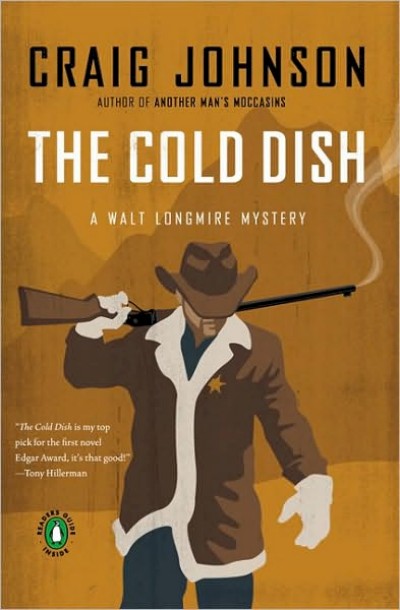
The Cold Dish - Craig Johnson

Gazpacho is a dish best served cold. That is mostly what this book is about. Cold dish stuff. Like revenge. And vengeance. And avenging someone. Any and all venge related words happen here, and the Sheriff is trying to play detective to prevent the vengeant from avenging, revenging, and vengancing the vengee. The characters are pretty good in this story. The main character is a bit down, feeling sorry for himself, and lives in a self-loathed squalor. But he truly is a great sheriff, very representative of small town law enforcement. Even drinks on his way home in his cruiser.

After his wife died, he did not necessarily go into a deep dark depression, but instead just melted into a sloppy, unmotivated, unambitious version of himself. Then the murder happens. Talk about a hell of a shot, ballistics and detective work eventually find out the round was from a Sharps .45-70. One of the best rifles ever made. Not so much a rifle, really, but a shoulder cannon. Or better yet, an explosion that just hurls a baseball weight of lead at its target hard enough to put a bison down at 300 yards. Hence the name, Buffalo Rifle. It is also capable of taking down a person at a better range, though that takes a great shot and even a bit of luck, as the bullets do not fly very true beyond 500 yards, which tends to be its practical range for shooting targets in the field.

In any event, the author knows much about this gun and other guns in general, and as the sheriff learns about them, everyone gets walked through the history and the mechanics of these  breech loading canons. Truly awesome weapons, but very difficult to shoot. Pretty funny, also, that there are so many in such a small town. Irony that is not lost upon the sheriff, which I appreciate. Kind of like a moment when the character in the story says “this story is sort of weird, but okay.” I think this happened on multiple occasions, but my memory is a bit foggy on the other instance. It was something to the effect of him answering another member of the community with “I’m not sure it’s a murder mystery yet, but if it is, there aren’t many butlers in these parts.” Not sure the details of the joke, but I make butler jokes all the time in murder stories so I thought it was great.

Again, the characters were all great, Henry Standing Bear probably the best of them all. Omar in perhaps a close second, but virtually all characters, very minor or major, had their own identity, contributed something to the storyline, and created that bit of small-town community whilst still being true to the small-town drama queens that I am more than just a little familiar with.

The pace was great, the mystery was pretty good, and the ending was getting to be a bit frustrating but ended up being okay. Violent, and violent to the point of the author taking the approach “we don’t need to talk about how gross that is, but trust me, it is devastatingly disgusting.” A .45-70 is capable of incredible damage, and I felt the damage it did to the murder victims wasn’t sensationalized or over-exaggerated. But in the end? Best we all don’t know how that one ended up looking.

This was enough to throw the sheriff into a strange depression. It lasts for several weeks, and by the time the book is over we don’t know if it will last longer, be something he carries with him forever or just gets over and gets back to being the sheriff. Guess we’ll have to read the next one to find out.

The combination of old school style, vaguely sexist and only slightly above the law, makes me think of the noir mystery novels I really like. But set in a contemporary western environment I can relate to much more. Pretty good combination, though I still will deny it being a great book, I will say it is a good one. Maybe because a mystery series just isn’t really my thing.

Thursday, June 13, 2013

Loins Series - Once Burned


Loins. Grab ’em if you got ’em. That line is borrowed from the rap song in that link, which is a song about being a Tucson gangsta from a former peer of mine in university who left his very aggressive stance as a hardcore evangelist born-again Xian to return to a life of debauchery. So, good for him.

Anyway I’m not sure how else a book that makes Stephanie Meyer appear as though she beholds the craft and imagination of Bram Stoker slithers its way onto my blog, other than to point out it was a book club recommendation by someone that definitely was not me. Because if I am to be getting off to vampyres for 300 pages, it is at least going to get weird. None of this pop-sensation Trueblood nonsense, or Queen of the Damned, or Blade, or stories that Joss Whedon craps out and people salivate over because OH MY GAWD IT’S JOSS WHEDON!

There is a very brief list of things I liked, so we’ll just cover that and be done. First up: Electrocution. I like how this author’s audacious nature re-defined what it means to be electrocuted. “I mildly electrocuted the perpetrator…” no. No you did not. “When I was a child, was electrocuted and didn’t come out of the coma for weeks OMG!” Again, no. Can’t happen. Think of being mildly murdered. That is how much sense the author makes. What boggles my mind is to think –  or rather trying to think – of friends, family, editors, and publishers actually reading “mildly electrocuted” and just totally being okay with it. Like it means a little zap. It means death by electricity. I would not let someone try to pass off “mildly drowning” and then gaining the power of making people wet when they touch them as a means of a premise to a novel. What further discourages me is to think this person got paid. Paid in real, actual, dollars to write this stuff. It boils my blood.

Pictured: Whampire
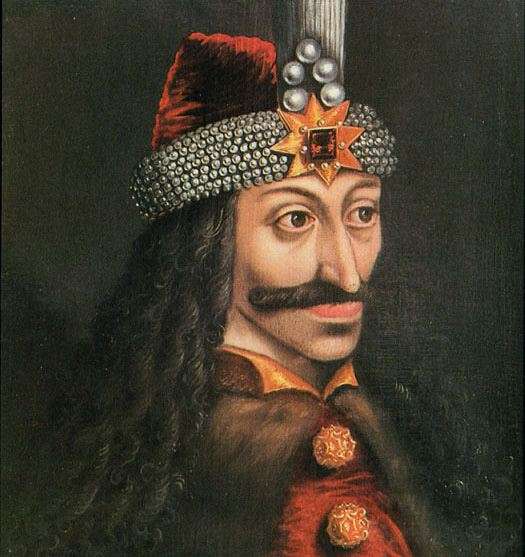
The other favourite part of this story is that vampires just are. They just can! And what sort of vampires are they? Of course they’re basically cliché TV vampires from the modern era. No effort goes into the foundation mythology (a subject I particularly enjoy in any fictional universe) or how they came to be. And why can they fly, any explanation there? Of course not, don’t fret your brain, this is just a story about thrusting in a meat sword to the hilt. Can the author describe why they die, or appear to die? How that happens yet they still don’t decay? Any sort of insight as to why that would happen would be grea- Oh no, don’t get me wrong, I still want to know how Vlad the Impaler licks up messy virgin girls’ remains when he takes their honour from them, I just meant after that…could we then explore the universe of vampires and their defiance of modern science or at least make some shit up about how their disease, affliction, gifts, what-have-you, came into existence?

In the end, I thought these scribblings of a rather boring, uninteresting, unadventurous middle aged woman’s fantasies are better left in a shoe-box with her other quick release apparatus of equally lame, predictable, greasy nature. To the hilt!

Tuesday, May 14, 2013

Another Roadside Attraction

Here’s the review of that one. We have all read it, surely. It was a CBC book after all. And we all discussed it at the meeting on the 27th of April. So I got to say what I had to say about it there, which differed greatly from the other(s) who had read it and others who are yet to. This is my chance, however, to have the last word, and say what I liked about the book at a louder volume and, perhaps more importantly, immediately after he/she/those who opined it was a meh book; to have a last word that will seal this book’s legacy forever.

It was good. Pretty damn good, in fact. Not as a book, and certainly not as a novel, but as a read. Humourous, odd, hippie-ish, dry, and minimal in its jokes’ punchlines, yet cultured and well-rounded enough to be appreciated by those with a taste that has ever had anything in common with the target audience (i.e. dirty Pacific Northwest hippies). For a guy like me, brought up in the desert and a University of Arizona graduate (a character in the book is likewise an alum) with a pretty thin, yet surprisingly strong (like the root of a mesquite tree in its infancy), connexion to the Pacific Northwest and all it has to offer – naturally, industrially, artistically, fundamentally, and spiritually – this book’s author seemed to be a man after my own heart. Not sure I like that phrase, but people know what it means and I cannot think of one that replaces it that people will automatically recognize.

To begin with, the girl in the story is a character I can fall in love with and not love, and I feel like she would be perfectly fine with that. She is a magical flower-child with a beauty that is not to be paralleled and a complete disregard for social norms. Not that I have a thing for flower-child granola bitches, especially those that do not shave their pits and think my hunting/fishing is somehow cruel, but everything about the girl’s personality just sounded generally fun. She also copulates. Frequently. At a Robert Heinlein character sort of pace (that’s the guy that delivers the quote I love: “Better copulate than never”).

The book’s magician is a guy named John Paul (of course his name is John Paul) Ziller. He has a baboon named Mon Cul. This turns into a bit of a fable at the end, which is really the only part of the book that resembles a plot and a storyline and a premise and a conclusion/resolution. It also kind of reminds me of Karl Pilkington’s Monkey News /OOOooh! CHIMPANZEETHATMonkeynews…. (TM Ricky Gervais)


The magician’s friend is an athlete who used to play football for Duke University and can still beat the hell out of anyone, and his mishap in falling into a violent order of monks within the catholic church is also a plot-line that really ends up being the chief storyline and the reason everything unfolds the way it does. And it is bizarre. But funny, at least to me.

Then there is the interesting bit about the narrator. He has experienced some of the story of which he writes, he is currently writing in a state of crisis as the story has not completely unfolded, and the story finishes with him recapping everything and bringing you to date in his current, hellish situation. Which reminded me a bit of the style in which the narrator recaps events in Pale Fire, the book that inspired me to finally get this blog going. If you decide you might be into stories that are written in that odd, rare, fictional-memoire-yet-present-tense-at-the-end form, you may also enjoy A Time of Changes by Robert Silverberg.

Another thing I would like to say I found enjoyable in this one is just how much use the characters believe there really is in a roadside attraction. It reminded me of two books I have read that have heavy inputs from roadside attractions: American Gods by Neil Gaiman – a book about varying forms of mythology taking on what people in today’s world worship; and Driving Mr. Albert – a non-fiction book my brother recommended about the improbable cross-country trip of Albert Einstein’s brain as it was returned to his family by a somewhat comical coroner who almost resembles a janitor.

That may just be all I have to say on this book. Unless someone else still has something to say about it, in which case I will respond to that and make my comment the final say and that will be that. Pretty odd book, overall, but I liked it.

Wednesday, March 27, 2013

Dandelion Wine – Ray Bradbury


First off, I’d just like to say that if you are reading this blog and you are not a Ray Bradbury fan, then kindly fuck right off and close this browsing window right this instant. He is one of the few authors I can apply the term “electrifying” to.  He dazzles. He makes me wonder at how great writing can be. And he makes me feel ashamed that I do not appreciate him enough. I own many books of his, several I have thoroughly enjoyed, some I am yet to read, and his short stories sit in a rather large volume on my shelf, unmolested, much to my dismay but entirely my own fault.

Many authors bring many different styles, and I have reviewed a large portion of my favourite authors on this blog: Neil Gaiman can write circles around the reader with a very “that’s exactly how I feel!” sense that comes to mind when he is read; Frank Herbert has a quality of delivering incredibly well thought out, unique plot-twisted and intense epics; Stephen King can wrap popular culture around a jagged, rusty blade of a storyline and stab it violently towards your eyes; Orson Scott Card will generally find the qualities of life you enjoy and use them as leverage to tear down a main character until he is the exact opposite of everything he is allegedly standing for; but Ray Bradbury remains un-trivialised on my blog. Let us change that, shall we?

He is, to me, what happens when incredible writing meets the everyday observation and is sprinkled in with a very modest, un-voluminous yet extremely powerful darkside. He does not dance around in his own cleverness the way Neil Gaiman does, yet they are very similar to me. He also does not bathe the heroes/heroines in despair quite the way Herbert or Orson Scott Card would, but I can see the relations and inspirations between them all.

Dandelion Wine represents to me a complete novel that fulfills all that I felt The Martian Chronicles lacked. Understand they are completely different books with nearly nothing in common. But both are novels compiled of essentially independent short stories tied to a central location/setting. I loved The Martian Chronicles, loved how it painted humans and our relationship with a new culture that is more of a state of consciousness than a simple second sentient race. But it lacked ringers. Stories that made you put the book down and take a few paces around the room, taking time out to appreciate the experience.


Dandelion Wine does not lack these moments. I do not feel I need to get specific, both for the sake of not spoiling anything for readers of the blog who have not yet read the book as well as for those of you who may have felt the way I did only with different chapters, but this book had individual stories of supreme brilliance.

Whether it was a simple description of the atmosphere one feels when in the prime of summer; the dread of seeing summer’s end; the thrill of scaring one’s self; the fear/acceptance of death and celebration/acknowledgement of life; everything seemed to be so clever and extremely relatable in the analogies and descriptions. In the end, I felt I lived through that Midwestern US summer of 1928 with Douglas and Tom in Illinois.

Whereas authors like Gaiman can be polarizing with their cuteness and subsequent filth in times of comic relief setting the stage for a quick, dark surprise, I felt like Bradbury simplified things in this book. Which serves well as much of the story revolves around two young boys, one a teenager and his brother a ten-year-old. Together they fantasize about the endless possibilities of new shoes. They philosophise and write down everything they learn and categorise human behavior as something “traditional” or “new”, something I found highly advanced for kids but was jealous of their cleverness; not because I could never think of that but because, in my experience, brothers tend to have a mutual let’s see what the riskiest thing we can do/dumbest lie we can tell/most dangerous behavior  complex. Not always, but two young males usually push each other in much the same way as Douglas and Tom, only in a direction that is less productive. So that was cool.