Popular Posts

Showing posts with label Cold War. Show all posts

Thursday, August 15, 2013

Make Room! Make Room! - Harry Harvey Harrold-Harrison

“SOYLENT GREEN IS PEOP – “ wait no, that was just the movie. A movie which is, admittedly, loosely based on the book. So there are no dead bodies floating their way through a factory coming out as green crackers of protein. Though I must confess, I was constantly examining the pages left until the end as I approached the climax of the book thinking “when is he going to follow his dead friend to the Soylent factory?” 

Though Charlton Heston is once again wonderful, perhaps more so when written as a character, this book is very different from the movie.  And different in a way that can still truly be appreciated. It is a detective novel in a dystopian, poverty-ridden, overpopulated, hungry world. A much less technologically advanced and shittier-outlook-on-life futuristic detective novel than, say, The Blade Runner. The universe is constructed well, much better than the sort of abstract android-assisted future in Blade Runner and certainly a much more believable future than the universe in Suzanne Collins’ The Hungry Games series. Both of those dystopias are very different, I get it, but the United States and, specifically, New York City in Make Room! Make Room! is so well constructed, probably because it focuses on a much more near-term crisis, only a couple generations out from when it written.

Another element I enjoyed is how it is set essentially in one small area, in Manhattan, in a single precinct of Manhattan virtually the entire book. The weight of the problems shared by the famished of the entire world seem to bear down harshly on the citizens of New York, and as overpopulation, hunger, and violent crime are main elements, NYC makes the perfect setting and there really is no need to stray from it; the city is expanse and populated enough to house a complete murder mystery novel in one individual precinct.

The relationship between Sol and detective Andy Rusch is also interesting, as is pretty much each relationship Rusch has. The dynamic of the two is so polarizing that it is almost comical, and because there are similar relationships with friends and family of mine, I did find it rather entertaining. Sol seems to have a wise man’s approach to the world’s problems: is a very level headed, rational thinker and backs up his philosophies with sound reasoning or, at worst, relevant experiences. He is willing to sacrifice himself and his goals to see that the world becomes a better place. Yet he does nothing to change the direction his path is taking or make his voice heard, until it is too late.

Andy, by comparison as well as contrast, will put up with nearly any injustice as long as he has a place to call home and a job that can help support a recurring source of food and water. He is very career-oriented, puts his job and his income above his personal happiness, will sacrifice his relationships to follow orders, and even when shit hits the fan and all signs point to him needing a change of scenery, he cannot let go of that steady job in such a great depression.

His relationship with Shirl is even more dynamic. Those two have issues, people in poverty and trying to be happy whilst still making sacrifices type issues. And when the man works so doggedly, so exhaustingly, and the woman has nothing to do but lament her past life as a playgirl, she tends to seek escape and sleep with other people. Happens in mining towns all the time. This instance was really very believable to me. 

The end of the book features very nasty breaks of Andy’s relationships, pretty much every link to him in the story either fades, escapes, or dies. He is all alone, but cannot let go of his fear of losing what he has to stand up for himself. And if we do not recognise that is what drives people to sacrifice their personal freedoms and liberties for the sake of economic or social security, then we have learned nothing.

Good book.

Lastly, as I was finishing this book, THIS was being hotly debated in my office. Not just its existence, the background of the nature of the research, the funding, but the implications and corporate supply/demand/marketing capitalistic flaws inherent with new technologies. I was excited for it, but humanity's, specifically capitalism's, track record with stuff like this is very poor (*cough* MONSANTO *cough cough*). 

Friday, August 2, 2013

Darkness at Noon

I can’t, I mean I really cannot, believe how good some people are at writing sometimes. I know writing is a craft and I have mad respect for anyone who gets a non-Vlad-the-Impaler-loins-fucker book published, but every once in a while you come across authors who can just fucking write. And this is one of them. I have no way of telling you how much I abhor certain political beliefs. I am a Libertarian and Robert Anson Heinlein taught me at a young age that there is no such thing as a Libertarian who is not hard headed and devout in his/her philosophy.

The same appears to be true for Communism, I am learning. That is a political belief I abhor, also. But, I maintain, I can hear a political ideal without immediately having an opinion on it; I can hear someone out and then take time to reflect upon what they are saying. Even still, Communism is difficult for me to grasp. But Koestler’s book is all about presenting to the reader both sides of an extremely difficult political system. And not only does he tell you the sides that are in opposition of each other, he explains the context, to illustrate how a man of reason and logic may fall into a seemingly extreme and violent Party due to the nature of absolute truth and absolute rights and absolute wrongs.

For example, if someone is loyal to the party and works their whole life for improving the lives of everyone, which pure Communism is intended to do, sacrifice individuality for the greater good, but learns later that a (government provided) product is destructive to the greater good and an innovative new product would be better for everyone….that person, scientist, engineer, business owner, political figure, will be liquidated. That is the term used in this history. Liquidated. Probably because “murdered” sounds way too harsh and not quite as productive. Executed would work, but people didn’t have that joy of knowing how well “executable files” work so the word had a very murdery connotation to it. The reason for these happenings is that all majour products that serve the public, by definition of Communism, also serve the state due to the nationalizing of companies who provide majour services for the people (like auto industry, mining, and in the book’s example of this scenario, agriculture). So this person and 30 of his friends find that a product is better than the status quo, says so, and is shot along with all of his friends/coworkers because that technically counts as speaking out against the Government. Against the Party. Against that force that required desperation and extreme, indiscriminant summary justice in order to survive, to have a chance against the Imperialistic White Guard.

Again though, Koestler gives you context, not one-sided views on how great one system could be and how shitty the opposition can be. So there are bits that flash back, bits that involve reflection, and lay out some rather logical steps as to how a man can live with some of the Party’s ideals and even enforce them. Because it was so much better than what they had prior. Because it wasn’t about the ends will justify the means and it wasn’t about one person being in control and setting so firm of rules that one man is dictating the future course of an entire nation, single-iron-fist-handedly. I began to feel bad for Rubashov and everyone that bought into a system that improved upon what they had prior and then turned it into a totalitarian dictatorship, an oligarchy of extreme social equality, to the point of executing those that are different by saying they support inequality.

Is that common? Hunting people who step out of line and either executing them or imposing your will on them such that they have no choice but to conform. I know it happens, on occasion, in our human history. If I read this book in another time period, say, circa 1955, and felt bad for what Rubashov had to go through, I know doubt would have suffered a similar fate at the hands of the most extreme example in our nation’s history – a man with a similar illness with similar goals yet a different political background – Joseph McCarthy. His existence makes me sad for humanity. He makes me think that, due to the fact we as humans did not unite as one to murder his ass, like we would a Hitler or a Stalin, that we will take just about any amount of abuse as long as it is sold to us by a self-proclaimed God-fearing Patriot. Fuck, us. Fuck us. Fuck us all.

This also reminds me, totally book-review-unrelatedly, of a conversation I had with a fellow Libertarian. I am no longer one for labels, so Libertarian, in the sense that Robert Anson Heinlein tried to lead, means nothing more to me now than a lost dream. Like waking up and feeling you were just in possession of something you really desired only to realize the world around you still sucks. Yet a fellow “traveller” (which is much preferred to the oft hunted “fellow traveller”) asked me recently: “When do you think we, as a nation, will have enough? What do you think will be the last straw? What, in essence, will it take, to make the people revolt when it comes to the government overstepping its bounds and doing injustice to the people of this great nation?”


 Too late, I thought. Way, way too late. I paused, I thought further before speaking, would have already happened if we really valued our freedom. Finally, I spoke up: “McCarthy.”  “What?” he said. “McCarthy. McCarthyism, I mean. That whole thing.” He was curious, but as his father walked him to the pickup for their trip home after a hard day’s work, he explained the blemish of our nation’s history to him.

“And Kent State!” I shouted, louder than necessary, just to make sure they would hear me, to be sure there could be no doubt I felt our time has passed. What atrocities. And we just take it. Because getting fucked in the ass sort of kind of in a weird way is a bit cool, I guess. That must be it.

This book took a lot out of my human spirit, knowing how harsh some conditions are. But whatever I read of how horrible some situations are, I am more than plentifully reloaded by the fact that there will always be a survivor or friend of a victim who can write this fucking well. Spread the word. Spread the knowledge.

Wednesday, July 17, 2013

Cat's Cradle - Vonnegut


A dark, satirical, humourous middle finger extended to everyone in Capitalist Christian and Science Loving America for about 250 rapid-fire pages that takes us through the post-war United States and the defilement of social structure which we felt necessary to sacrifice for peace, and ends up in a completely dystopian, end-of-world, doomsday moment of Zen on a deserted island. What could be more fun?

I read this book in order to become more familiar with the works of Mr. Vonnegut. I'm not too huge a fan of his work, if you can believe it. The only book I had read prior to this that he has written was Slaughterhouse V. And even though it makes nearly everyone's list of American books from the last century that are must reads, I just was not too impressed by it. It was simple, and whilst trying to come of as sad, almost seemed to come of as pathetic. To make matters worse, I just really did not understand why it has such a religious following. Honestly, if I never met a guy with a tattoo of a quote from that book on his arm, I may have been able to enjoy it more.

I think another part of the problem was that I felt I was missing something. Like there was a truly epic experience that the book offered that I just missed out on, probably due to the fact that I skipped out on reading Slaughterhouses I through IV. "This tends to happen when you pick up Book V and start there," I thought. "Surely someone did the same with 'Heretics of Dune' or 'Harry Potter and the Fifth Book of the Franchise.'"


Anyway, you don't need a fanatic loyalty pledged to Kurt Vonnegut to be able to enjoy this book. It just is, on its own, very enjoyable, fast, and darkly funny. Its statement on religion, philosophy, and science is tremendous and, if you are quite the cynic, accurate. Celebrating a genius like Albert Einstein for giving us the power of atomic energy, probably not the best idea. Let alone thinking about that power and knowledge in the wrong hands. Really made me want to go jam to O.M.D’s popular 80’s hit, and one of the best songs of 80’s electronica bar none, Enola Gay. 
This book has indeed inspired me to go for more in terms of Vonnegut literature, even though I maintain I am not a devout follower, nor even yet a fellow traveller. Which reminds me, you can claim loyalty not to him but to fun phrases and terms he makes up: like Bokononism, wampeters, granfalloons (people pretending to be a part of a made-up cause), so it goes (death), and, thanks to the next Vonnegut book I've started:  chrono-synclastic infundibulum.

Monday, September 10, 2012

Lucifer's Hammer - Larry Niven & Jerry Pournelle


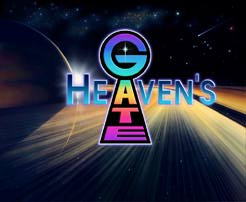
Well now this was good. Very good. A comet is spotted by a playboy millionaire/part-time stargazer who uses it to promote his image and get a television documentary. This turns into a sort of Doomsday phenomenon, complete with a prophet spreading the word of God about our Judgement, sort of like Marshall Applewhite or that Harold Camping guy, except this bullshit happened in real life and not in a science fiction book written 35 fucking years ago.

The book also features some of the wonders of contemporary science. Space shuttles were just getting going, but the astronauts in this book use an Apollo craft to team up with awesome Russian kosmonauts. There are many characters in this story, but none top the guy who works at the Jet Propulsion Laboratory (more on him later). The authors’ take on JPL and the magic those nerds are able to generate is really wonderful. I read this book shortly after the Mars Curiousity landed, and was able to view the landing via a stream online, straight from JPL command center. I also was fortunate enough to attend the landing party for our previous mission to Mars, Phoenix, as the University of Arizona coordinated that mission with JPL. Being in the nerd-command-center for those moments is really exciting, and Pournelle and Niven capture the essence perfectly.

(Lesson from Marshall Applewhite: if you're gonna start a cult, pick a logo that's slightly more timeless)

Once the comet hits, much of the writing oscillates between a sort of Crichton-paced action adventure Doomsday book and a very clever post-apocalyptic thriller. Some scenes just stand out more, and are usually isolated and short, but the one that jumps out to me the most is the diabetic scientist from JPL, Dr. Forrester, bagging his entire library, each book in several sets of Ziploc bags, and stashing them away for safe keeping after society is completely destroyed. It was almost as if he had read all of the same post-apocalyptic books that I have read and did what I thought I would do in that situation.

(Illustration from the book? Nope. Harold Camping's fucking people.)

As society really falls apart, with looting leading to survivalist campaigns of hostile cannibals – another post-apocalyptic touch I really appreciated – a Senator with a ranch and hot daughter look to save the day for everyone in the Southern California area (the focus of virtually all the action). Things go well for this society until they inevitably have to deal with the cannibals, and if not for the saving grace of science, which is complemented by people saving science in the battle of the nuclear powerplant (a great mirroring of our relationship with science), things would get even more gruesome than they do. Which would have been fun, of course, but I’m happy with how things turned out.

This book had just about everything I need: end of world, cannibals, scientists being badasses, shit-hits-the-fan scenarios and people’s planning around the apocalypse (i.e. guns, food, water; always something to learn), religious cukes and a cult-like mentality, babes, a cameo by a Dodge Dart, Russians, inappropriate relationships between Scout leaders and girl scouts (and underage boys and underage girls, for that matter) and more cannibals.

To say this book is a good time is an understatement. 

Wednesday, August 15, 2012

Invitation to a Beheading


 [Editor’s Note: Do not forget, I created this blog with an epiphany whilst reading a Nabokov book, so if it seems like I like this book too much simply because it is Nabokovian, then I apologise. It probably isn’t a great book, and will not make it on anyone’s top 10 lists; as anyone who is not particularly well read will not understand it, and those who are well read have certainly read similar stories of much greater depth and with clearer, more sensical settings]

Oh those tricky Russians. Their creativity and vivid descriptions of human nature, mapping out people’s emotions and thought processes as easily as a cartographer plots his homeland, never ceases to amaze me.

I honestly did not know what to expect when I began reading Invitation to a Beheading. I knew it was about an execution in a nonsensical universe, but why? And what was he trying to say? More suppressed Russian artistry coming out from under the veil of the Iron Curtain? Not exactly.

Cincinnatus C. is being held for a crime I will hereby reference much as my life moves along, that of gnostical turpitude, which is undefined in the book and may be equally as nonsensical to the common reader as the characters working within the prison itself. But if you read much, you can maybe link the phrase gnostical turpitude to another: moral depravity, as a sort of loose translation. The crime has to do with Cincinnatus feeling like he does not belong in his society, and carries a certain opacity as a defense mechanism. That is to say, everyone is completely transparent, and though the details of the society and its functions, both leisurely and occupationally, remain a big mystery outside of Cincinnatus’s life, it paints a picture to a society similar to Huxley’s Brave New World or Bradbury’s Fahrenheit 451. He has a quest for individuality that is considered obscene, and no one can quite work out why he wishes to talk about the things he wishes to talk about.

The trivial, annoying nature and the lack of concern for seemingly important matters amongst the facility’s director, the guards and executioner, whose entire character and appearance/influence in the story is brilliant, I might add, make the world seem very nightmarish. The spider in the room that is fed by the guard doesn’t help, either. It seems Cincinnatus is losing his mind, and nobody loves him, not even his cheating wife or children who are not his. The relationship with his wife actually may have been my favourite part of this book. It was wrong, vile, vulgar, and yet beautiful in a completely indecent and lovely animalistic sort of way. The description of him walking in on her swallowing a uhh….spurting peach?...yeah, I simply cannot do his writing justice by talking about it. It is artistry at its highest, most sexually provocative level.

If you are not into that, the dream world is really fucked up and will keep you engaged and force to you wear your thinking cap as you read it. Not in a troublesome way, either, at least not for me and remember: I am an idiot. So it is not like you have to be an intellectual snob to realize the humour and struggle of dealing with the people and environment Cincinnatus C. has to put up with.

This is the second to last book of the Second bookclub list to which I belong, and it is a favourite of mine (amongst several others this list). Next up: Lucifer’s Hammer. If you have already read it, no spoilers. If you have not, join me. Either way, do read Invitation to a Beheading and get ready for some fun, weird shit.

Thursday, May 3, 2012

2001: A Space Odyssey


Author’s Note: the novel, not the movie

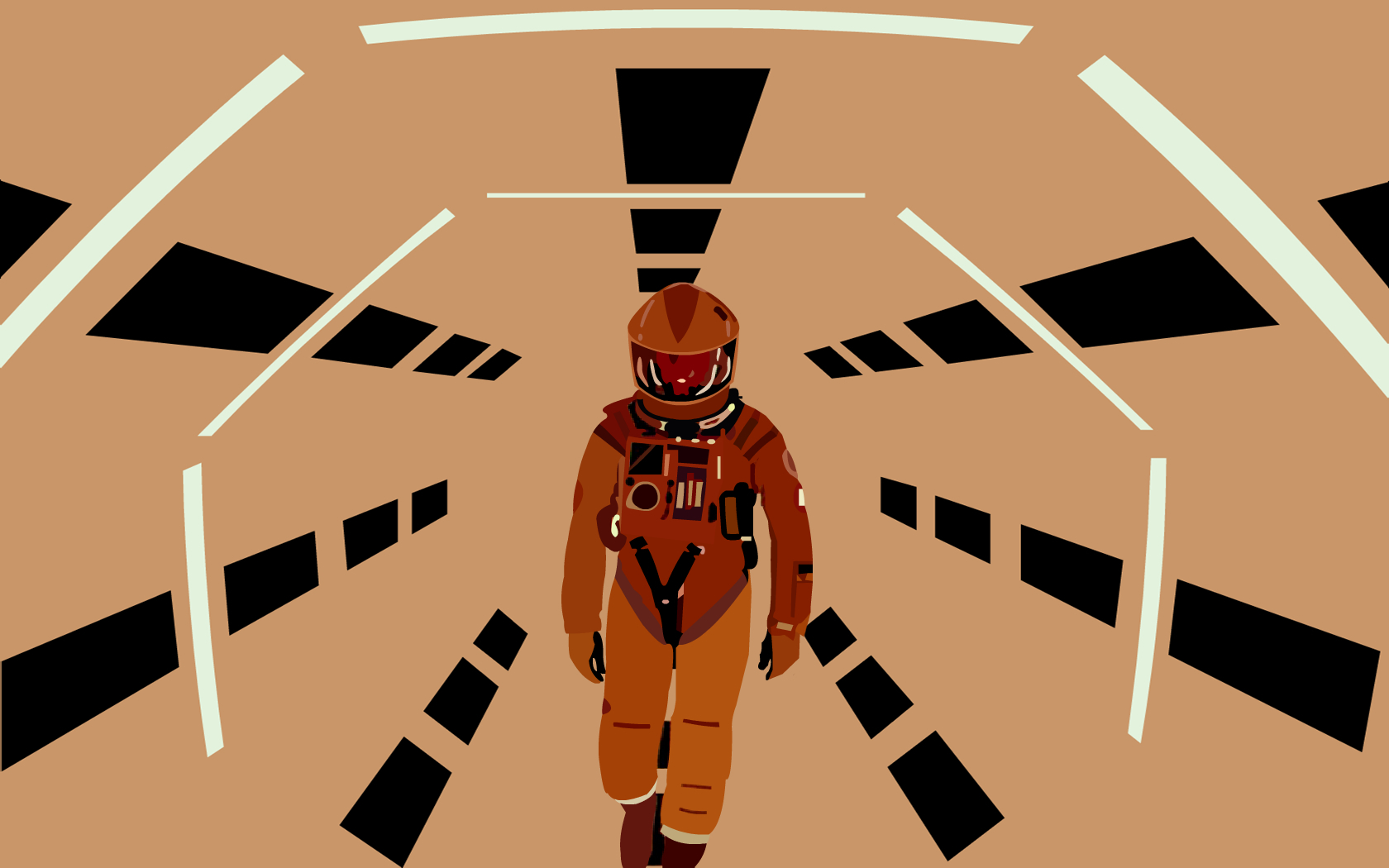
Which is worth noting, as for whatever reason Arthur C. Clarke decided to do both, virtually at the same time. Although I can think of better things to do two of at the same time, he felt that the story needed proper explaining, specifically the Star Gate and the alien intervention, whereas Stanley Kubrick felt that the movie should be mysterious, enigmatic, and move the viewer into a gripping sense of wonder. I like Arthur C. Clarke’s decision more; books are just better and you can draw ultimately the same conclusions with two very different tactics but visually, especially visually as of 1968, I feel like you lose some emotional and psychological unseen aspects that films cannot offer.

That being said, Clarke wrote a very good but not great story, in my humble opinion. I love science, I love space and I love fiction. Anything with space exploration, space treachery, novel concepts of galactic travel, self-aware computers, bizarre ends to interaction with hyper-intelligent creatures and so on, I am all for it.

In fact, I loved just about everything in this book. The symmetry between Moon-Watcher and the Star Child, inheriting powers from the aliens that help shape humanity at the beginning and end of the book, 3 million years apart; great stuff. The will and drive of the cosmonauts to further space exploration knowing their chances of success were terrifyingly low but would stop at nothing to complete the mission; awesome. Even the little things about how physics works differently for them, and with the confinement of the ship and the peril of being alone at the edge of our solar system mounting, their brains are still so well suited that they can work through conflict and keep you interested in their quest to reach Saturn.

I would like to say the only negative of the book was the same thing that usually gets me involved in sci-fi books: aliens. Maybe it is the fault of the creators of the television show Ancient Aliens, but anytime one tries to link humanity’s early advancements with alien intervention (e.g. The Great Pyramids; the Nazca Lines; Stonehenge) there are often silly jokes or strange looks given in response rather than intelligent conversation being sparked. So yeah, alien assistance to shape us the way we are is met with ridicule because it is fairly silly. But Clarke and Kubrick made a really good story about it. And that is not at all what bothers me about this book.

It is really HAL 9000. I guess I have read too much of Robert Heinlein’s self-aware computers (The Moon is a Harsh Mistress with MIKE/MICHELLE/Adam Selene or Time Enough for Love with Dora and Minerva) or droids in stories like The Hitchhiker’s Guide to the Galaxy. But for some reason I simply could not go from a semi-advanced human race in the not-to-distant-future, which 2001 presents to us, to a race with computers that have emotions, feelings, show enthusiasm about completing a mission and ultimately kill humans in the process but with some guilt along the way. They do not fit into the same era, for me.


Okay, I get it, there are self-aware computers in this universe. Good, nothing new for me. But why? How? And if we are newly gaining the ability to travel beyond Mars, and newly gaining the ability to have a supercomputer, then give us some insight as to how it came to get a personality.

In The Moon is a Harsh Mistress, for example, MIKE’s personality is gained quite by accident as it makes a computer’s attempt at a joke. Far out, yes, but that’s Heinlein. It is also an error, as in, not supposed to happen and a complete mistake in the computer. In Time Enough for Love, Dora and Minerva are given their personalities, Dora by Lazarus Long in an attempt to remind him of the mortal girl he once loved since she was a child. Sure, it’s sweet, but it is also a design feature.
HAL 9000 just is. And that was a noticeable gap for me that I tried to overcome and enjoy the story, which I did, but just cannot give it credit for being great. The hole that represents HAL 9000 aside, though, everything else is really enjoyable. Even aliens helping us evolve into what we have become (ideas that have since been humiliated by Ancient Aliens. Thanks a fucking lot Ancient Aliens). Going to watch the movie soon, maybe I will let you know how I feel about it. I can already tell you now though that Stanley Kubrick creeps me the fuck out.

Monday, November 21, 2011

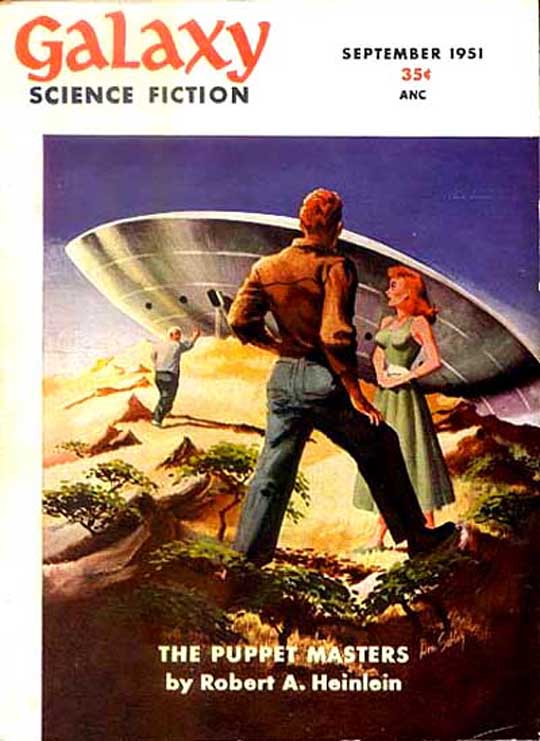
The Puppet Masters by Robert Heinlein

This is my first review of a Heinlein book, one of my top tier Sci-Fi authors and one of the best of all time. I have artwork that honors him in the living room, a portion of my library dedicated to him, and revert all political and sci-fi nerd conversations back to him.
Robert Anson Heinlein was a hard-headed Libertarian, and knew much about how society and government worked in his time and held very controversial opinions about it all. For the most part, he felt people could govern themselves just fine, necessitating certain liberties, and that love, freedom and science flourish in a society in which people are given the opportunity to make informed decisions on their own and don’t have too many personal liberties infringed upon.  He was always within reason though, clearly laying down the need for a stable government and why a system such as ours is a successful one, and why authoritarian dictatorships and communist regimes don’t have the strength to rule successfully for very long.
Puppet Masters is an interesting book that highlights many of these views and others, and from what I’ve read thus far of the man, probably his best effort at conveying his ideals whilst still being a very enjoyable sci-fi thriller. It has the furious pace and light-reading-style similar to a Crichton novel, but don’t forget this was written in 1951 and relates to the fear tactics of our Cold War counterparts.
A UFO crash lands in Iowa, and a special branch of the government similar to what many kids from our generation might compare to the Men in Black are dispatched to check it out. Their findings: Nothing. There was no crash and everything is a hoax, “thanks for coming though and check out this tourist trap of a  man-made saucer,” the strange Iowans all say.
Only problem is that it really couldn’t have been a hoax, not with what this group knows. Also, a member of the unit is a super attractive and stacked brunette (in typical Heinlein fashion) who can tell when men “aren’t right” because they don’t treat her as men normally would. So she surmises they may be possessed.
Turns out, she’s right. The alien creatures attach themselves to your spine and use you, still knowing what you know and speaking as you speak, the use your manpower and human nature to gather up a fierce fighting force.
Only the agency knows the truth, which is so out there that the President has trouble buying into it. But when he does, declaring a state of emergency takes, as you may be able to guess, an Act of Congress. This leads to Heinlein wonderfully relaying the problems with bureaucracy, lobbyists and special needs groups with strict (in this case conservative) agendas. It takes brute force to use common sense but once everyone’s on board with beating the aliens, they run into another problem.
So many aliens are in control of such large areas, breaking through how they run the media is next to impossible. Small tricks with the camera and what gets displayed on TV in these regions is easy to control, and difficult to overthrow and reach the public from the outside. Not at all unlike our own media’s love affair with Barack Obama, their absolute refusal to acknowledge Ron Paul and even more scarily similar to the near-brain-washing that went on in communist Soviet Union.
The resolution is met through downright unique science fiction, involving mobile infantry, shooting possessed charing zoo animals, alien abductions, colonists on other planets, hypnosis and controlled alien experiments.
Things to love about this novel include Heinlein’s use of sexy females and the powers of their charm, his rant of how government and media works, the frustrations of improper military action, far out but accurate comparisons to Soviet society, and the great closer in which the narrator says “Death and destruction!” to put an exclamation on the hunt to eradicate an enemy so humanity (specifically Americans) can live peacefully.
And in case you had any other questions on how much I love Robert Heinlein, the name of the blog is taken from the first thought in the first intermission of Time Enough for Love.