Popular Posts

Showing posts with label Crime. Show all posts

Thursday, August 15, 2013

Make Room! Make Room! - Harry Harvey Harrold-Harrison

“SOYLENT GREEN IS PEOP – “ wait no, that was just the movie. A movie which is, admittedly, loosely based on the book. So there are no dead bodies floating their way through a factory coming out as green crackers of protein. Though I must confess, I was constantly examining the pages left until the end as I approached the climax of the book thinking “when is he going to follow his dead friend to the Soylent factory?” 

Though Charlton Heston is once again wonderful, perhaps more so when written as a character, this book is very different from the movie.  And different in a way that can still truly be appreciated. It is a detective novel in a dystopian, poverty-ridden, overpopulated, hungry world. A much less technologically advanced and shittier-outlook-on-life futuristic detective novel than, say, The Blade Runner. The universe is constructed well, much better than the sort of abstract android-assisted future in Blade Runner and certainly a much more believable future than the universe in Suzanne Collins’ The Hungry Games series. Both of those dystopias are very different, I get it, but the United States and, specifically, New York City in Make Room! Make Room! is so well constructed, probably because it focuses on a much more near-term crisis, only a couple generations out from when it written.

Another element I enjoyed is how it is set essentially in one small area, in Manhattan, in a single precinct of Manhattan virtually the entire book. The weight of the problems shared by the famished of the entire world seem to bear down harshly on the citizens of New York, and as overpopulation, hunger, and violent crime are main elements, NYC makes the perfect setting and there really is no need to stray from it; the city is expanse and populated enough to house a complete murder mystery novel in one individual precinct.

The relationship between Sol and detective Andy Rusch is also interesting, as is pretty much each relationship Rusch has. The dynamic of the two is so polarizing that it is almost comical, and because there are similar relationships with friends and family of mine, I did find it rather entertaining. Sol seems to have a wise man’s approach to the world’s problems: is a very level headed, rational thinker and backs up his philosophies with sound reasoning or, at worst, relevant experiences. He is willing to sacrifice himself and his goals to see that the world becomes a better place. Yet he does nothing to change the direction his path is taking or make his voice heard, until it is too late.

Andy, by comparison as well as contrast, will put up with nearly any injustice as long as he has a place to call home and a job that can help support a recurring source of food and water. He is very career-oriented, puts his job and his income above his personal happiness, will sacrifice his relationships to follow orders, and even when shit hits the fan and all signs point to him needing a change of scenery, he cannot let go of that steady job in such a great depression.

His relationship with Shirl is even more dynamic. Those two have issues, people in poverty and trying to be happy whilst still making sacrifices type issues. And when the man works so doggedly, so exhaustingly, and the woman has nothing to do but lament her past life as a playgirl, she tends to seek escape and sleep with other people. Happens in mining towns all the time. This instance was really very believable to me. 

The end of the book features very nasty breaks of Andy’s relationships, pretty much every link to him in the story either fades, escapes, or dies. He is all alone, but cannot let go of his fear of losing what he has to stand up for himself. And if we do not recognise that is what drives people to sacrifice their personal freedoms and liberties for the sake of economic or social security, then we have learned nothing.

Good book.

Lastly, as I was finishing this book, THIS was being hotly debated in my office. Not just its existence, the background of the nature of the research, the funding, but the implications and corporate supply/demand/marketing capitalistic flaws inherent with new technologies. I was excited for it, but humanity's, specifically capitalism's, track record with stuff like this is very poor (*cough* MONSANTO *cough cough*). 

Wednesday, April 17, 2013

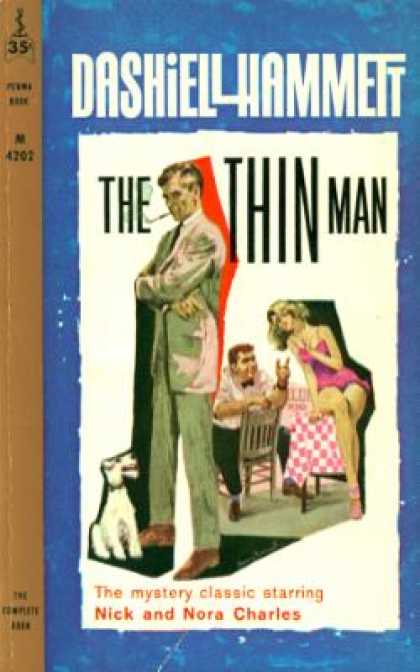
The Thin Man - Dashiell Hammett

Dashiell Hammett is a wonderful writer. This is the third book I have read of his, and though I feel it was the least strong and found it boring  at times, he still has a charm that I cannot deny turns me on. In the same way Don Draper’s charm turns people on, if you follow me.

His stories are typically prohibition era private-eye or consultant detective solving a murder mystery or busting up a crime ring. The Maltese Falcon was my introduction to him, and featured a great detective who did not trust anyone trying to find a missing treasure, which is a falcon of gold from Malta, if you can believe it. The hero is a highly intuitive, rough and stoic chauvinist who openly admits to not trusting or loving anyone and this seems to always work to his advantage in solving crimes. Red Harvest was another great book where a man who essentially owns a town with his wealth is seeing it slip away after the murder of his son, so he hires a private-eye, the best in the business, to come set the town aright. The private-eye does actually very little, but learns from everyone by being agreeable, receptive, and working “on their side” and eventually, the 4 different crime-rings are at full on war with each other and the hero watches the town destroy itself. It is the only way to purge the town of the evils that plague it. It is very violent and very clever. 

This book, though very much lacking in terms of action (only one scene where the protagonist is shot and wounded), is also very clever and features a detective carved from the same block as the other two stories. Only difference is this guy is married, and the sexual tension between he, his wife, and each partner’s friends-of-the-opposite-sex is really entertaining to me. Young girls and mature women alike all seem to love Nick Charles, and men off all different backgrounds in the story cannot seem to get enough of his wife Nora. And because they are constantly detecting, they each flirt back incessantly. I think it is a fun new angle from the types of characters I am familiar with through Hammettt’s stories.

The plot of this one is pretty basic: lover of an inventor is murdered. Ex-wife and her family, who have worked with the vacationing, retired, Nick Charles in the past, are expected to be involved. The current detective on the case ends up using Nick as a consultant of sorts. And even though Nick wants nothing more than to refrain from getting involved, he just cannot help it. The people in the Wynant family are all great characters: the eccentric inventor ; the lying, harsh and violent cougar-attractive mother; the equally as dangerous and untrustworthy yet incredibly beautiful daughter; the strange detective-hopeful son with a knack for spying on everyone; and the wife’s new husband and step-father to the children,  supposed Frenchman Chris Jorgensen.

Everyone is hiding something and Nick and Nora trust nobody. Instead, their method of solving this murder is to visit speakeasies and hose down the degenerate low-class criminals with alcohol and flirtatious charisma to get’em talking. In typical Hammett fashion, very few pages remain when the crime is still unsolved, but without giving anything away the hero pretty much has a final grasp of what is going on here. Then, as news unfolds, his chess pieces in place, he is able to kick the gate open on the whole thing and everyone goes home no longer confused but still very uncomfortable.

I do believe it to be the weakest of the 3 I have read of his, but refuse to back down on recommending Hammett as a great American all-around detective novel badass. I would suggest that anyone with any desire for those types of stories should start with the Maltese Falcon and then try out the less-clever-yet-much-more-violent Red Harvest.

Friday, January 11, 2013

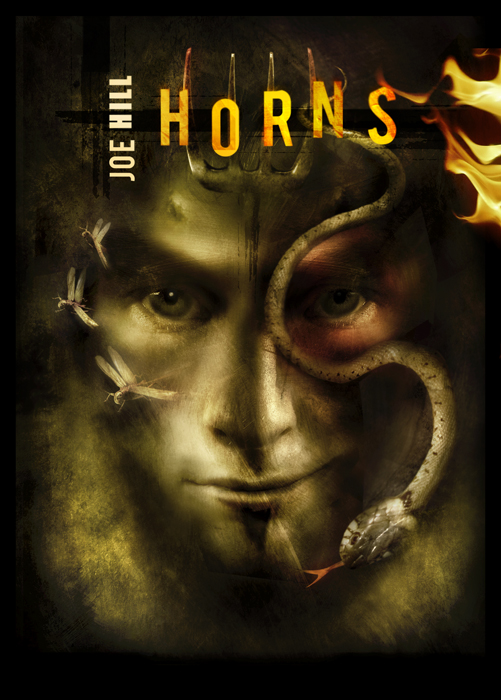
Horns - Joe Hill


I was discussing this book with a friend before I was finished. A dangerous game, sure, but I am always sure to mention I am unfinished with it when I have such talks. And my friends are decent enough people not to ruin it with a devastating spoiler. But she told me she really loved this book, and I said “yeah, it’s pretty good. I mean, as far sex murderer stories are concerned.” She responded with “but it’s so much more than that!” and I honestly didn’t feel, at that point in the story, that it was. Well only a couple of chapters after thinking that horrible thought, there was a majour turning point in the book. I got hit like I’d insulted someone’s mother with a twist I didn’t expect. And not just a plot twist, but one that changes what you feel the story is really trying to convey. It was beautiful. I mean, tragic, and I wanted to cry or take shots or break something, or maybe do all that at the same time, but it was still a very moving moment in the book.

And it is in regards the most important topics with which one can concern his/her self: life, death, and love. Life is no guarantee, but once it is obtained it is your right to keep it, and let others keep theirs. Death can only come once life is granted, and will follow life where ever it may exist. Love, unfortunately, is no guarantee either, and the worst thing to think of is people who experience life until death but never get to experience, or exercise, their right to love. And dying before one can experience love is the greatest crime of all for humanity, in my opinion.
This book takes all of that and, instead of elaborating on it, concentrates it into one vicious strike to your heart. It happens all in one moment. One moment realized after the person everyone loved has been dead for some time. It is truly tragic but truly wonderful.  I really cannot stress that enough.

There is also a very King family influence, and much of the book can be looked at as being written by “Stephen King’s son”. There is that lovable, cynical charm and the dirty, nasty secrets everyone holds within with hidden evil, dark desires that mostly revolve around sex or violence, or violent sex.


But even with that, he is still a unique author, and the book is great on its own, regardless of the fact that you might think, at many different points, it seems like something written by a young Stephen King. “Huh, I could imagine a universe in which the guy that wrote The Dead Zone also wrote this book” I said to myself on more than one occasion. Like, for example, when he touches someone and knows everything about them.

I did find a few faults with the book, I think the plotline of illness making people turn into real assholes is a common enough issue that he may write about it, but not so common that it is on the level of common knowledge that everyone turns into a wicked person when they are ill. I also felt there was some really good irony when he had his horns and people were coming out with these horrible secrets, but sometimes they would act upon their desires with the removal all inhibitions (the true effect of his horns) but there was never any follow-up as to what resulted from people making good on their horrible actions.

Really look forward to more from Joe Hill though. This story had a very “early stages of a great author” feel too it, not a perfect but still very good, and I hope he only improves with time. But then again, he is Stephen King’s son, so who the hell knows.

Monday, September 10, 2012

Lucifer's Hammer - Larry Niven & Jerry Pournelle


Well now this was good. Very good. A comet is spotted by a playboy millionaire/part-time stargazer who uses it to promote his image and get a television documentary. This turns into a sort of Doomsday phenomenon, complete with a prophet spreading the word of God about our Judgement, sort of like Marshall Applewhite or that Harold Camping guy, except this bullshit happened in real life and not in a science fiction book written 35 fucking years ago.

The book also features some of the wonders of contemporary science. Space shuttles were just getting going, but the astronauts in this book use an Apollo craft to team up with awesome Russian kosmonauts. There are many characters in this story, but none top the guy who works at the Jet Propulsion Laboratory (more on him later). The authors’ take on JPL and the magic those nerds are able to generate is really wonderful. I read this book shortly after the Mars Curiousity landed, and was able to view the landing via a stream online, straight from JPL command center. I also was fortunate enough to attend the landing party for our previous mission to Mars, Phoenix, as the University of Arizona coordinated that mission with JPL. Being in the nerd-command-center for those moments is really exciting, and Pournelle and Niven capture the essence perfectly.

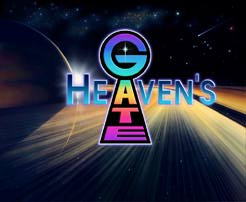
(Lesson from Marshall Applewhite: if you're gonna start a cult, pick a logo that's slightly more timeless)

Once the comet hits, much of the writing oscillates between a sort of Crichton-paced action adventure Doomsday book and a very clever post-apocalyptic thriller. Some scenes just stand out more, and are usually isolated and short, but the one that jumps out to me the most is the diabetic scientist from JPL, Dr. Forrester, bagging his entire library, each book in several sets of Ziploc bags, and stashing them away for safe keeping after society is completely destroyed. It was almost as if he had read all of the same post-apocalyptic books that I have read and did what I thought I would do in that situation.

(Illustration from the book? Nope. Harold Camping's fucking people.)

As society really falls apart, with looting leading to survivalist campaigns of hostile cannibals – another post-apocalyptic touch I really appreciated – a Senator with a ranch and hot daughter look to save the day for everyone in the Southern California area (the focus of virtually all the action). Things go well for this society until they inevitably have to deal with the cannibals, and if not for the saving grace of science, which is complemented by people saving science in the battle of the nuclear powerplant (a great mirroring of our relationship with science), things would get even more gruesome than they do. Which would have been fun, of course, but I’m happy with how things turned out.

This book had just about everything I need: end of world, cannibals, scientists being badasses, shit-hits-the-fan scenarios and people’s planning around the apocalypse (i.e. guns, food, water; always something to learn), religious cukes and a cult-like mentality, babes, a cameo by a Dodge Dart, Russians, inappropriate relationships between Scout leaders and girl scouts (and underage boys and underage girls, for that matter) and more cannibals.

To say this book is a good time is an understatement. 

Friday, August 10, 2012

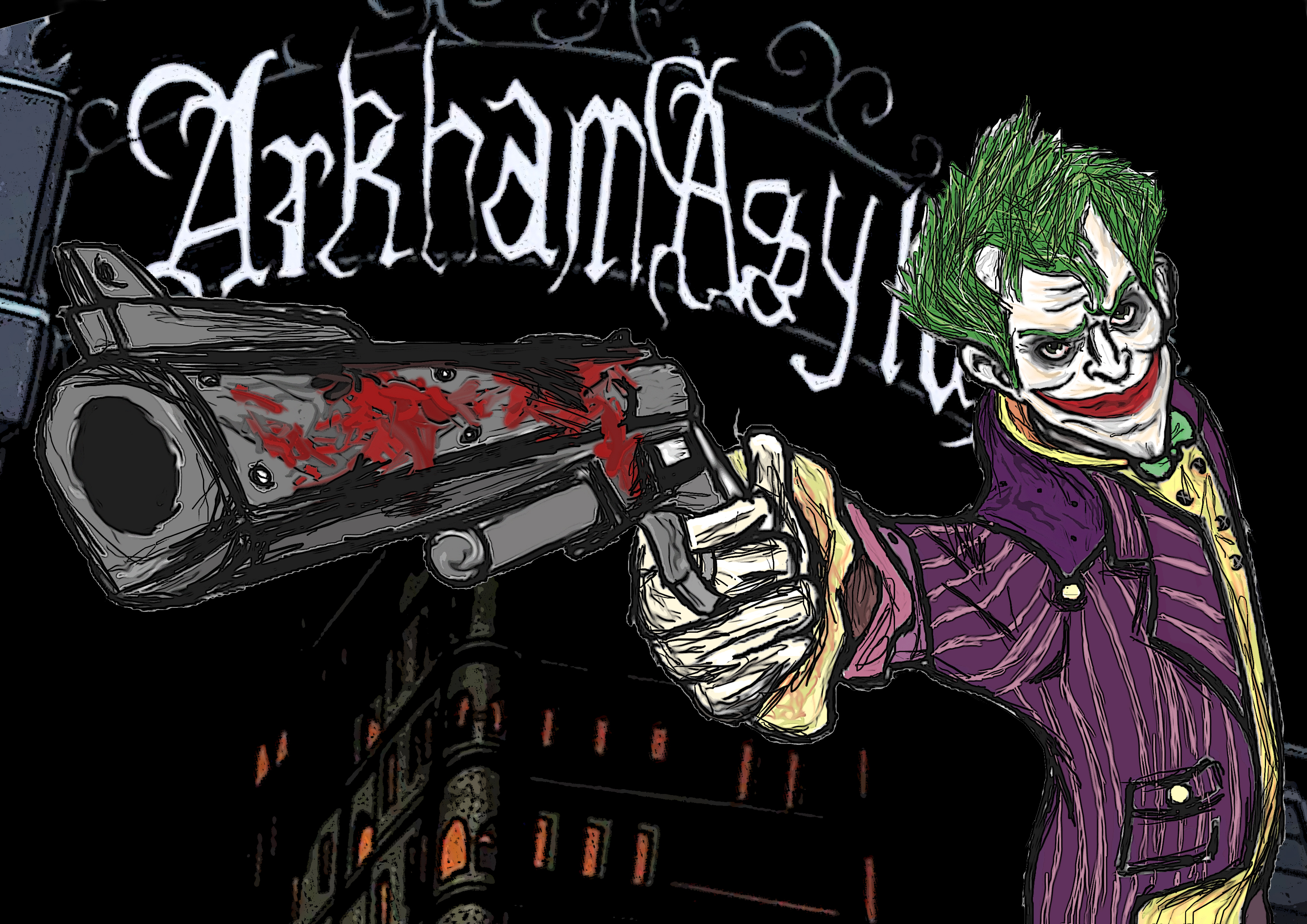
Arkham Asylum


Batman! Oh yes, my favourite superhero (we’re not going to get into a human/superhuman hero/superhero discussion here) in the form of Grant Morrison’s graphic novel. Because the events of the environmentally, congressionally, and constitutionally confused state of Colorado and city of Aurora have me in a state of fear and keep me from viewing Christopher Nolan’s latest masterpiece (at least until I am assured Batman will save us in the event of a theatre shooting) The Dark Knight Rises, I chose to settle down and read this gem.

Now the Arkham Asylum line of recent Batman video games were fantastic, the control and movements were unlike any suphero video game based on a legendary comic book character. Furthermore, the fact that they didn't release it along with movie and with a movie titled with (- The Game) stamped on at the end is a definite plus. Let's us know they have a quality product and they are not just trying to ride the coat tails of a popular film.


The demand for Batman saving the day is always high, especially from me, but the demand for a creepy thriller of a story that has a halloween-like atmosphere and features many villains within Arkham and Batman needing to enter the darkness to fight them all, is not very high. I think that puts this book at a bit of a disadvantage, it sort of fits into its own category of Batman action and it is not what I crave.

Do not get me wrong though, that takes away nothing from the enjoyment. It is a very unique idea with a very creepy story and even creepier artwork. Dr. Arkham and his mother's lunacy driving him to use the old house as a treatment facility for the criminally insane sets everything up beautifully. Tragedy, and tragedy from a character I knew nothing about going into the story, really creates a tension that keeps me engaged.

As much as I love to see the Dark Knight bashing baddies, I really enjoyed reading about Arkham's history and his mind. You feel more like the story is about him with each scene, and Batman is just a reflection of the insanity that ripples through the surface within the halls of the Asylum, becoming mad himself almost by osmosis. Of course, this gives us something to cheer about, but rather than it being a physical villain (which, there are those too), it is his mind.

Of course, the graphic novel is short, almost too short. But short and sweet make it a worthy read in an evening for any hardcore Batman fans. Probably wouldn't recommend it to the casual Batman fans out there though.