Popular Posts

Showing posts with label Propriety. Show all posts

Wednesday, February 13, 2013

The Picture of Dorian Gray - My intro to Oscar Wilde


The Picture of Dorian Gray is a book I hear about and know a lot about without actually reading until just very recently. People love it, and it isn’t surprising to see why. It was very outside the box, very much taboo and spoke out loudly – flamboyantly? – against the social/societal norms of Elizabethan British Propriety.

I feel so improper writing that sentence, but it feels good. The book is about much of what I like to tease people about, the idea that you can screw social norms and live your life by the simple rule: Do what feels good. 

I have a feeling that most noble men and women who live by similar standards, like Lord Henry (Dorian Gray’s friend and sort of mentor figure), can do this responsibly and without hurting anyone. But Dorian is immature and very, very vain. Not to mention he misinterprets what his mentors are trying to pass down to him and applies their lessons to become more cunning, more conniving and cleverly use his good looks for intentions that are not only selfish, but actually harmful to others.

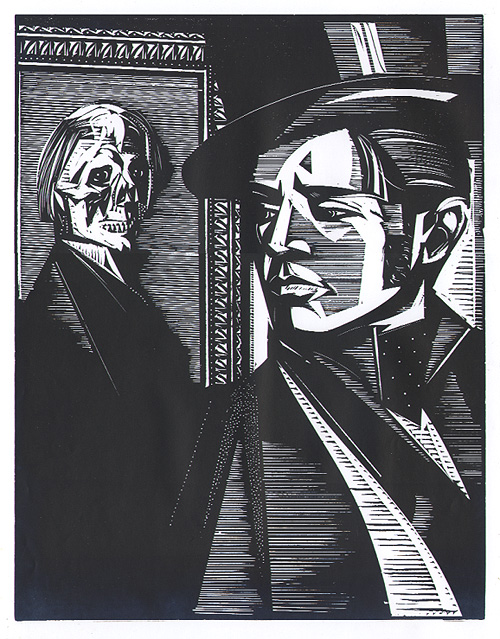
Vanity is one of the themes here, especially that annoying British vanity – the focus on appearance and etiquette, manner of speech and coming off to people as noble rather than intelligent – but Dorian seems to take his vanity too far. The painting that is so goddamn exquisitely described and miserably, painfully created over the course of our introduction to Dorian that it represents an image that is not, in fact, a portrait of the young man, but instead an image of his person. It changes as he maintains his beauty and celebrates it.

He is basically indestructible in high British society because of his beauty, and goes on doing whatever the hell he wants even though his close friend, Lord Henry, has a very similar approach to life and is still a responsible, quite likeable human. But only likeable to us, as his behavior is extremely taboo and scandalous for the time it was written. He talks about marrying a woman he does not love, about art as a career, and even jokes about divorce; in the U.K. in the 20th Century, ‘divorce’ was still treated like a swear word by people who wished to always be polite and proper.
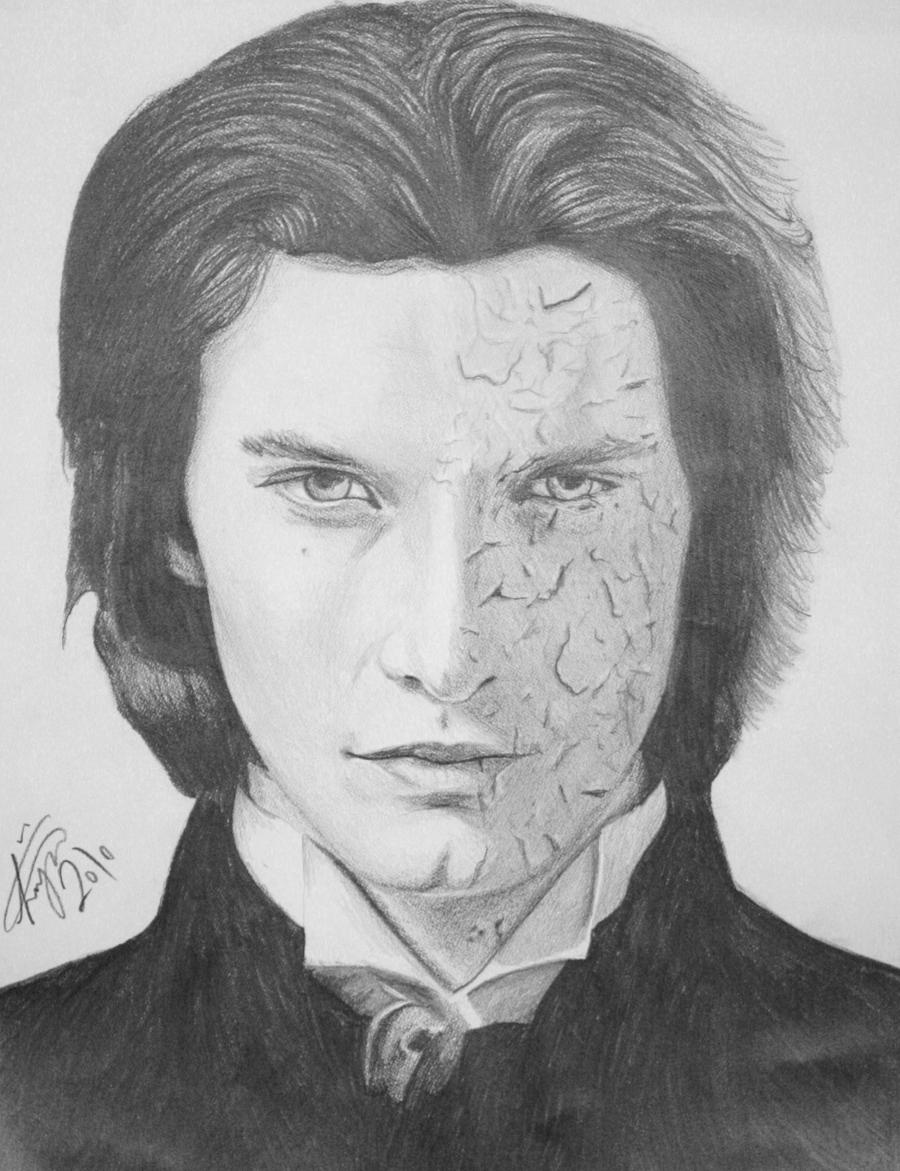
Dorian, on the other hand, takes it all to a totally new level and is a quite despicable creature because of it. From breaking women’s hearts and being a complete ass about it to irritate behavior towards his peers, opium den visits, malice, scorn, and even murder. He is a truly awful subject but is celebrated by proper British upper class folk because they are all just as vain as he is. His hateful, ugly inner self is reflected only in the changes that keep happening to his portrait. It is a very good parallel but had to be very difficult for British noblemen and women – in their 80 pounds of clothes, pantaloons, annoyingly overdone white make-up, wigs and fancy parties – to swallow back in 1870.

Speaking of swallowing, I feel like there may have been a reference to a bit of homosexuality in the book, but I cannot quite put my fingers on it. Or in it, whatever. Lots of scenes really get into depth in describing the immediate surroundings of the characters and offer up pastel descriptions of butterflies and flowers whilst talking about how beautiful the young man is and how his friends much prefer his company over the company of their own wives. It really only adds to the beauty that this dreamy Dorian Gray figure puts out but I cannot help but think that Oscar Wilde may be hinting at something.

Anyway, considering how proper people were at this time, and the class that Wilde chooses as his subjects, it is no wonder it was such a controversial book. Several chapters in this version were not originally published; and this from a society that truly loves good literature. He was really ahead of his time, and his works (this being the only one of his I have read) stand the test of time because of it. Unlike Dickens, who is also awesome, do not misunderstand me, The Picture of Dorian Gray is still a good read in my opinion and has humour we can laugh at even now and points out a tremendous amount of horrible flaws in a superficial society that even people today can appreciate.
Sunday, March 25, 2012

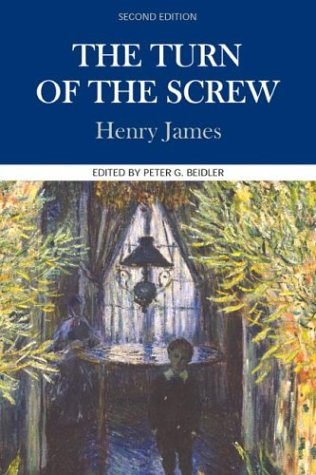
The Turn of the Screw


Well if you aren’t familiar with Henry James, he’s an author in a long line of authors and well distinguished Brits from the late 1800’s. This novella (I’m allowed to review novellas here right?) was published in 1898, same year my 30-40 Krag made its debut and later helped Theodore Roosevelt win the battle of San Juan Hill and, eventually, the Americans win the first two back to back World War Championships.

Good authors in the late 1800’s Britain are very different from good authors today (which are also from Britain, I might add). As such, plot, conflict and humour revolve around things that we don’t view in the same light. This makes the discussions which used to be tense amongst characters seem rather dry to us, but if you can get beyond that, this is actually an alright story.

It starts out as an overly complex setup to the telling of a ghost story (the setup is a bit over the top and I didn’t like it, in fact), compounded by Henry James’s extremely annoying writing style. It almost reads like American Law, very jumbly, wordy and unnecessarily complex. Beyond all that nonsense, things get interesting quick.

The narrator (once the tale is being narrated) is a governess hired to take care of a man’s nephew and niece as their parents are dead. She shows up and quickly learns of visitors from the outside. After another creepy encounter, it becomes obvious the man she’s seeing around the estate is the deceased Peter Quint. Who was a creepy bastard and child molester, in addition to being a ginger. The housekeeper confirms, without herself seeing the apparition, that he was indeed a creepy bastard and fits the description of the ghost.

There is then a female ghost, the predecessor of the governess telling the story. How she died is not quite as clear (to my recollection, she committed suicide) as Mr. Quint, who was said to have fallen and hit his head really, really hard on the ice when he was stumbling home drunk one night (the horrible bruising on his head supported this claim). Miss Jessel is the second ghost, dressed in black and appears to be mourning, and the girl of the estate, Flora, seems to ignore her during all encounters.

The children continue to creep me the fuck out, waking at midnight to walk to the window and peer out into the darkness, leaving the house entirely and hanging out in the lawns in the complete darkness of the hour and peering up towards the tower where the ghosts have previously appeared to the narrator, and so on. Despite the attempts of the governess to corral the kids, they continue to be adorable little bastards. The ghosts keep appearing. And the children keep implying they have no clue the house is haunted.

In typical British fashion (a sort of Dickens-humour) everyone keeps dancing around anything outside of old-school British propriety: like the fact that there are goddamn ghosts in this place and the kids are covering it up by being way, way too sweet and innocent, even though when they do pull stunts they seem way too clever to be good children.

The governess slowly begins suspecting the house is evil; then as she loses her shit she says the children are evil. Finally she ties up all the loose ends to point out the ghosts to everyone, and no one else can see them. I went from suspecting to declaring the lady was crazy at this point, but the ending is very open and, if you can sustain Henry James’ ridiculous law prose you might have a lot to interpret and several different arguments for which to make a case on just what the hell was really going on in that house.

Because of its relative shortness, the clever trickiness of the kids and their pranks, the humour of discomfort amongst a governess completely out of her element and slowly losing her mind, and the surprisingly pleasant ending in which someone dies, someone feels victorious and nothing is explicit, I was quite glad this made it on our book club list.