Popular Posts

Showing posts with label Horror. Show all posts

Sunday, October 14, 2012

Blood Meridian

Or as I like to call it: The Western section of my library’s tribute to the holocaust. Good God. Okay, where to begin. The book isn’t good. But I read it because it was on the book club list and I did not want to be that guy who read one book by an author (Cormac McCarthy’s The Road) and say I’ll never open up to anything of his again…especially with how much acclaim this guy gets.

Well, I read it, open mind and all, and even liked bits of it at times, but in the end, it was just too much McCarthy. That is to say, there is no point to anything and the violence is so rampant and unrestrained one sort of gets desensitised – no that’s not right, that’s what you say about actual violence – acclimated to it.

The book begins well, a boy in a broken home whose mother died at birth and violent father could never accept him runs away, and quickly the action picks up when he enters a preacher’s tent for a sermon. The preacher has a weird way of talking, combining King James’ New Testament Gospel with that ignorant redneck western country talk, and is interrupted by a man we come to know only as the Judge. The Judge tells the crowd this preacher is a fraud, speaks the way he does because he is illiterate, and may seem new here, but is on the run because of committing several different forms of child-rape and molestation crimes in various parts of the United States. The crowd is in uproar, charges the preacher and eventually kills him. 

When we meet the Judge again in a bar, the boy (and the main character is only known as the boy in this book, except when he’s known as the man, very McCarthy-like) asks the Judge how he came to know this preacher, to which the Judge says “I’ve never heard of this preacher before today. Just wanted him out of here.” Or something like that.

Awesome start, right? Well the awesome was basically over right there. The Judge is a very interesting character and all, but he helps lead a band of Cavalrymen on an Apache hunt gone wrong and every chapter ends up following the same basic order: travel, massacre, rape, massacre, rape, murder, molestation, other violent crime, massacre, capture, escape, repeat.


About the only thing of interest is its historical significance, which is mostly in regards to John Joel Glanton. Apparently the Glanton is one of the most notorious scalp hunters of the American West. That’s great. Really terrific. It just doesn’t make for an interesting fictional book to read of his adventures skinning Native Americans, impaling enough dead babies on a tree to create a sort of “dead babies don’t grow on trees” irony, picking fights in bars and killing everyone inside, things like that. I just felt nothing reading this other than “I can’t wait for it to be over and me to never have to read another Cormac McCarthy book again.” 

And I’m sorry if you liked The Road. It was really terrible. But if it is your style, you may just like Blood Meridian

Tuesday, August 28, 2012

The Waste Lands - The Dark Tower: Book Three


Book III picks up essentially where Book II leaves off, plus an intro by Mr. King really recaps everything that has happened in the first two books well. We start out with Eddie Dean, Detta/Odetta-now-Susannah/Mrs. Eddie Dean, and the hero Roland as they reach the forest and have moved away from the coast lines with giant evil fucking lobsters. Now their diet consists of deer meat rather than lobster meat. So good for them.

The pace of this book is entertaining for me. It starts out with a brief “here we are now, moved on from the lobstrocities,” and then enters the “Holy shit, a hostile giant grizzly robot bear with a parasitic disease, headed right for Eddie!” This happens, of course when Susannah is learning to Gunsling (I’ll note here that both her and Eddie learn the craft) and she ends up being able to shoot the fucker right in its fucking robot antenna. Cool shit.

From here the book continues with Roland being haunted by a new take on alternate realities, which can sort of be compared to time travel paradoxes. Being a huge, huge nerd for time travel paradoxes, it’s cool to see how this variant unfolds. Roland met the boy Jake in Book I, and he and Jake bonded a close relationship up until the kid, terrified of being left for dead in that world, basically said “ah fuck it, I can tell the Tower means more to you than this. Go on.” Since then Roland had felt very guilty. But the moment Jake left his current world (which is essentially our world circa 1987) for whatever fucked up place he met Roland, he was dead. Dead because the Man in Black or Jack Mort pushed him into a car on the streets of New York and he came to, post-mortem, alive and well (somehow), to meet the Gunslinger and hunt down The Man in Black. Confusing, I know, but when you are reading Book III it all makes sense.

Anyway, what’s cool is how haunted and mind-blowingly mind-fucked Roland now is. He explains that when he was in control of Jack Mort (in Book II), he saw him about to commit the act of pushing Jake in front of the car and thus, killing him, which sends him to meet Roland back in Book I. But since Roland saved him from this fate, meaning he did not die there, he never technically got sent to Roland’s world; meaning they technically never met. So his mind splits between a reality that says “the boy was saved, of course he never died and went to your world” and another that says “but you met him, he was there.”


Roland tripping balls on this helps add to the nightmare landscape King creates in this book. Dreams, both crazy nightmarish and important event-foreshadowing-signals dreams, are involved in making the book read like a scene from a Freddy Kruger nightmare world in which the landscapes and monsters seem just as impossible as the notion of escape. I was really digging it. Then Jake came into the story, as he suffers from not only the same paradox as Roland, but much worse because his involves himself being killed, blood and trauma and all. This not only makes things interesting for me, but the pace continues, all the way up until we all cheer Jake onto the gate that brings him into the Gunglingers’ world; every one antsy, giddy and hollering for the little fucker to escape the monster made of plaster (I also had trouble envisioning it, don’t worry) and Susannah fucking a demon.

The demon fucking is actually what I use as the turning point. That is about where things got weird. Once they are all together, things get a little slower paced. The city and the bridge and the people and villains they stumble upon, from here on out, are not really from the genre the story seemed to be carrying me. There are post-apocalyptic settings, with worlds and universes mixed together like Jake mixing in with Roland in Book I, and that’s all great, don’t get me wrong. But something about the sophisticated fallout shelter and the hyper advanced train co-mingling with idiots who murder each other every hour and our Clint Eastwood figure gunslinging seemed to branch out in too many directions. Plus I wasn’t as excited to see Roland with a six-shooter blasting people in a fallout shelter and running for a monorail as it electrocutes people in front of him as I thought I was.

The book ends with them headed through the real Waste Lands, which are one of the most nightmarish environments ever imagined. I really respect the way he creates the world that is passing underneath the gang as they travel on a super evil, badass monorail.

What I liked most about this book is not just his ability to talk about nightmares and nightmarish worlds, though. It was two other important things:

  1. The ability to relate to characters that are kids, and make you feel the same emotions you felt when you were a kid, whether it be petrified fear of something that scared the bajesus out of you, or that awkward feeling of being near people who are complete assholes and you were unable to understand a world of such blatant assholery.
  2. The snark, the comic relief, the King-humour. It is that little, tiny bit of dirty charm he offers and it works really well in this story.


Sometimes it is too cheesy, sometimes it adds nothing to his novels, but in this book it just works. The subtle humour that is worthy of a reader’s smirk is a good quality, and it makes him a great, cynical ass. As opposed to a cynical assHOLE, like me.

Interestingly enough, Stephen King’s Dark Tower series seems to coincide with shit that happens in real life that makes me think, “if Ibelieved in coincidences, this wouldn’t mean shit, but since I don’t, this is pretty weird.” So as the book concludes with Blane the Mono taking them over some weird ass freaky world, a friend (not a reader, I might add, and certainly I don’t keep people up on what I’m reading, so this is out of the blue) posted this on my Fbook wall:


Creepy? Yup.

I would say overall it was very good until things went downhill from the point they brought the other one into the world. The Demon fucking, which I later told a friend I referred to as the gift that keeps on giving, since it happened in the first one and also since Susanna was certain she was pregnant around the same time (weird, isn’t it?), was difficult. Not difficult in terms of “handling it,” – which it was, that demon was packing – but difficult to follow in a world that worked. This just did not seem like something that belonged. Seemed more like the Stephen King I have come to know and like only a little bit.

The book generally had a downhill cheesiness from there for me; but again, because I enjoyed the first half so much, I would still say it is a very enjoyable read. Just don’t get your hopes up after the first half. The momentum and general awesomeness does not maintain its thrilling pace.

Tuesday, July 3, 2012

The Drawing of the Three – The Dark Tower: Book Two


 Very discontinuous from my post on Book One: The Gunslinger, sure, but review that one if you need to, because I wrote this one shortly thereafter and it follows a similar style and train of thought. Here we go:

Well now this is more like it. I recall saying something along the lines of

Besides, I don’t dislike all of his work, I just find him a bit too bizarre and gory for me sometimes; really drawing out the scenes that are intended to make one uncomfortable but don’t add much, if anything at all, to the story.”

And guess what? It happens…but not in such a way that I can’t enjoy the story overall. The truly horrible thing (he is a “horror” novelist, right? Even if these aren’t particularly scary books) is that it happened at a particularly odd time. Being a man who doesn’t believe in coincidences, I have to say this may be an event that will stick with me for a while. How it happened was that I was listening to an Audiobook of this story, narrated by Frank Muller and using my Audiobook application on my smartphone as I traveled to Phoenix from Safford to watch a Red Wings game.

Stephen King’s “Kinginess,” wherein he describes the gruesome crime that leads to Odetta Holmes losing her legs above the knee after being pushed in front of the A-train in NYC, was more gore with less plot-relevancy than I felt I should be putting up with during a narrow canyon pass through the most dangerous part of my drive. I promptly switched from Audiobook to music on my smartphone, and as I did, there was an accident ahead of me. The details of this accident relate more to another story, which can be found at another blog for which I sometimes stop by and write. And that story blossomed to even more unexpected, stranger-than-mere-coincidence, deeper relationships. Very strange, to say the least.

I think for that, this book will always be looked upon strangely, and fondly. To get away from what happened in my life as I went through this story, it was very much fun. Eddie Dean was a very enjoyable character and his rite of passage from drug mule in his world to sidekick of the Gunslinger was well done, and at times fun to cheer along with. Odetta Holmes/Detta Walker, not so much. But the drawing of the third one made it all better.

And of course, how can I recap this story without mentioning the giant, bloodthirsty lobsters? Does Stephen King really hate lobsters? Being a native Northeastern US celebrity and representative of that region, I can imagine. But maybe the man had nightmares of them when he was a kid. In any event, the narrators take on their psychotic questioning (“Dum-a-chum? Ded-a-chek?”) makes me laugh everytime I think about it. It was perfect.


I also really enjoyed the gunslinging in this book. Whether it was his threats, a blasting of a human-hungry lobster, killing off people from Eddie Dean’s world or doing his thing with ammo and drugs in Jack Mort’s world, it was always entertaining. And Jack Mort represented a typical Stephen King villain to me, and I’m glad he wasn’t in there long enough to ruin the book for me. A sociopath who gets off causing serious injury to people…and yes, I mean actual orgasms when he does. Very King-y, I should think.

But there’s a great plot development with him at the end, and great character development too, pulling everything together and preparing you for the long, difficult journey onwards as they leave the coast and head up into the foothills on their quest for the Tower. Not much is said about the Tower in this book, but with the Man in Black gone, it’s not as though any one here knows that much.

Needless to say, I liked this book more than its predecessor and if the third one is half this good, I’ll enjoy it as well.

Sunday, March 25, 2012

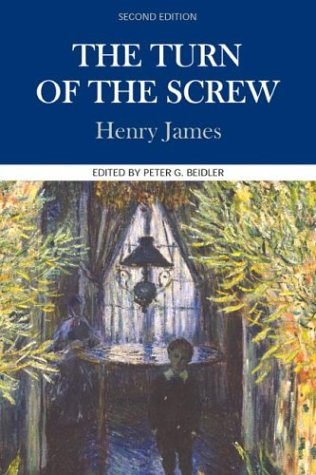
The Turn of the Screw


Well if you aren’t familiar with Henry James, he’s an author in a long line of authors and well distinguished Brits from the late 1800’s. This novella (I’m allowed to review novellas here right?) was published in 1898, same year my 30-40 Krag made its debut and later helped Theodore Roosevelt win the battle of San Juan Hill and, eventually, the Americans win the first two back to back World War Championships.

Good authors in the late 1800’s Britain are very different from good authors today (which are also from Britain, I might add). As such, plot, conflict and humour revolve around things that we don’t view in the same light. This makes the discussions which used to be tense amongst characters seem rather dry to us, but if you can get beyond that, this is actually an alright story.

It starts out as an overly complex setup to the telling of a ghost story (the setup is a bit over the top and I didn’t like it, in fact), compounded by Henry James’s extremely annoying writing style. It almost reads like American Law, very jumbly, wordy and unnecessarily complex. Beyond all that nonsense, things get interesting quick.

The narrator (once the tale is being narrated) is a governess hired to take care of a man’s nephew and niece as their parents are dead. She shows up and quickly learns of visitors from the outside. After another creepy encounter, it becomes obvious the man she’s seeing around the estate is the deceased Peter Quint. Who was a creepy bastard and child molester, in addition to being a ginger. The housekeeper confirms, without herself seeing the apparition, that he was indeed a creepy bastard and fits the description of the ghost.

There is then a female ghost, the predecessor of the governess telling the story. How she died is not quite as clear (to my recollection, she committed suicide) as Mr. Quint, who was said to have fallen and hit his head really, really hard on the ice when he was stumbling home drunk one night (the horrible bruising on his head supported this claim). Miss Jessel is the second ghost, dressed in black and appears to be mourning, and the girl of the estate, Flora, seems to ignore her during all encounters.

The children continue to creep me the fuck out, waking at midnight to walk to the window and peer out into the darkness, leaving the house entirely and hanging out in the lawns in the complete darkness of the hour and peering up towards the tower where the ghosts have previously appeared to the narrator, and so on. Despite the attempts of the governess to corral the kids, they continue to be adorable little bastards. The ghosts keep appearing. And the children keep implying they have no clue the house is haunted.

In typical British fashion (a sort of Dickens-humour) everyone keeps dancing around anything outside of old-school British propriety: like the fact that there are goddamn ghosts in this place and the kids are covering it up by being way, way too sweet and innocent, even though when they do pull stunts they seem way too clever to be good children.

The governess slowly begins suspecting the house is evil; then as she loses her shit she says the children are evil. Finally she ties up all the loose ends to point out the ghosts to everyone, and no one else can see them. I went from suspecting to declaring the lady was crazy at this point, but the ending is very open and, if you can sustain Henry James’ ridiculous law prose you might have a lot to interpret and several different arguments for which to make a case on just what the hell was really going on in that house.

Because of its relative shortness, the clever trickiness of the kids and their pranks, the humour of discomfort amongst a governess completely out of her element and slowly losing her mind, and the surprisingly pleasant ending in which someone dies, someone feels victorious and nothing is explicit, I was quite glad this made it on our book club list.

Friday, February 10, 2012

The Gunslinger - The Dark Tower Series: Book One

Ah yes, Stephen King. An author I gave up on when I realized he didn’t give a shit if I found his stories scary, well-thought out with plots and characters well developed or forced out with the grace of an explosive fart. There is not much out there he’s written that I’ve read, and even less that I’ve enjoyed, but I’ve never met someone who read the Dark Tower series and had anything bad to say about it. In fact, the closest thing to a negative review I’ve ever heard from any of my friends about the books is that some in the series are “very Stephen King-y.”

This had me worried at first, but after finishing the Gunslinger (and now finished with The Drawing of the Three) I think I can say this is that bit of Stephen King I enjoy. Besides, I don’t dislike all of his work, I just find him a bit too bizarre and gory for me sometimes; really drawing out the scenes that are intended to make one uncomfortable but don’t add much, if anything at all, to the story.

But this book was a mix between a slow, painful trek through the desert (don’t I know a thing or two about those having lived here all my life) and some mind blowing revelations. There is also a little bit of action, which helps define what the Gunslinger is, rather than whom.

We don’t know much about whom he is, really, there are some brief flashbacks, but for the most part he is a man of mystery. It’s a while until we even hear his name. We know he is skilled, but we don’t know where he comes from. For that matter, we don’t know where he is. Is this place in our world or not? It seems like it, as he recognizes the lyrics to ‘Hey Jude’ by the Beatles, but does not refer to it as a Beatles song.

There are also hints of some terrible apocalypse, as this world has “moved on” and left behind some technologies like pianos and revolvers, but not all that we have. For a better speculation by a very thorough book reviewer, I recommend you see what the good people at Tor.com have to say about this book, which includes more speculation and more guessing than I did as I followed the story:

Constant Reader analysis from Tor.com
http://www.tor.com/features/series/a-read-of-the-dark-tower
Very inquisitive review, for sure, by Tor.com

The last bit of description about the Gunslinger’s world is when the boy, Jake, says “there are other worlds than this one.” And this comes after he describes to him how he died and the Man in Black brought him back to this world. So it is like a freaky, Stephen King-y purgatory, I gather.

The book ends with his conversations with The Man in Black. This involves some pretty weak tarot card readings (didn’t like that addition) but ultimately sets up the next book.

I felt it was so short and brief that it really did nothing other than set up the rest of the series, but it did a good enough job of that. The scene in which he gets the Pentecostal preacher woman off with his pistol, then blasts the rest of the town one at a time with a gun in each hand really made everything worth it. Plus, getting to know a bit more about the Dark Tower at the end made me feel better about being dragged through the desert not knowing what the hell for.

Really looking to vent about The Drawing of the Three soon. Stay tuned.