Popular Posts

Showing posts with label Drugs. Show all posts

Monday, September 30, 2013

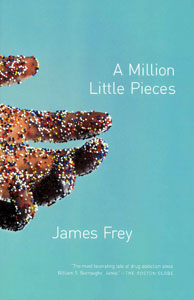
A Million Little Pieces – James Frey

If you're Oprah, don't read this. I have had this book targeted on my shelf for ages and have long been debating my near-term To Read List so that it may be included. I do not know why I kept pushing it off, but I have finally come around to read the biggest story of the year 2007!
I enjoyed it, it had some great stuff to offer. It also had some stuff that buggered me. In all, though, I am glad I finally took the time.
It starts out without giving the reader any sort of back story. Just a drunk/drugged out junkie going through a bit of withdrawals maybe that force his breakfast, lunch, and dinner to be poured out all over his clothes, sopping them no matter where he may find himself. Turns out his parents picked him up at the airport and are delivering him to a rehab facility, the best in the country.
He is inexplicably shitty. Not just covered in vomit, and later his own poo, but because he has no interest in getting better. He is shit, just totally burned out from crack and alcohol and glue and gas and anything else. I was almost disappointed at the things he has left out that could have also worked to get him high. Like Pledge. Or fingernail polish.
He is also told that he is in such horrible shape, and his body is rejecting sobriety through withdrawals so vehemently, that he will literally die the next time he hits the crackpipe. Pretty damn sure, at least. Sure enough to say that if he goes out into the world he will be dead within days. And as if this weren't shit enough, he has to get a couple fillings and root canals because he has not exactly taken care of his Chiclets during his stint as a Whitney Houston impersonator. The catch here is that because he is undergoing treatment for substance abuse, he has to do it without any help from anesthetics or pain killers. Having your ass-rapist shout “I'm going in dry!” behind your back comes to mind.
So that's him. But to counter all of this, he has a heroically awful, anti-hero personality. He is unequivocally fierce, with a stubbornness and temper that set up incomprehensible violence and cataclysmic meltdowns. His stubbornness is also so deeply rooted that he absolutely refuses, at all levels, anything to do with the Twelve Steps. “They won't work on me,” his mantra reminds his captors throughout. We need no reminding, because we get it the first fucking time he says it.
That is really one of the very few things I disliked about the book. The repetition. The repeating of word or words. Mostly word. Repetition. Repeating. Repetition. Repeating.
Repeating.
Repeating.


Repeating.
Repeating.
Repeating.
See how annoying that is? It happens, and happens often in this book. But I gritted past it. It wasn't “I'm going in dry!” level of unbearable.
The other thing I disliked was the bit about the Catholic Priest in the end. Seemed unnecessary. We get it, dude. You are a badass and no one messes with you. Especially when you were high. Got it. You don't have to lay down how tough you are or slip one in at the end about how nobody crosses you.
I really do feel like it completely matters not – as in zero part of me cares – whether this book is factual or a fictional biography. I do not think it affects the reader's experience of it one bit. I went in not caring and came out not caring, with no opinion on how much I would be affected if it is 99% true or 1% true. Point being, Oprah is a twat. I believe she believed everything she was reading was factual, then berated James Frey simply because its not being completely factual made her out to look a fool. Don't she know?

Tuesday, May 14, 2013

Another Roadside Attraction

Here’s the review of that one. We have all read it, surely. It was a CBC book after all. And we all discussed it at the meeting on the 27th of April. So I got to say what I had to say about it there, which differed greatly from the other(s) who had read it and others who are yet to. This is my chance, however, to have the last word, and say what I liked about the book at a louder volume and, perhaps more importantly, immediately after he/she/those who opined it was a meh book; to have a last word that will seal this book’s legacy forever.

It was good. Pretty damn good, in fact. Not as a book, and certainly not as a novel, but as a read. Humourous, odd, hippie-ish, dry, and minimal in its jokes’ punchlines, yet cultured and well-rounded enough to be appreciated by those with a taste that has ever had anything in common with the target audience (i.e. dirty Pacific Northwest hippies). For a guy like me, brought up in the desert and a University of Arizona graduate (a character in the book is likewise an alum) with a pretty thin, yet surprisingly strong (like the root of a mesquite tree in its infancy), connexion to the Pacific Northwest and all it has to offer – naturally, industrially, artistically, fundamentally, and spiritually – this book’s author seemed to be a man after my own heart. Not sure I like that phrase, but people know what it means and I cannot think of one that replaces it that people will automatically recognize.

To begin with, the girl in the story is a character I can fall in love with and not love, and I feel like she would be perfectly fine with that. She is a magical flower-child with a beauty that is not to be paralleled and a complete disregard for social norms. Not that I have a thing for flower-child granola bitches, especially those that do not shave their pits and think my hunting/fishing is somehow cruel, but everything about the girl’s personality just sounded generally fun. She also copulates. Frequently. At a Robert Heinlein character sort of pace (that’s the guy that delivers the quote I love: “Better copulate than never”).

The book’s magician is a guy named John Paul (of course his name is John Paul) Ziller. He has a baboon named Mon Cul. This turns into a bit of a fable at the end, which is really the only part of the book that resembles a plot and a storyline and a premise and a conclusion/resolution. It also kind of reminds me of Karl Pilkington’s Monkey News /OOOooh! CHIMPANZEETHATMonkeynews…. (TM Ricky Gervais)


The magician’s friend is an athlete who used to play football for Duke University and can still beat the hell out of anyone, and his mishap in falling into a violent order of monks within the catholic church is also a plot-line that really ends up being the chief storyline and the reason everything unfolds the way it does. And it is bizarre. But funny, at least to me.

Then there is the interesting bit about the narrator. He has experienced some of the story of which he writes, he is currently writing in a state of crisis as the story has not completely unfolded, and the story finishes with him recapping everything and bringing you to date in his current, hellish situation. Which reminded me a bit of the style in which the narrator recaps events in Pale Fire, the book that inspired me to finally get this blog going. If you decide you might be into stories that are written in that odd, rare, fictional-memoire-yet-present-tense-at-the-end form, you may also enjoy A Time of Changes by Robert Silverberg.

Another thing I would like to say I found enjoyable in this one is just how much use the characters believe there really is in a roadside attraction. It reminded me of two books I have read that have heavy inputs from roadside attractions: American Gods by Neil Gaiman – a book about varying forms of mythology taking on what people in today’s world worship; and Driving Mr. Albert – a non-fiction book my brother recommended about the improbable cross-country trip of Albert Einstein’s brain as it was returned to his family by a somewhat comical coroner who almost resembles a janitor.

That may just be all I have to say on this book. Unless someone else still has something to say about it, in which case I will respond to that and make my comment the final say and that will be that. Pretty odd book, overall, but I liked it.

Wednesday, February 13, 2013

The Picture of Dorian Gray - My intro to Oscar Wilde


The Picture of Dorian Gray is a book I hear about and know a lot about without actually reading until just very recently. People love it, and it isn’t surprising to see why. It was very outside the box, very much taboo and spoke out loudly – flamboyantly? – against the social/societal norms of Elizabethan British Propriety.

I feel so improper writing that sentence, but it feels good. The book is about much of what I like to tease people about, the idea that you can screw social norms and live your life by the simple rule: Do what feels good. 

I have a feeling that most noble men and women who live by similar standards, like Lord Henry (Dorian Gray’s friend and sort of mentor figure), can do this responsibly and without hurting anyone. But Dorian is immature and very, very vain. Not to mention he misinterprets what his mentors are trying to pass down to him and applies their lessons to become more cunning, more conniving and cleverly use his good looks for intentions that are not only selfish, but actually harmful to others.

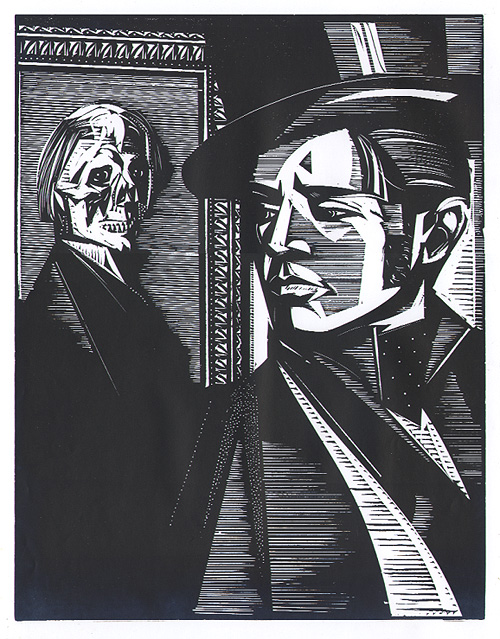
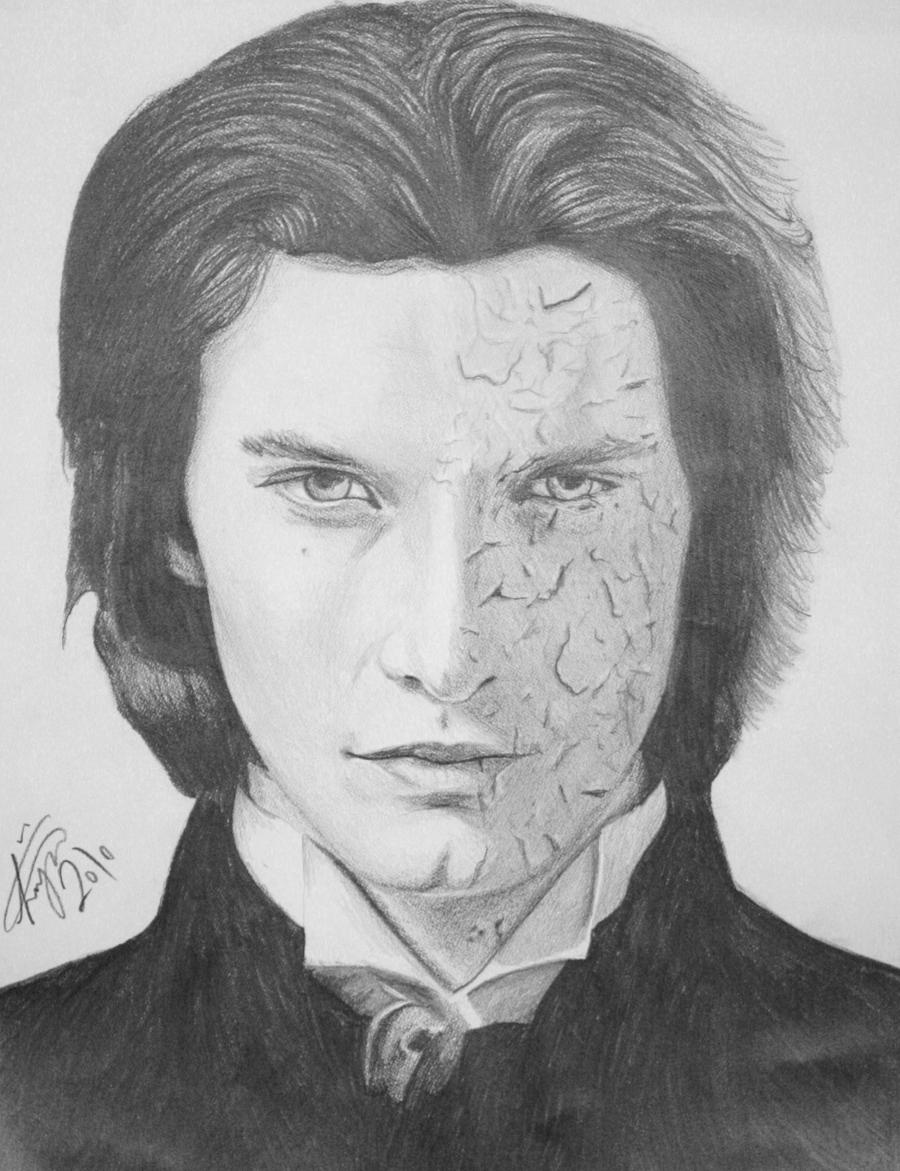
Vanity is one of the themes here, especially that annoying British vanity – the focus on appearance and etiquette, manner of speech and coming off to people as noble rather than intelligent – but Dorian seems to take his vanity too far. The painting that is so goddamn exquisitely described and miserably, painfully created over the course of our introduction to Dorian that it represents an image that is not, in fact, a portrait of the young man, but instead an image of his person. It changes as he maintains his beauty and celebrates it.

He is basically indestructible in high British society because of his beauty, and goes on doing whatever the hell he wants even though his close friend, Lord Henry, has a very similar approach to life and is still a responsible, quite likeable human. But only likeable to us, as his behavior is extremely taboo and scandalous for the time it was written. He talks about marrying a woman he does not love, about art as a career, and even jokes about divorce; in the U.K. in the 20th Century, ‘divorce’ was still treated like a swear word by people who wished to always be polite and proper.

Dorian, on the other hand, takes it all to a totally new level and is a quite despicable creature because of it. From breaking women’s hearts and being a complete ass about it to irritate behavior towards his peers, opium den visits, malice, scorn, and even murder. He is a truly awful subject but is celebrated by proper British upper class folk because they are all just as vain as he is. His hateful, ugly inner self is reflected only in the changes that keep happening to his portrait. It is a very good parallel but had to be very difficult for British noblemen and women – in their 80 pounds of clothes, pantaloons, annoyingly overdone white make-up, wigs and fancy parties – to swallow back in 1870.

Speaking of swallowing, I feel like there may have been a reference to a bit of homosexuality in the book, but I cannot quite put my fingers on it. Or in it, whatever. Lots of scenes really get into depth in describing the immediate surroundings of the characters and offer up pastel descriptions of butterflies and flowers whilst talking about how beautiful the young man is and how his friends much prefer his company over the company of their own wives. It really only adds to the beauty that this dreamy Dorian Gray figure puts out but I cannot help but think that Oscar Wilde may be hinting at something.

Anyway, considering how proper people were at this time, and the class that Wilde chooses as his subjects, it is no wonder it was such a controversial book. Several chapters in this version were not originally published; and this from a society that truly loves good literature. He was really ahead of his time, and his works (this being the only one of his I have read) stand the test of time because of it. Unlike Dickens, who is also awesome, do not misunderstand me, The Picture of Dorian Gray is still a good read in my opinion and has humour we can laugh at even now and points out a tremendous amount of horrible flaws in a superficial society that even people today can appreciate.

Wednesday, September 19, 2012

Destination: Void


Whoa. Fuckin'....whoa.

Don't know how many times I have let Frank Herbert absolutely fuck my mind, but I keep coming back for it. The author of Dune and, perhaps more importantly, mastermind/creator of the Dune universe, wrote Destination: Void, which kicked off the WorShip series that included 3 others (all other 3 co-authored with Bill Ransom).

In an undated near-future scenario, astronauts are sent to the Tau Ceti galaxy to begin colonising a habitable planet. Sounds like a simple enough plot, until Herbert tosses in that 6 prior missions have all ended in disaster, the technology for such a journey is either in its infancy or does not exist, the astronauts are genetically (strategically) placed clones (with clone colonists in hybernation tanks on-board) and have dozens of replacements for each of the four full-time positions out of the thousands of bodies inside said tanks...and biggest of all...semi-self-aware-computers.

It actually is a very short book and a very short read, but many of the paragraphs and Herbertian tirades are in regards to something I just cannot wrap my brain around: the logic of creating a self-aware computer. I'm sure that if I were a computer nerd and made wiring up computers and trying to gain them a consciousness a hobby of mine, plus had a firm understanding of human psychology and the biology of the brain, that I could follow along no problem. Let me just throw a few phrases out there that sound like Chinese to me:

nerve-net simulators; electroform inputs of nerve impulse groups; flux impulses in four dimensions; inhibitory roulette cycles; black box – white box transfer;

Why? Why can't I understand any of this? Maybe it is just me being an idiot and I will shut up about it.

The good news is, however, that this takes nothing away from the book. As I did not fully understand what was going on with the wiring of this system, I appreciated it as an effort, a means to an end, to get a self-aware computer constructed. And that is exactly what all this is, so it is not imperative to the plot. But once shit starts getting constructed and happening...whoa man, hold on!

The first brains, the organic mental cores, which are crude versions of humans' early attempts at constructing self-aware computers, have human brains acting as the emotional/reactionary/survivalist side of the ship's computer. They all go mad, and are destroyed. The astronauts are then completely on their own save for the others in hibernation. When I had this much of the book in my brain's grasp I told myself this is basically what 2001:A Space Odyssey would have been if it were fucking great.

Instead, Herbert spends the next 180 or so pages (of 200, mind you) fucking with the reader on what it means to be conscious. Just soak that in for a second. What does it mean to you? This discussion could go on for years, and has. It has evolved since the first philosophers. Even before Diogenes the Cynic helped us bridge the gap between man and animal.

To me it has always been signified by goals. Seeking more than survival and reproduction, but setting up goals for ourselves. Aspirations. Shit like that.

But this book does not stop there. Not only is the question a constant issue amongst the crew and constant theme throughout the book, but there are other, brilliant, typical Frank Herbert ideas thrown in there to help get your brain motivated and thinking of new, novel, ideologically challenging concepts.

It was interesting to me that the ship's Psychologist is also the ship's Chaplain, for example. Why? Because psychology is not much for an exact science, and has assumptions associated with it and diagnoses that are based on historical symptoms and behaviour of the human. Religion is not so different from that, now is it? He also comments later on that both Religion and Psychology are methods of healing, specifically healing people's brain or intellect. I can attest to this. Because when one feels uncomfortable with an anxiety brought on by substance abuse there are two overwhelmingly popular choices people make to seek treatment: Religion (e.g. Jesus, e.g. Being born again) and medical (e.g. psychological) treatment. It happens like that, not just limited to those two but much more often than not. Honestly, it does!

Another great moment is when men are trying to teach the computer life and death by teaching it what it means to preserve a life dependent upon its systems – in this case a farm animal in gestation/fetus phase that the colonists could use if they land at their destination – and the computer decides to kill it, just to learn its limits, learn of its own behaviour and maybe even test its own powers. Well one of the most hopeful men on the crew for this test working out is the Life Systems Engineer. And of the people on this crew, of the four awake, of course the Life Systems Engineer is going to have the most trouble seeing past this self-aware-computer initiated abortion. And it shows.


Moments like this happen in a Frank Herbert novel within a sentence or two, and it is all thanks to his amazing ability to develop characters. You see more of what is going on inside their heads than with any other story-teller. The female working in the group of four has a much different but equally as interesting role. She is a clone placed on board because of her natural ability to lead, care for others, and juggle several responsibilities at once. As such, her independence is driven by certain chemicals and offset by others that showcase her caring side, and whatever it takes to match these Herbert explains that it inadvertently forces her to be extremely sexually active by nature. She takes chemicals to reduce her sex drive, but she also experiments, due to the pressure of the situation, with chemicals that enhance her awareness and help her ponder as the crew tries to wrap their minds around  consciousness. The taking of these drugs displaces those that reduce her sex drive, and soon enough she is conflicted by constant sexual thoughts, fantasies and desires.

Seriously, for such a short book the character development is incredible. I could go on, but I won't. Instead, I'll just say that everyone should be reading plenty of Frank Herbert, and once you get accustomed to his style, then you can delve into this one, because it is complex and difficult to follow but extremely brilliant.

Saturday, July 21, 2012

Kalpa Imperial


This collection of short stories chronicles the Greatest Empire that (n)ever was, a sort of fictional history about a fictional empire that remains true to South American style fantasy worlds. Rather than load it with monsters and dragons and legendary heroics, it shares relatable common heroes/heroines in their all-too believable world that mirrors ours, or at least a universe we recognise as something that actually exists. South American fantasy worlds like those created by Gabriel Garcia Marquez are never so unbelievable that you feel it is difficult to get into the story.

Argentine author Angelica Gorodischer is no different. Though some of the history is a thinly veiled sarcastic commentary on greedy, despotic rulers and the problems with monarchs who hand down the reign to the next generation of poorly raised high-born tyrants, many of the stories involve on the philosophies of the outsiders: story-tellers, noblemen, rebels and workmen and peasants and their impact on the various Emperors.

The second to last story I found very interesting, it involved an individual who escaped the Empire and its reach to head south, the South, if you will, where savages live in small villages and have none of the benefits/drawbacks that the folk living within the Empire receive. His quest is one of escape and survival at first, but takes an inadvertent turn and becomes a quest for knowledge. There are some prophecies and other nonsense, and eventually the Empire comes for him and all hell breaks loose in a few pages; but what I noticed about this short story is how closely it mimics the plot of Robert Silverberg’s Nebula Award winning novel A Time of Changes (1971).
I don’t wish to make this review too A Time of Changes­-y but I will say that it is a fantastic novel. A lot of egoism and hence, individuality, has been banned from the states that make up the empire in the civilized North. A drug that opens minds (this novel came out the same year as my favourite movie, Vanishing Point, also about individual freedom and rampant drug use, and I don’t believe that is by mere coincidence) and teaches people the of love, comes from the uncivilized Southern continent (no silly, it is not a sci-fi Colombia, or Kolombya or anything like that) and after using it regularly and realizing he just does not fit into his society, the protagonist loads up on drugs and begins expanding people’s minds. He makes almost a diplomatic mission of it, not so much to change the culture but to share love with the people he cares about. After getting into some majour shit for this, he fleas for the south to live with the natives down there, score some hallucinogens and live in the desert until, alas, the Empire comes for him.
They sound similar, do they not? Well something about that sort of world, that sort of treachery and intrigue sets up an enjoyable atmosphere for me in both stories. And the writing styles by the authors are sufficiently different, with different worlds and different characters with varying purposes that each story is unique, despite my trying to make them sound like the same thing. I am also glad I read A Time of Changes first because I would hate to have started that book and then, 60 pages in, gone “ah wait, I know how this one ends.”
Some of the stories in Kalpa Imperial are actually weak; they just cannot all be winners. But the good ones are very good and the universe in which it takes place is at least consistent and consistently interesting, and very well thought out. I would recommend this book to any casual sci-fi/fantasy fan, but since there is no hardcore magic or monsters I would be hesitant to get LOTR nerds or sci-fi space alien loving nerds into it. Great read though.