Popular Posts

Showing posts with label Murder. Show all posts

Thursday, August 15, 2013

Make Room! Make Room! - Harry Harvey Harrold-Harrison

“SOYLENT GREEN IS PEOP – “ wait no, that was just the movie. A movie which is, admittedly, loosely based on the book. So there are no dead bodies floating their way through a factory coming out as green crackers of protein. Though I must confess, I was constantly examining the pages left until the end as I approached the climax of the book thinking “when is he going to follow his dead friend to the Soylent factory?” 

Though Charlton Heston is once again wonderful, perhaps more so when written as a character, this book is very different from the movie.  And different in a way that can still truly be appreciated. It is a detective novel in a dystopian, poverty-ridden, overpopulated, hungry world. A much less technologically advanced and shittier-outlook-on-life futuristic detective novel than, say, The Blade Runner. The universe is constructed well, much better than the sort of abstract android-assisted future in Blade Runner and certainly a much more believable future than the universe in Suzanne Collins’ The Hungry Games series. Both of those dystopias are very different, I get it, but the United States and, specifically, New York City in Make Room! Make Room! is so well constructed, probably because it focuses on a much more near-term crisis, only a couple generations out from when it written.

Another element I enjoyed is how it is set essentially in one small area, in Manhattan, in a single precinct of Manhattan virtually the entire book. The weight of the problems shared by the famished of the entire world seem to bear down harshly on the citizens of New York, and as overpopulation, hunger, and violent crime are main elements, NYC makes the perfect setting and there really is no need to stray from it; the city is expanse and populated enough to house a complete murder mystery novel in one individual precinct.

The relationship between Sol and detective Andy Rusch is also interesting, as is pretty much each relationship Rusch has. The dynamic of the two is so polarizing that it is almost comical, and because there are similar relationships with friends and family of mine, I did find it rather entertaining. Sol seems to have a wise man’s approach to the world’s problems: is a very level headed, rational thinker and backs up his philosophies with sound reasoning or, at worst, relevant experiences. He is willing to sacrifice himself and his goals to see that the world becomes a better place. Yet he does nothing to change the direction his path is taking or make his voice heard, until it is too late.

Andy, by comparison as well as contrast, will put up with nearly any injustice as long as he has a place to call home and a job that can help support a recurring source of food and water. He is very career-oriented, puts his job and his income above his personal happiness, will sacrifice his relationships to follow orders, and even when shit hits the fan and all signs point to him needing a change of scenery, he cannot let go of that steady job in such a great depression.

His relationship with Shirl is even more dynamic. Those two have issues, people in poverty and trying to be happy whilst still making sacrifices type issues. And when the man works so doggedly, so exhaustingly, and the woman has nothing to do but lament her past life as a playgirl, she tends to seek escape and sleep with other people. Happens in mining towns all the time. This instance was really very believable to me. 

The end of the book features very nasty breaks of Andy’s relationships, pretty much every link to him in the story either fades, escapes, or dies. He is all alone, but cannot let go of his fear of losing what he has to stand up for himself. And if we do not recognise that is what drives people to sacrifice their personal freedoms and liberties for the sake of economic or social security, then we have learned nothing.

Good book.

Lastly, as I was finishing this book, THIS was being hotly debated in my office. Not just its existence, the background of the nature of the research, the funding, but the implications and corporate supply/demand/marketing capitalistic flaws inherent with new technologies. I was excited for it, but humanity's, specifically capitalism's, track record with stuff like this is very poor (*cough* MONSANTO *cough cough*). 

Monday, July 8, 2013

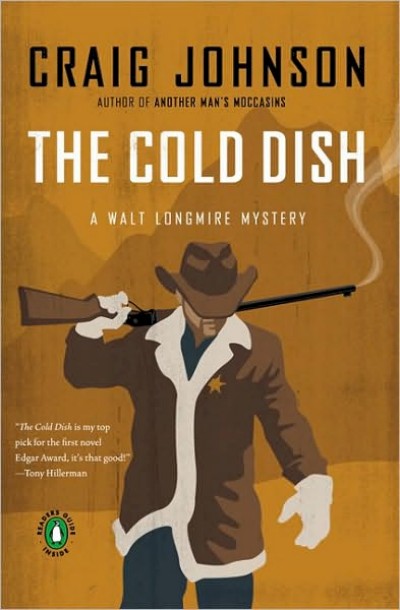
The Cold Dish - Craig Johnson

Gazpacho is a dish best served cold. That is mostly what this book is about. Cold dish stuff. Like revenge. And vengeance. And avenging someone. Any and all venge related words happen here, and the Sheriff is trying to play detective to prevent the vengeant from avenging, revenging, and vengancing the vengee. The characters are pretty good in this story. The main character is a bit down, feeling sorry for himself, and lives in a self-loathed squalor. But he truly is a great sheriff, very representative of small town law enforcement. Even drinks on his way home in his cruiser.

After his wife died, he did not necessarily go into a deep dark depression, but instead just melted into a sloppy, unmotivated, unambitious version of himself. Then the murder happens. Talk about a hell of a shot, ballistics and detective work eventually find out the round was from a Sharps .45-70. One of the best rifles ever made. Not so much a rifle, really, but a shoulder cannon. Or better yet, an explosion that just hurls a baseball weight of lead at its target hard enough to put a bison down at 300 yards. Hence the name, Buffalo Rifle. It is also capable of taking down a person at a better range, though that takes a great shot and even a bit of luck, as the bullets do not fly very true beyond 500 yards, which tends to be its practical range for shooting targets in the field.

In any event, the author knows much about this gun and other guns in general, and as the sheriff learns about them, everyone gets walked through the history and the mechanics of these  breech loading canons. Truly awesome weapons, but very difficult to shoot. Pretty funny, also, that there are so many in such a small town. Irony that is not lost upon the sheriff, which I appreciate. Kind of like a moment when the character in the story says “this story is sort of weird, but okay.” I think this happened on multiple occasions, but my memory is a bit foggy on the other instance. It was something to the effect of him answering another member of the community with “I’m not sure it’s a murder mystery yet, but if it is, there aren’t many butlers in these parts.” Not sure the details of the joke, but I make butler jokes all the time in murder stories so I thought it was great.

Again, the characters were all great, Henry Standing Bear probably the best of them all. Omar in perhaps a close second, but virtually all characters, very minor or major, had their own identity, contributed something to the storyline, and created that bit of small-town community whilst still being true to the small-town drama queens that I am more than just a little familiar with.

The pace was great, the mystery was pretty good, and the ending was getting to be a bit frustrating but ended up being okay. Violent, and violent to the point of the author taking the approach “we don’t need to talk about how gross that is, but trust me, it is devastatingly disgusting.” A .45-70 is capable of incredible damage, and I felt the damage it did to the murder victims wasn’t sensationalized or over-exaggerated. But in the end? Best we all don’t know how that one ended up looking.

This was enough to throw the sheriff into a strange depression. It lasts for several weeks, and by the time the book is over we don’t know if it will last longer, be something he carries with him forever or just gets over and gets back to being the sheriff. Guess we’ll have to read the next one to find out.

The combination of old school style, vaguely sexist and only slightly above the law, makes me think of the noir mystery novels I really like. But set in a contemporary western environment I can relate to much more. Pretty good combination, though I still will deny it being a great book, I will say it is a good one. Maybe because a mystery series just isn’t really my thing.

Wednesday, April 17, 2013

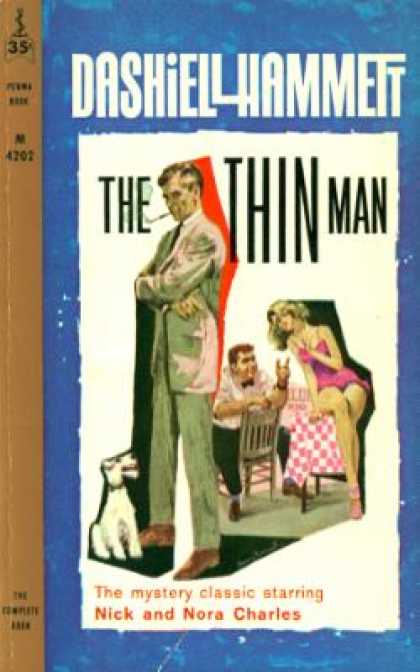
The Thin Man - Dashiell Hammett

Dashiell Hammett is a wonderful writer. This is the third book I have read of his, and though I feel it was the least strong and found it boring  at times, he still has a charm that I cannot deny turns me on. In the same way Don Draper’s charm turns people on, if you follow me.

His stories are typically prohibition era private-eye or consultant detective solving a murder mystery or busting up a crime ring. The Maltese Falcon was my introduction to him, and featured a great detective who did not trust anyone trying to find a missing treasure, which is a falcon of gold from Malta, if you can believe it. The hero is a highly intuitive, rough and stoic chauvinist who openly admits to not trusting or loving anyone and this seems to always work to his advantage in solving crimes. Red Harvest was another great book where a man who essentially owns a town with his wealth is seeing it slip away after the murder of his son, so he hires a private-eye, the best in the business, to come set the town aright. The private-eye does actually very little, but learns from everyone by being agreeable, receptive, and working “on their side” and eventually, the 4 different crime-rings are at full on war with each other and the hero watches the town destroy itself. It is the only way to purge the town of the evils that plague it. It is very violent and very clever. 

This book, though very much lacking in terms of action (only one scene where the protagonist is shot and wounded), is also very clever and features a detective carved from the same block as the other two stories. Only difference is this guy is married, and the sexual tension between he, his wife, and each partner’s friends-of-the-opposite-sex is really entertaining to me. Young girls and mature women alike all seem to love Nick Charles, and men off all different backgrounds in the story cannot seem to get enough of his wife Nora. And because they are constantly detecting, they each flirt back incessantly. I think it is a fun new angle from the types of characters I am familiar with through Hammettt’s stories.

The plot of this one is pretty basic: lover of an inventor is murdered. Ex-wife and her family, who have worked with the vacationing, retired, Nick Charles in the past, are expected to be involved. The current detective on the case ends up using Nick as a consultant of sorts. And even though Nick wants nothing more than to refrain from getting involved, he just cannot help it. The people in the Wynant family are all great characters: the eccentric inventor ; the lying, harsh and violent cougar-attractive mother; the equally as dangerous and untrustworthy yet incredibly beautiful daughter; the strange detective-hopeful son with a knack for spying on everyone; and the wife’s new husband and step-father to the children,  supposed Frenchman Chris Jorgensen.

Everyone is hiding something and Nick and Nora trust nobody. Instead, their method of solving this murder is to visit speakeasies and hose down the degenerate low-class criminals with alcohol and flirtatious charisma to get’em talking. In typical Hammett fashion, very few pages remain when the crime is still unsolved, but without giving anything away the hero pretty much has a final grasp of what is going on here. Then, as news unfolds, his chess pieces in place, he is able to kick the gate open on the whole thing and everyone goes home no longer confused but still very uncomfortable.

I do believe it to be the weakest of the 3 I have read of his, but refuse to back down on recommending Hammett as a great American all-around detective novel badass. I would suggest that anyone with any desire for those types of stories should start with the Maltese Falcon and then try out the less-clever-yet-much-more-violent Red Harvest.

Wednesday, March 27, 2013

Dandelion Wine – Ray Bradbury


First off, I’d just like to say that if you are reading this blog and you are not a Ray Bradbury fan, then kindly fuck right off and close this browsing window right this instant. He is one of the few authors I can apply the term “electrifying” to.  He dazzles. He makes me wonder at how great writing can be. And he makes me feel ashamed that I do not appreciate him enough. I own many books of his, several I have thoroughly enjoyed, some I am yet to read, and his short stories sit in a rather large volume on my shelf, unmolested, much to my dismay but entirely my own fault.

Many authors bring many different styles, and I have reviewed a large portion of my favourite authors on this blog: Neil Gaiman can write circles around the reader with a very “that’s exactly how I feel!” sense that comes to mind when he is read; Frank Herbert has a quality of delivering incredibly well thought out, unique plot-twisted and intense epics; Stephen King can wrap popular culture around a jagged, rusty blade of a storyline and stab it violently towards your eyes; Orson Scott Card will generally find the qualities of life you enjoy and use them as leverage to tear down a main character until he is the exact opposite of everything he is allegedly standing for; but Ray Bradbury remains un-trivialised on my blog. Let us change that, shall we?

He is, to me, what happens when incredible writing meets the everyday observation and is sprinkled in with a very modest, un-voluminous yet extremely powerful darkside. He does not dance around in his own cleverness the way Neil Gaiman does, yet they are very similar to me. He also does not bathe the heroes/heroines in despair quite the way Herbert or Orson Scott Card would, but I can see the relations and inspirations between them all.

Dandelion Wine represents to me a complete novel that fulfills all that I felt The Martian Chronicles lacked. Understand they are completely different books with nearly nothing in common. But both are novels compiled of essentially independent short stories tied to a central location/setting. I loved The Martian Chronicles, loved how it painted humans and our relationship with a new culture that is more of a state of consciousness than a simple second sentient race. But it lacked ringers. Stories that made you put the book down and take a few paces around the room, taking time out to appreciate the experience.


Dandelion Wine does not lack these moments. I do not feel I need to get specific, both for the sake of not spoiling anything for readers of the blog who have not yet read the book as well as for those of you who may have felt the way I did only with different chapters, but this book had individual stories of supreme brilliance.

Whether it was a simple description of the atmosphere one feels when in the prime of summer; the dread of seeing summer’s end; the thrill of scaring one’s self; the fear/acceptance of death and celebration/acknowledgement of life; everything seemed to be so clever and extremely relatable in the analogies and descriptions. In the end, I felt I lived through that Midwestern US summer of 1928 with Douglas and Tom in Illinois.

Whereas authors like Gaiman can be polarizing with their cuteness and subsequent filth in times of comic relief setting the stage for a quick, dark surprise, I felt like Bradbury simplified things in this book. Which serves well as much of the story revolves around two young boys, one a teenager and his brother a ten-year-old. Together they fantasize about the endless possibilities of new shoes. They philosophise and write down everything they learn and categorise human behavior as something “traditional” or “new”, something I found highly advanced for kids but was jealous of their cleverness; not because I could never think of that but because, in my experience, brothers tend to have a mutual let’s see what the riskiest thing we can do/dumbest lie we can tell/most dangerous behavior  complex. Not always, but two young males usually push each other in much the same way as Douglas and Tom, only in a direction that is less productive. So that was cool.

Wednesday, February 13, 2013

The Picture of Dorian Gray - My intro to Oscar Wilde


The Picture of Dorian Gray is a book I hear about and know a lot about without actually reading until just very recently. People love it, and it isn’t surprising to see why. It was very outside the box, very much taboo and spoke out loudly – flamboyantly? – against the social/societal norms of Elizabethan British Propriety.

I feel so improper writing that sentence, but it feels good. The book is about much of what I like to tease people about, the idea that you can screw social norms and live your life by the simple rule: Do what feels good. 

I have a feeling that most noble men and women who live by similar standards, like Lord Henry (Dorian Gray’s friend and sort of mentor figure), can do this responsibly and without hurting anyone. But Dorian is immature and very, very vain. Not to mention he misinterprets what his mentors are trying to pass down to him and applies their lessons to become more cunning, more conniving and cleverly use his good looks for intentions that are not only selfish, but actually harmful to others.

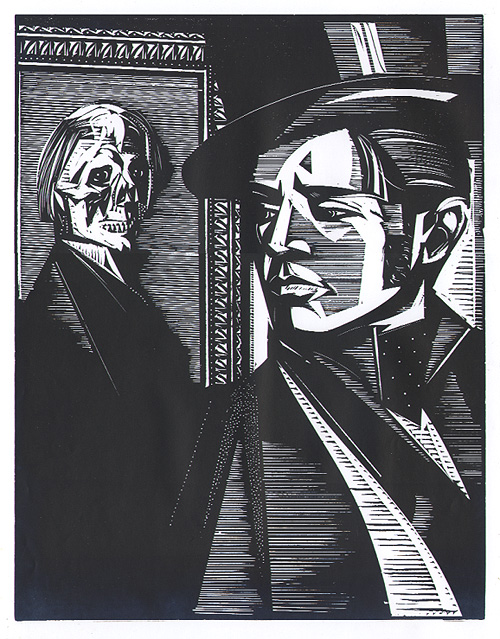
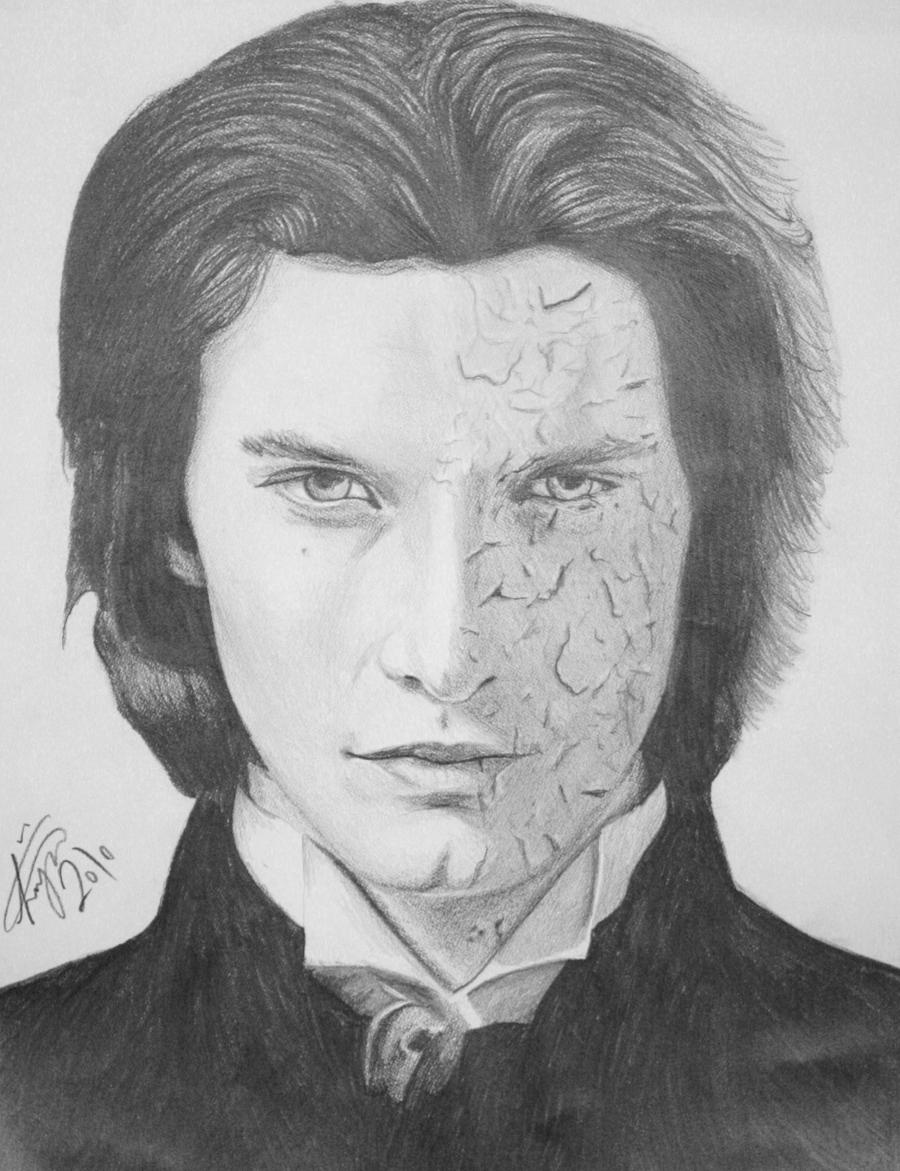
Vanity is one of the themes here, especially that annoying British vanity – the focus on appearance and etiquette, manner of speech and coming off to people as noble rather than intelligent – but Dorian seems to take his vanity too far. The painting that is so goddamn exquisitely described and miserably, painfully created over the course of our introduction to Dorian that it represents an image that is not, in fact, a portrait of the young man, but instead an image of his person. It changes as he maintains his beauty and celebrates it.

He is basically indestructible in high British society because of his beauty, and goes on doing whatever the hell he wants even though his close friend, Lord Henry, has a very similar approach to life and is still a responsible, quite likeable human. But only likeable to us, as his behavior is extremely taboo and scandalous for the time it was written. He talks about marrying a woman he does not love, about art as a career, and even jokes about divorce; in the U.K. in the 20th Century, ‘divorce’ was still treated like a swear word by people who wished to always be polite and proper.

Dorian, on the other hand, takes it all to a totally new level and is a quite despicable creature because of it. From breaking women’s hearts and being a complete ass about it to irritate behavior towards his peers, opium den visits, malice, scorn, and even murder. He is a truly awful subject but is celebrated by proper British upper class folk because they are all just as vain as he is. His hateful, ugly inner self is reflected only in the changes that keep happening to his portrait. It is a very good parallel but had to be very difficult for British noblemen and women – in their 80 pounds of clothes, pantaloons, annoyingly overdone white make-up, wigs and fancy parties – to swallow back in 1870.

Speaking of swallowing, I feel like there may have been a reference to a bit of homosexuality in the book, but I cannot quite put my fingers on it. Or in it, whatever. Lots of scenes really get into depth in describing the immediate surroundings of the characters and offer up pastel descriptions of butterflies and flowers whilst talking about how beautiful the young man is and how his friends much prefer his company over the company of their own wives. It really only adds to the beauty that this dreamy Dorian Gray figure puts out but I cannot help but think that Oscar Wilde may be hinting at something.

Anyway, considering how proper people were at this time, and the class that Wilde chooses as his subjects, it is no wonder it was such a controversial book. Several chapters in this version were not originally published; and this from a society that truly loves good literature. He was really ahead of his time, and his works (this being the only one of his I have read) stand the test of time because of it. Unlike Dickens, who is also awesome, do not misunderstand me, The Picture of Dorian Gray is still a good read in my opinion and has humour we can laugh at even now and points out a tremendous amount of horrible flaws in a superficial society that even people today can appreciate.