Popular Posts

Showing posts with label Space. Show all posts

Thursday, October 10, 2013

The Illustrated Man – Ray Bradbury

Another short story compilation, but tweaked slightly to present a set of stories told by a drifter that all relate to his unfortunate condition. Aside from the massive Everyman’s Library omnibus of short stories, this is the third novel-length and novel-published book of Bradbury’s I have read that is actually more of a collection of short stories: The Martian Chronicles and Dandelion Wine being the other two.

The other two are also much stronger. This one has some great stuff, I enjoyed quite a few of the stories, but for the most part the book seemed to drag on and on without actually providing much suspense or any reason to keep reading more. So it took me a long time to finish. Some of the stories had suspense – like the one about the astronauts in the explosion who are all drifting through space alone until they crash into something or are taking out by something (speaking of which, isn’t that the plot for the new George Clooney/Sandra Bullock movie?) – but they were all over so quickly.  

Nothing felt really gripping, or profound. Just a bunch of stories that all featured a rocket in some way or another. The one about the Rocketman who does not want his son to grow up to be one like him was probably the closest thing to the profound story that I have come to associate with Bradbury. Either that or the final story about the Illustrated Man himself. They were both kind of fucked up. But for the most part, everything felt kind of meh. Sort of feel indifferently about this one, but I am glad I am at least tearing through the Bradbury section of my library.
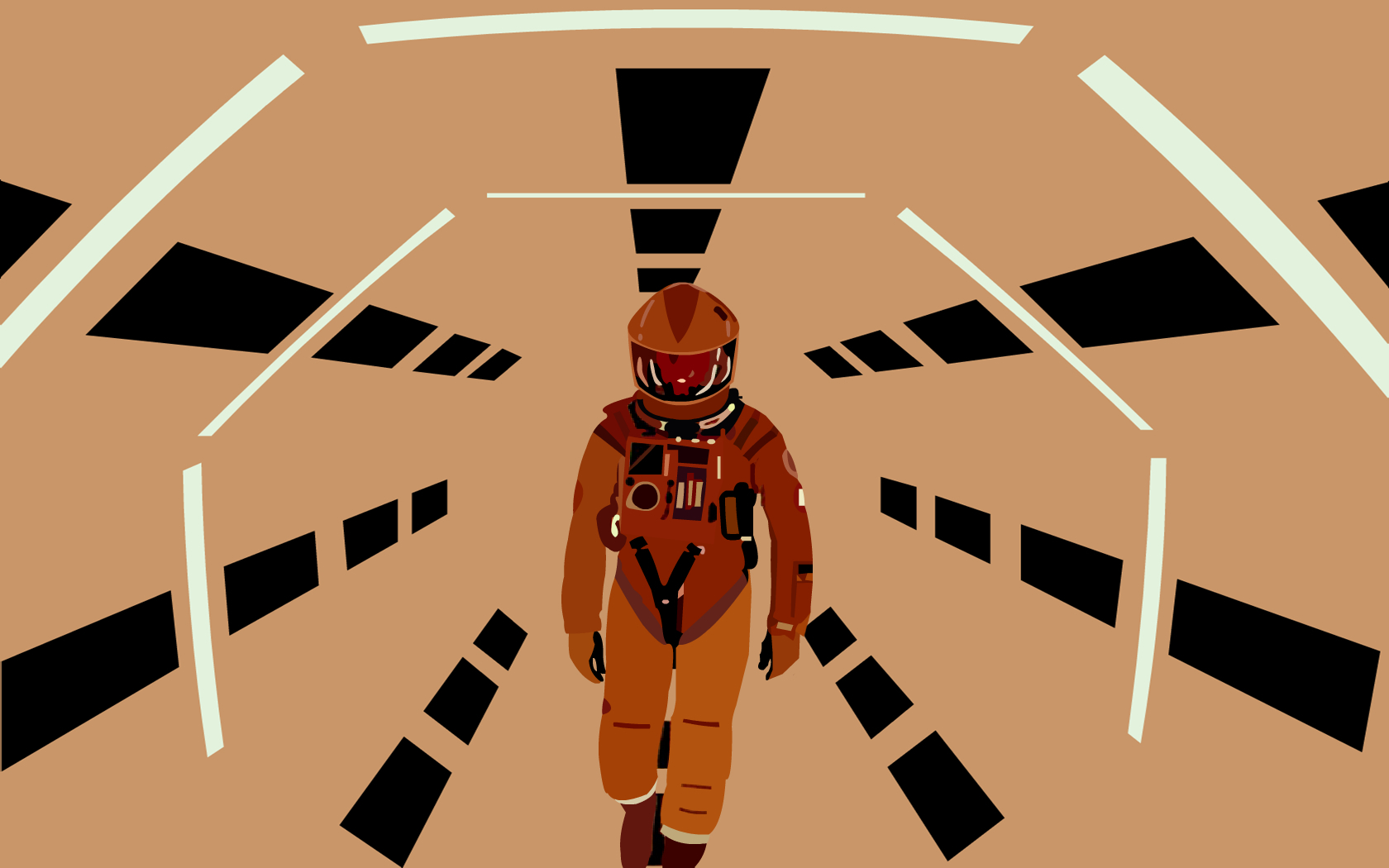
Also of note, just after I finished this book, the Simpsons released their latest Halloween special “Treehouse of Horrors” episode, which featured an opening sequence directed by legendary horror/thriller filmmaker Guillermo del Toro. Why is this of significance? See if you can spot why:


Monday, February 25, 2013

Fountains of Paradise

Arthur C. Clarke is known for his dedicated research and devout worship of all things science in his books as much as he is known for eventful, mind-boggling “getaway” endings that attempt to lose the reader. I made the second half of that sentence up but most people I know of who watch his movies/read his books agree with it, so let us move forward.
I love this guy. And I am very glad one of my friends recommended him for this month’s (January, actually) book club item; whereby “recommend” I mean I berated him for not having enough recommendations to bring to the party and promptly told him I’d have no more input into his career, education or personal life unless he toss in the fifth of my four recommended books into the list (I’m exaggerating, I will freely admit. It was the 7th of four books I was allowed to add to the list of our Book Club. Bratty much?) and we all agree to read it.
That being said, everyone in the group seems rather thankful it made its way into the list. It was recommended as a book for “people who like Arthur C. Clarke before he got weird” and I interpret that as “before his writing got real shitty,” which some of his later books definitely are. It represents the last of an era of greatness for Clarke (again, according to people whose opinions on which I rely), and was written in 1979. Keep that year in mind if you pick up any other books of his. Think of it as Pre-Sequels-to-Space-Odyssey-and-Other-Crap.
This one is really great though, I thoroughly enjoyed it. The main character is an engineer, so BOOM, it is a favourite of mine already. Not merely an engineer but a damn experienced one, and Clarke knows much about the field, more than people who work alongside engineers, I might add (for those of you who don’t know me on a personal level, I am an engineer. A shit one, granted, but one that understands, however poorly, the requirements of the field).
Clarke absolutely nails the thought process of the engineer and his attitude toward others. Ambitious, always hoping the next project is bigger than the one before, doing more to ensure it is well funded, innovative, safe, aggressive and unique, and best of all, well-funded. He even goes so far as to pointing out, upon hearing about the economic implications/impacts of his greatest project: “You don’t need to explain economics to me, I’m an engineer.” I believe it is a conversation with an accountant. Which is exactly right, for most us in the engineering field. Not that there is any hard feeling between us and accountants (which, of course, there are), but that we are scolded/praised so much by the powers that be on the value of all of our innovations, that by now we are experts on the economics of each solution to each problem. Granted, we still miss a few things, but in the big scope, we have all had enough feeback and criticism by upper-management to cover our collective asses.
Other things I loved about this book: Starglider. A supermassive, hyper-intelligent data gathering satellite that comes through to make contact with any and all life forms/life sustaining planets! Could you just imagine the possibilities? It can learn new languages rapidly and thereby easily communicate with us. Oh the things we’d tell it! Turns out we send it, straight away, the Encyclopedia Britannica and a few other bits. Then we let philosophers talk to it and it promptly talks down to us on the basis of religion, which made me re-think my Amazon.com Wishlist queue of “The Summa Theologica by St. Thomas Aquinas”. I mean read the damn book because I can’t sum it up in a funny way for you, but trust me, aliens arguing our “God” with us is funny. Funny is capped off by hilarious when the humans realize their religious views make them look like violent cukes, potentially, and then further come to the realization that, “SHIT! It’s too late to ask for the Encyclopedia Britannica we sent up back!”
What I like about this book is that is has a great pace, almost like a good movie, but ties in science, engineering, made-up history and religion in all the ways I appreciate in a good book. Religion, especially that of “this is sacred ground” all too often impedes the progression of important scientific research. I see it often with the monumentally large binocular telescope atop the mountain in my backyard (Google Mt. Graham Large Binocular Telescope and I bet half the articles of the first few pages are dedicated to Anti-Observationalists’ propaganda). But there are ways to defeat religion with logic, and this one happens in such a way that you do not have to feel the dirty capitalist project engineers unfairly exploited the environment. Things just needed to move on, and they happened from the inside out for the pilgrims. Plus some needling from aliens.
My favourite quote of all during the book, however, was when the engineer is trying desperately to reach a crew of scientists working from space back down towards Earth on the tower as it descends through space to reach the atmosphere:
                “If Morgan had been able to pray, he would have done so.”
That sentence said so much to me about hope, hard work, science, logic and reason, and religion.
All in all, an absolutely wonderful and fun book. Its non-linear fashion of writing is a reminder to me of what makes a great author. The immense amount of science and research put into it also reminds me of how some Sci-Fi authors refuse to half-ass their fantasy worlds. And lastly, the imagery in this book during all the activity, when described rather in-depth by Clarke, is beautiful and makes me proud of our accomplishments and knowledge gained in the time since its writing.

Wednesday, January 9, 2013

The Man Who Sold The Moon

Early Robert Heinlein! Always a great read, no matter where in his career you find yourself as you dig through  the gems of his literature.

I read this book not too long after watching the History Channel series, The Men Who Built America. Which is about how strong armed, cut-throat, ruthless, ambitious, and never-satisfied our turn of the century (the earlier one) entrepreneurs were. It chronicles the corporate lives of Cornelius “The Commodore” Vanderbilt, JP Morgan, John D. Rockefeller, Andrew Carnegie, Thomas Edison, and to some small extent, Tesla, Ford and Charles Schwab.


The fun thing is how people revere what these assholes did for American free market Capitalism. Which is to say, they forced federal regulation in a lot of areas. They also were key in bringing about labour unions, ending monopolies, and breaking ground on federal anti-trust lawsuits. Plus a few other things in terms of stock market and inner-company control were made illegal after these guys had their way. I mean, whoa, I know they were crooked back then, but to be the wealthiest humans in the entire world and battling like that, trying to end the other moguls? It was crazy!


How does that relate to this book? Well free market capitalism, when we can find loopholes in the federal government, really helps the rich get richer. But in this instance, the rich man, Delos David “D.D.” Harriman, isn’t out to make himself personally wealthy just for the fuck of it (like Steve Jobs). He is out to do it and raise enough money to get us to the moon. And eventually, get us to expand to more than just this tiny planet (which isn’t dying, by the way).


The concept of expansion, colonization in space is favourite of mine in Science Fiction, I feel we need to help support that. Companies like Planetary Resources backed by Google billionaires trying to expand our natural resources, Blue Origin backed by Amazon founder Jeff Bezos, and Red Bull with their Stratos jump are all examples of privately funded space exploration opportunities that provide more science and learning than NASA alone could ever dream to offer. And I like all that. And so does Robert Heinlein.


The difference is that he wrote this in 1949 before NASA was what we think of when we think space exploration. So he wrote about a corporate mogul, a real wealthy bastard swindling his way to get ownership rights to the land, and mineral rights, and a space craft, for the goddamn moon! Maybe it is difficult for some to put themselves in the position of how it could be exciting to try and claim the moon in the name of exploration and exploitation in the days before NASA, but not for me.


How does he do it? Simple. First there are some mergers and investors coming online with loads of more cash to support this venture and claim some part of the moon once they are there, plus corporate advertising giants and why not sell out to the media and take the highest bidding studio to make the documentary of the project? Then there are children. Like 40 million of them or whatever. He says if they each send a nickel to him, he’ll have their names individually engraved on a plaque that is going to be planted there as a memorial for the first ever lunar landing. But if they send 1 dollar, they get an autograph from the astronauts, plus other cheap swag! He neglects to mention this plague’s engravings are microscopic so as not to take up weight on the craft’s journey. He also sets up a non-profit organization, like National Geographic or B&MGF shit, which allows for a massive amount of money to roll in from people interesting in this project, and since it is led by the same tycoons all their work goes to it, but at the last moment the non-profit foundation makes a massive donation to the project. Awesome.


It is a future history tale, so there are chapters of other things going on, plus some corporate/federal regulation fights over patents that aren’t so pretty, including some pretty damn accurate conspiracy theories. Or at least, close to what we have seen in our history with some innovative minds *cough* Tesla! *cough*cough*.


I love American capitalism when it works this way, and I love people’s ambitions to get us off this fucking rock, before everyone goes mental. Let us expand! Let us conquer! And regardless of what that tree hugging hippie next to you says, don’t ever lose that ambition and drive to conquer all, it is our key to getting off this fucking rock and putting our roots in other places. Earth first, moon next, Mars after that, and later on, the rest of the stars!

Wednesday, September 19, 2012

Destination: Void


Whoa. Fuckin'....whoa.

Don't know how many times I have let Frank Herbert absolutely fuck my mind, but I keep coming back for it. The author of Dune and, perhaps more importantly, mastermind/creator of the Dune universe, wrote Destination: Void, which kicked off the WorShip series that included 3 others (all other 3 co-authored with Bill Ransom).

In an undated near-future scenario, astronauts are sent to the Tau Ceti galaxy to begin colonising a habitable planet. Sounds like a simple enough plot, until Herbert tosses in that 6 prior missions have all ended in disaster, the technology for such a journey is either in its infancy or does not exist, the astronauts are genetically (strategically) placed clones (with clone colonists in hybernation tanks on-board) and have dozens of replacements for each of the four full-time positions out of the thousands of bodies inside said tanks...and biggest of all...semi-self-aware-computers.

It actually is a very short book and a very short read, but many of the paragraphs and Herbertian tirades are in regards to something I just cannot wrap my brain around: the logic of creating a self-aware computer. I'm sure that if I were a computer nerd and made wiring up computers and trying to gain them a consciousness a hobby of mine, plus had a firm understanding of human psychology and the biology of the brain, that I could follow along no problem. Let me just throw a few phrases out there that sound like Chinese to me:

nerve-net simulators; electroform inputs of nerve impulse groups; flux impulses in four dimensions; inhibitory roulette cycles; black box – white box transfer;

Why? Why can't I understand any of this? Maybe it is just me being an idiot and I will shut up about it.

The good news is, however, that this takes nothing away from the book. As I did not fully understand what was going on with the wiring of this system, I appreciated it as an effort, a means to an end, to get a self-aware computer constructed. And that is exactly what all this is, so it is not imperative to the plot. But once shit starts getting constructed and happening...whoa man, hold on!

The first brains, the organic mental cores, which are crude versions of humans' early attempts at constructing self-aware computers, have human brains acting as the emotional/reactionary/survivalist side of the ship's computer. They all go mad, and are destroyed. The astronauts are then completely on their own save for the others in hibernation. When I had this much of the book in my brain's grasp I told myself this is basically what 2001:A Space Odyssey would have been if it were fucking great.

Instead, Herbert spends the next 180 or so pages (of 200, mind you) fucking with the reader on what it means to be conscious. Just soak that in for a second. What does it mean to you? This discussion could go on for years, and has. It has evolved since the first philosophers. Even before Diogenes the Cynic helped us bridge the gap between man and animal.

To me it has always been signified by goals. Seeking more than survival and reproduction, but setting up goals for ourselves. Aspirations. Shit like that.

But this book does not stop there. Not only is the question a constant issue amongst the crew and constant theme throughout the book, but there are other, brilliant, typical Frank Herbert ideas thrown in there to help get your brain motivated and thinking of new, novel, ideologically challenging concepts.

It was interesting to me that the ship's Psychologist is also the ship's Chaplain, for example. Why? Because psychology is not much for an exact science, and has assumptions associated with it and diagnoses that are based on historical symptoms and behaviour of the human. Religion is not so different from that, now is it? He also comments later on that both Religion and Psychology are methods of healing, specifically healing people's brain or intellect. I can attest to this. Because when one feels uncomfortable with an anxiety brought on by substance abuse there are two overwhelmingly popular choices people make to seek treatment: Religion (e.g. Jesus, e.g. Being born again) and medical (e.g. psychological) treatment. It happens like that, not just limited to those two but much more often than not. Honestly, it does!

Another great moment is when men are trying to teach the computer life and death by teaching it what it means to preserve a life dependent upon its systems – in this case a farm animal in gestation/fetus phase that the colonists could use if they land at their destination – and the computer decides to kill it, just to learn its limits, learn of its own behaviour and maybe even test its own powers. Well one of the most hopeful men on the crew for this test working out is the Life Systems Engineer. And of the people on this crew, of the four awake, of course the Life Systems Engineer is going to have the most trouble seeing past this self-aware-computer initiated abortion. And it shows.


Moments like this happen in a Frank Herbert novel within a sentence or two, and it is all thanks to his amazing ability to develop characters. You see more of what is going on inside their heads than with any other story-teller. The female working in the group of four has a much different but equally as interesting role. She is a clone placed on board because of her natural ability to lead, care for others, and juggle several responsibilities at once. As such, her independence is driven by certain chemicals and offset by others that showcase her caring side, and whatever it takes to match these Herbert explains that it inadvertently forces her to be extremely sexually active by nature. She takes chemicals to reduce her sex drive, but she also experiments, due to the pressure of the situation, with chemicals that enhance her awareness and help her ponder as the crew tries to wrap their minds around  consciousness. The taking of these drugs displaces those that reduce her sex drive, and soon enough she is conflicted by constant sexual thoughts, fantasies and desires.

Seriously, for such a short book the character development is incredible. I could go on, but I won't. Instead, I'll just say that everyone should be reading plenty of Frank Herbert, and once you get accustomed to his style, then you can delve into this one, because it is complex and difficult to follow but extremely brilliant.

Saturday, June 30, 2012

Michael Crichton's Sphere


Oh right, I have read Sphere, I had almost forgotten. I am unsure as to whether or not it is because I am getting older, or maybe just evolving in my taste for literature, but though I respect what Michael Crichton brings to the table (Science! Reason!), it never seems to match up, even comparably, with what I felt when I read Andromeda Strain. Again, that's not a knock on Crichton, but I just do not find much of his later books – or maybe any of his other books for that matter, including his earlier works (The Great Train Robbery, The Terminal Man to some extent) – all that engaging.

So Sphere, I shall start with what I liked. Of course, I always like the pace with which he writes. His books read like you are watching a movie. Just like Dan Brown novels. But there are things you lose in those types of books. Unfortunately, this is not a Michael Crichton review it is a Sphere review so if you do not understand what that pace is like and how it affects book/movie plotlines, I won't be covering it here. Moving on.

I also liked the influence of science. Of all the criticisms we can give Michael Crichton, one we cannot dish out is that the mother fucker didn't do his research. This guy had a mathematician, an astro-physicist, a psychologist and a biologist, plus Navy/Military and US Defense aspects all effecting the plot in a way that twists the story into itself and forces the people's ideals to clash and at times implode on their little underwater society.

It takes us some time to research these different fields and weave a story with them, and we have the benefit of internet. I have to believe Crichton's struggles to intertwine all this in 1987 (yeah, that's another thing, can you believe this was published in 19fucking87?) were a bit more difficult than I would guess, being a child born shortly before the book was published. In other words, he got off his ass and went to the library more than I have ever felt the need to, of that I am certain.

A very novel concept, with very novel science and well-thought out backgrounds, characters and plots, typical Crichton. But, in typical Crichton fashion, it just doesn't pull together in a way that grips me. Sure, it is a real page-turner, but more because of the pace and less because the writing is great. The writing is actually, to be honest, not good. I think what drew me in was that I am a man of science, but that sometimes acts as a double edged sword and I get annoyed with little mistakes, which seem to me in certain lights as glaring, obvious errors.

So when I read “strong odor of ammonium” and “ammonia fumes” on adjacent pages, I flip shit (Sphere, Michael Crichton, Harper Collins © 2006). Ammonia is NH4+, making it a cation where ammonia is the chemical we smell and clean with. If you have had a chemistry class you know they are very, very different things. Still, this is not Crichton's biggest error.


His biggest error in this story for me was just how weak and feeble a military organisation trying to investigate the biggest discovery in human history (and trying to weaponise it) could be so insubstantially backed up, in terms of personnel and contingency planning. I know we always portray the military as being short-sighted, gung-ho and absolutely confident the point of no return at times, but having family in the military I know they're actually very thorough most of the time. And that “one time” they aren't thorough seems to be the whole punch line of every book that ever uses military intervention as part of its plot.

Can we get over that, yet? It really is an annoying trait stories need to rely upon to get the message through. Other than all that, I thought it was a decent story. The movie gets some of it right but ends up in a mess of people unable to control their thoughts and narrowly escaping, and with way more unnecessary dramatics, but I'd honestly say you don't lose too much watching the movie over reading the book (even thought I'm a smug bastard who typically, pretendingly, judges people who watch movies over reading the books). Plus, I cannot hate the movie too much, it does have Peter Coyote, with his voice in all its glory, and Sam Jackson. He doesn't make bad movies, does he?

Not a poor book, but certainly nothing to be smug about having read it. That's my final thought.

Tuesday, June 19, 2012

My Book Blog's Review of Prometheus


I meant to get around to this a lot sooner, I apologize, sincerely, for the poor timing, but unforeseen events/emergencies have forced me to delay this post I so desperately wished to write.


It is, if you have been following me on the Twitbooks ,about the one thing I cannot stop talking about of late, the film Prometheus. This is a film that has garnered much attention and much hate from nerds, casual science fiction fans, regular movie-goers and unintelligent, uninformed action film fans alike. Oh and atheists, they especially hate this film. There is something inherently wrong to them about people believing in God and the existence of aliens at the same time. I personally think it is the existence of God bit that winds them up but the primary atheist I talk to does not actually have a problem with what I just mentioned, because he has a brain that is useful.

Anyway, this film, this fucking film! if you will, really has not been well received. People just are not talking about it in a very positive light. And it makes me wonder what things people were saying about Alien in 1979. All I know about that one is from my father, who says it was “freaky.” Prometheus, a great prequel when you consider how many even-remotely-decent-prequels there are out there, is not necessarily freaky. Nor is it entirely intended to be. Whilst Alien was a groundbreaking, revolutionary horror/sci-fi crossover, combining elements of each in such a way that viewers were never really sure which it was supposed to be (hint: horror), Prometheus is more sci-fi adventure but keeps some of that chest-bursting charm we have come to admire from Ridley Scott.

I know, I know, it has a terribly convenient setup and we are whisked away to a foreign planet before we can even judge for ourselves whether or not we want to sit through this whole adventure. And I know, the characters are sometimes weak, with ambitions that do not line up with the policies onboard the ship and hence the trouble, and some characters, especially the old ones, are entirely unnecessary whilst still others are completely necessary and great but are killed off in a very weak and silly fashion.


But there is more to the movie, especially to a person in the field of science who has had interactions with many different fields, that stands out. The Geologist was perfect, ditto for the biologist. Has anyone ever been a part of a job with a geologist? That role was cast perfectly. Almost made me feel as if Ridley Scott came to my worksite sometime in the past when I was not there. And his relationship with the biologist – absolutely spot on. The scientists I know and have known in the past clash with geologists, and the rock-folk seem all to quick to defend themselves against the fact that their field is a speculative science, not an actual science. Just as engineers are applied sciences. One thing they hold dear is that biology is not an exact science and should not be looked at as such. I personally love the conflicts between these careers, and being in a work environment for NASA’s Phoenix mission and my current job affords me all of the tension I can handle with varying fields of science using their careers to shield themselves from actually needing to make friends. This is reflected beautifully in the film.

I am not sure if this was by accident in the movie, or if Scott knew what he was doing, but based on the evidence of Alien and his accuracy of depicting the brotherhood-conscious and money/security-conscious yet production/safety-oblivious  union miners in characters Parker, Lambert and Brett (something I am unfortunately all too familiar with), I think he knew exactly what he was doing with these characters, no matter how small their role.

Then there is the Alien influence. The part that makes it either a prequel or an addition to what is my favourite science fiction film franchise. As a man who enjoys and appreciates the story of Alien 3, I can definitely appreciate the tie-ins from Prometheus to the franchise. I squirmed when I saw the life forms for the first time. Shitty exploration scientists do not seem to catch on, but aliens from Ridley Scott films are almost painfully obviously fallic and usually are successful in raping male characters’ mouths. Of course, we know by now what they’re doing, and much like Ellen Ripley we never seem to get over the dread of watching them burst out of someone’s chest,  and like her, we cannot seem to look away.

And when you need a hero, no one seems to step up quite like strong, logical and independent women. They seem to make better engineers in my field and I would not be surprised if they actually make better leaders under pressure. But it is controversial, and uncomfortable for men to accept this. That is another reason I love Ridley Scott, he shoves that shit in our faces. Women are also less fidgety and uncomfortable when something is living inside someone, they have to be, that is just a part of nature, but for us men, holy shit Scott knows how to make us squirm in our seats.


All these reasons and more helped me enjoy Prometheus, and I was not one who was a bit turned off by the fact that a belief in God and the existence of aliens can coexist. They can. Christianity might have to change some of their sermons, if we are all to accept this, but there is absolutely nothing wrong with the premise. God, teachings, Christianity, these are things that are (or at least should be) about values. Atheists need not get angry that there is a contradiction here, but be happy that a Christian – a type of person most atheists find hard-headed – can accept this coexistence and back it up with a simple statement of “because it is what I believe.” That’s not being too pushy, that is totally fair and I will allow anyone of any creed to tell me that, absolutely no questions asked on my part.

Each and every one of the persons that sees this film is entitled to his or her own opinion of it, and need not justify that opinion to me. But I have read and heard many sour, negative reviews and disfavourable opinions towards it. I say that there are a great many more terribly written movies with bigger plot holes and worse plot-lines altoghter that have received much more acclaim in recent memory (Avatar, Transformers &cetera). Sure, that is no excuse for a disappointing film to rely upon; and sure, it may have its contradictions, its loose ends, its redundant characters, some of which are poorly casted and their silly reasoning for existing in the first place that fails to fully engage viewers in the expedition, but it is a very unique idea for a film, along with a very challenging idea, and opens up to another chapter yet to be discovered, capped off by brilliant special effects. And that unto itself is more than most films have to offer in the modern era. And that is truly all I can expect from a good film anymore, good ideas with passing storylines and great, but not sensory-overloading, special effects. Also, if you are a true film snob artsy person like some people I know, and enjoy solid acting and well-timed music, then Prometheus offers that as well, just not throughout every character like I had hoped it would.

Thursday, May 3, 2012

2001: A Space Odyssey


Author’s Note: the novel, not the movie

Which is worth noting, as for whatever reason Arthur C. Clarke decided to do both, virtually at the same time. Although I can think of better things to do two of at the same time, he felt that the story needed proper explaining, specifically the Star Gate and the alien intervention, whereas Stanley Kubrick felt that the movie should be mysterious, enigmatic, and move the viewer into a gripping sense of wonder. I like Arthur C. Clarke’s decision more; books are just better and you can draw ultimately the same conclusions with two very different tactics but visually, especially visually as of 1968, I feel like you lose some emotional and psychological unseen aspects that films cannot offer.

That being said, Clarke wrote a very good but not great story, in my humble opinion. I love science, I love space and I love fiction. Anything with space exploration, space treachery, novel concepts of galactic travel, self-aware computers, bizarre ends to interaction with hyper-intelligent creatures and so on, I am all for it.

In fact, I loved just about everything in this book. The symmetry between Moon-Watcher and the Star Child, inheriting powers from the aliens that help shape humanity at the beginning and end of the book, 3 million years apart; great stuff. The will and drive of the cosmonauts to further space exploration knowing their chances of success were terrifyingly low but would stop at nothing to complete the mission; awesome. Even the little things about how physics works differently for them, and with the confinement of the ship and the peril of being alone at the edge of our solar system mounting, their brains are still so well suited that they can work through conflict and keep you interested in their quest to reach Saturn.

I would like to say the only negative of the book was the same thing that usually gets me involved in sci-fi books: aliens. Maybe it is the fault of the creators of the television show Ancient Aliens, but anytime one tries to link humanity’s early advancements with alien intervention (e.g. The Great Pyramids; the Nazca Lines; Stonehenge) there are often silly jokes or strange looks given in response rather than intelligent conversation being sparked. So yeah, alien assistance to shape us the way we are is met with ridicule because it is fairly silly. But Clarke and Kubrick made a really good story about it. And that is not at all what bothers me about this book.

It is really HAL 9000. I guess I have read too much of Robert Heinlein’s self-aware computers (The Moon is a Harsh Mistress with MIKE/MICHELLE/Adam Selene or Time Enough for Love with Dora and Minerva) or droids in stories like The Hitchhiker’s Guide to the Galaxy. But for some reason I simply could not go from a semi-advanced human race in the not-to-distant-future, which 2001 presents to us, to a race with computers that have emotions, feelings, show enthusiasm about completing a mission and ultimately kill humans in the process but with some guilt along the way. They do not fit into the same era, for me.


Okay, I get it, there are self-aware computers in this universe. Good, nothing new for me. But why? How? And if we are newly gaining the ability to travel beyond Mars, and newly gaining the ability to have a supercomputer, then give us some insight as to how it came to get a personality.

In The Moon is a Harsh Mistress, for example, MIKE’s personality is gained quite by accident as it makes a computer’s attempt at a joke. Far out, yes, but that’s Heinlein. It is also an error, as in, not supposed to happen and a complete mistake in the computer. In Time Enough for Love, Dora and Minerva are given their personalities, Dora by Lazarus Long in an attempt to remind him of the mortal girl he once loved since she was a child. Sure, it’s sweet, but it is also a design feature.
HAL 9000 just is. And that was a noticeable gap for me that I tried to overcome and enjoy the story, which I did, but just cannot give it credit for being great. The hole that represents HAL 9000 aside, though, everything else is really enjoyable. Even aliens helping us evolve into what we have become (ideas that have since been humiliated by Ancient Aliens. Thanks a fucking lot Ancient Aliens). Going to watch the movie soon, maybe I will let you know how I feel about it. I can already tell you now though that Stanley Kubrick creeps me the fuck out.