Popular Posts

Showing posts with label Sexual. Show all posts

Thursday, June 13, 2013

Loins Series - Once Burned


Loins. Grab ’em if you got ’em. That line is borrowed from the rap song in that link, which is a song about being a Tucson gangsta from a former peer of mine in university who left his very aggressive stance as a hardcore evangelist born-again Xian to return to a life of debauchery. So, good for him.

Anyway I’m not sure how else a book that makes Stephanie Meyer appear as though she beholds the craft and imagination of Bram Stoker slithers its way onto my blog, other than to point out it was a book club recommendation by someone that definitely was not me. Because if I am to be getting off to vampyres for 300 pages, it is at least going to get weird. None of this pop-sensation Trueblood nonsense, or Queen of the Damned, or Blade, or stories that Joss Whedon craps out and people salivate over because OH MY GAWD IT’S JOSS WHEDON!

There is a very brief list of things I liked, so we’ll just cover that and be done. First up: Electrocution. I like how this author’s audacious nature re-defined what it means to be electrocuted. “I mildly electrocuted the perpetrator…” no. No you did not. “When I was a child, was electrocuted and didn’t come out of the coma for weeks OMG!” Again, no. Can’t happen. Think of being mildly murdered. That is how much sense the author makes. What boggles my mind is to think –  or rather trying to think – of friends, family, editors, and publishers actually reading “mildly electrocuted” and just totally being okay with it. Like it means a little zap. It means death by electricity. I would not let someone try to pass off “mildly drowning” and then gaining the power of making people wet when they touch them as a means of a premise to a novel. What further discourages me is to think this person got paid. Paid in real, actual, dollars to write this stuff. It boils my blood.

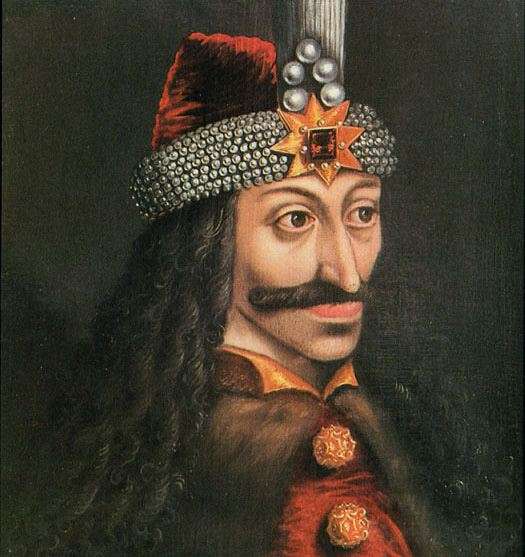
Pictured: Whampire
The other favourite part of this story is that vampires just are. They just can! And what sort of vampires are they? Of course they’re basically cliché TV vampires from the modern era. No effort goes into the foundation mythology (a subject I particularly enjoy in any fictional universe) or how they came to be. And why can they fly, any explanation there? Of course not, don’t fret your brain, this is just a story about thrusting in a meat sword to the hilt. Can the author describe why they die, or appear to die? How that happens yet they still don’t decay? Any sort of insight as to why that would happen would be grea- Oh no, don’t get me wrong, I still want to know how Vlad the Impaler licks up messy virgin girls’ remains when he takes their honour from them, I just meant after that…could we then explore the universe of vampires and their defiance of modern science or at least make some shit up about how their disease, affliction, gifts, what-have-you, came into existence?

In the end, I thought these scribblings of a rather boring, uninteresting, unadventurous middle aged woman’s fantasies are better left in a shoe-box with her other quick release apparatus of equally lame, predictable, greasy nature. To the hilt!

Wednesday, September 19, 2012

Destination: Void


Whoa. Fuckin'....whoa.

Don't know how many times I have let Frank Herbert absolutely fuck my mind, but I keep coming back for it. The author of Dune and, perhaps more importantly, mastermind/creator of the Dune universe, wrote Destination: Void, which kicked off the WorShip series that included 3 others (all other 3 co-authored with Bill Ransom).

In an undated near-future scenario, astronauts are sent to the Tau Ceti galaxy to begin colonising a habitable planet. Sounds like a simple enough plot, until Herbert tosses in that 6 prior missions have all ended in disaster, the technology for such a journey is either in its infancy or does not exist, the astronauts are genetically (strategically) placed clones (with clone colonists in hybernation tanks on-board) and have dozens of replacements for each of the four full-time positions out of the thousands of bodies inside said tanks...and biggest of all...semi-self-aware-computers.

It actually is a very short book and a very short read, but many of the paragraphs and Herbertian tirades are in regards to something I just cannot wrap my brain around: the logic of creating a self-aware computer. I'm sure that if I were a computer nerd and made wiring up computers and trying to gain them a consciousness a hobby of mine, plus had a firm understanding of human psychology and the biology of the brain, that I could follow along no problem. Let me just throw a few phrases out there that sound like Chinese to me:

nerve-net simulators; electroform inputs of nerve impulse groups; flux impulses in four dimensions; inhibitory roulette cycles; black box – white box transfer;

Why? Why can't I understand any of this? Maybe it is just me being an idiot and I will shut up about it.

The good news is, however, that this takes nothing away from the book. As I did not fully understand what was going on with the wiring of this system, I appreciated it as an effort, a means to an end, to get a self-aware computer constructed. And that is exactly what all this is, so it is not imperative to the plot. But once shit starts getting constructed and happening...whoa man, hold on!

The first brains, the organic mental cores, which are crude versions of humans' early attempts at constructing self-aware computers, have human brains acting as the emotional/reactionary/survivalist side of the ship's computer. They all go mad, and are destroyed. The astronauts are then completely on their own save for the others in hibernation. When I had this much of the book in my brain's grasp I told myself this is basically what 2001:A Space Odyssey would have been if it were fucking great.

Instead, Herbert spends the next 180 or so pages (of 200, mind you) fucking with the reader on what it means to be conscious. Just soak that in for a second. What does it mean to you? This discussion could go on for years, and has. It has evolved since the first philosophers. Even before Diogenes the Cynic helped us bridge the gap between man and animal.

To me it has always been signified by goals. Seeking more than survival and reproduction, but setting up goals for ourselves. Aspirations. Shit like that.

But this book does not stop there. Not only is the question a constant issue amongst the crew and constant theme throughout the book, but there are other, brilliant, typical Frank Herbert ideas thrown in there to help get your brain motivated and thinking of new, novel, ideologically challenging concepts.

It was interesting to me that the ship's Psychologist is also the ship's Chaplain, for example. Why? Because psychology is not much for an exact science, and has assumptions associated with it and diagnoses that are based on historical symptoms and behaviour of the human. Religion is not so different from that, now is it? He also comments later on that both Religion and Psychology are methods of healing, specifically healing people's brain or intellect. I can attest to this. Because when one feels uncomfortable with an anxiety brought on by substance abuse there are two overwhelmingly popular choices people make to seek treatment: Religion (e.g. Jesus, e.g. Being born again) and medical (e.g. psychological) treatment. It happens like that, not just limited to those two but much more often than not. Honestly, it does!

Another great moment is when men are trying to teach the computer life and death by teaching it what it means to preserve a life dependent upon its systems – in this case a farm animal in gestation/fetus phase that the colonists could use if they land at their destination – and the computer decides to kill it, just to learn its limits, learn of its own behaviour and maybe even test its own powers. Well one of the most hopeful men on the crew for this test working out is the Life Systems Engineer. And of the people on this crew, of the four awake, of course the Life Systems Engineer is going to have the most trouble seeing past this self-aware-computer initiated abortion. And it shows.


Moments like this happen in a Frank Herbert novel within a sentence or two, and it is all thanks to his amazing ability to develop characters. You see more of what is going on inside their heads than with any other story-teller. The female working in the group of four has a much different but equally as interesting role. She is a clone placed on board because of her natural ability to lead, care for others, and juggle several responsibilities at once. As such, her independence is driven by certain chemicals and offset by others that showcase her caring side, and whatever it takes to match these Herbert explains that it inadvertently forces her to be extremely sexually active by nature. She takes chemicals to reduce her sex drive, but she also experiments, due to the pressure of the situation, with chemicals that enhance her awareness and help her ponder as the crew tries to wrap their minds around  consciousness. The taking of these drugs displaces those that reduce her sex drive, and soon enough she is conflicted by constant sexual thoughts, fantasies and desires.

Seriously, for such a short book the character development is incredible. I could go on, but I won't. Instead, I'll just say that everyone should be reading plenty of Frank Herbert, and once you get accustomed to his style, then you can delve into this one, because it is complex and difficult to follow but extremely brilliant.
Tuesday, August 28, 2012

The Waste Lands - The Dark Tower: Book Three


Book III picks up essentially where Book II leaves off, plus an intro by Mr. King really recaps everything that has happened in the first two books well. We start out with Eddie Dean, Detta/Odetta-now-Susannah/Mrs. Eddie Dean, and the hero Roland as they reach the forest and have moved away from the coast lines with giant evil fucking lobsters. Now their diet consists of deer meat rather than lobster meat. So good for them.

The pace of this book is entertaining for me. It starts out with a brief “here we are now, moved on from the lobstrocities,” and then enters the “Holy shit, a hostile giant grizzly robot bear with a parasitic disease, headed right for Eddie!” This happens, of course when Susannah is learning to Gunsling (I’ll note here that both her and Eddie learn the craft) and she ends up being able to shoot the fucker right in its fucking robot antenna. Cool shit.

From here the book continues with Roland being haunted by a new take on alternate realities, which can sort of be compared to time travel paradoxes. Being a huge, huge nerd for time travel paradoxes, it’s cool to see how this variant unfolds. Roland met the boy Jake in Book I, and he and Jake bonded a close relationship up until the kid, terrified of being left for dead in that world, basically said “ah fuck it, I can tell the Tower means more to you than this. Go on.” Since then Roland had felt very guilty. But the moment Jake left his current world (which is essentially our world circa 1987) for whatever fucked up place he met Roland, he was dead. Dead because the Man in Black or Jack Mort pushed him into a car on the streets of New York and he came to, post-mortem, alive and well (somehow), to meet the Gunslinger and hunt down The Man in Black. Confusing, I know, but when you are reading Book III it all makes sense.

Anyway, what’s cool is how haunted and mind-blowingly mind-fucked Roland now is. He explains that when he was in control of Jack Mort (in Book II), he saw him about to commit the act of pushing Jake in front of the car and thus, killing him, which sends him to meet Roland back in Book I. But since Roland saved him from this fate, meaning he did not die there, he never technically got sent to Roland’s world; meaning they technically never met. So his mind splits between a reality that says “the boy was saved, of course he never died and went to your world” and another that says “but you met him, he was there.”


Roland tripping balls on this helps add to the nightmare landscape King creates in this book. Dreams, both crazy nightmarish and important event-foreshadowing-signals dreams, are involved in making the book read like a scene from a Freddy Kruger nightmare world in which the landscapes and monsters seem just as impossible as the notion of escape. I was really digging it. Then Jake came into the story, as he suffers from not only the same paradox as Roland, but much worse because his involves himself being killed, blood and trauma and all. This not only makes things interesting for me, but the pace continues, all the way up until we all cheer Jake onto the gate that brings him into the Gunglingers’ world; every one antsy, giddy and hollering for the little fucker to escape the monster made of plaster (I also had trouble envisioning it, don’t worry) and Susannah fucking a demon.

The demon fucking is actually what I use as the turning point. That is about where things got weird. Once they are all together, things get a little slower paced. The city and the bridge and the people and villains they stumble upon, from here on out, are not really from the genre the story seemed to be carrying me. There are post-apocalyptic settings, with worlds and universes mixed together like Jake mixing in with Roland in Book I, and that’s all great, don’t get me wrong. But something about the sophisticated fallout shelter and the hyper advanced train co-mingling with idiots who murder each other every hour and our Clint Eastwood figure gunslinging seemed to branch out in too many directions. Plus I wasn’t as excited to see Roland with a six-shooter blasting people in a fallout shelter and running for a monorail as it electrocutes people in front of him as I thought I was.

The book ends with them headed through the real Waste Lands, which are one of the most nightmarish environments ever imagined. I really respect the way he creates the world that is passing underneath the gang as they travel on a super evil, badass monorail.

What I liked most about this book is not just his ability to talk about nightmares and nightmarish worlds, though. It was two other important things:

  1. The ability to relate to characters that are kids, and make you feel the same emotions you felt when you were a kid, whether it be petrified fear of something that scared the bajesus out of you, or that awkward feeling of being near people who are complete assholes and you were unable to understand a world of such blatant assholery.
  2. The snark, the comic relief, the King-humour. It is that little, tiny bit of dirty charm he offers and it works really well in this story.


Sometimes it is too cheesy, sometimes it adds nothing to his novels, but in this book it just works. The subtle humour that is worthy of a reader’s smirk is a good quality, and it makes him a great, cynical ass. As opposed to a cynical assHOLE, like me.

Interestingly enough, Stephen King’s Dark Tower series seems to coincide with shit that happens in real life that makes me think, “if Ibelieved in coincidences, this wouldn’t mean shit, but since I don’t, this is pretty weird.” So as the book concludes with Blane the Mono taking them over some weird ass freaky world, a friend (not a reader, I might add, and certainly I don’t keep people up on what I’m reading, so this is out of the blue) posted this on my Fbook wall:


Creepy? Yup.

I would say overall it was very good until things went downhill from the point they brought the other one into the world. The Demon fucking, which I later told a friend I referred to as the gift that keeps on giving, since it happened in the first one and also since Susanna was certain she was pregnant around the same time (weird, isn’t it?), was difficult. Not difficult in terms of “handling it,” – which it was, that demon was packing – but difficult to follow in a world that worked. This just did not seem like something that belonged. Seemed more like the Stephen King I have come to know and like only a little bit.

The book generally had a downhill cheesiness from there for me; but again, because I enjoyed the first half so much, I would still say it is a very enjoyable read. Just don’t get your hopes up after the first half. The momentum and general awesomeness does not maintain its thrilling pace.

Wednesday, August 15, 2012

Invitation to a Beheading


 [Editor’s Note: Do not forget, I created this blog with an epiphany whilst reading a Nabokov book, so if it seems like I like this book too much simply because it is Nabokovian, then I apologise. It probably isn’t a great book, and will not make it on anyone’s top 10 lists; as anyone who is not particularly well read will not understand it, and those who are well read have certainly read similar stories of much greater depth and with clearer, more sensical settings]

Oh those tricky Russians. Their creativity and vivid descriptions of human nature, mapping out people’s emotions and thought processes as easily as a cartographer plots his homeland, never ceases to amaze me.

I honestly did not know what to expect when I began reading Invitation to a Beheading. I knew it was about an execution in a nonsensical universe, but why? And what was he trying to say? More suppressed Russian artistry coming out from under the veil of the Iron Curtain? Not exactly.

Cincinnatus C. is being held for a crime I will hereby reference much as my life moves along, that of gnostical turpitude, which is undefined in the book and may be equally as nonsensical to the common reader as the characters working within the prison itself. But if you read much, you can maybe link the phrase gnostical turpitude to another: moral depravity, as a sort of loose translation. The crime has to do with Cincinnatus feeling like he does not belong in his society, and carries a certain opacity as a defense mechanism. That is to say, everyone is completely transparent, and though the details of the society and its functions, both leisurely and occupationally, remain a big mystery outside of Cincinnatus’s life, it paints a picture to a society similar to Huxley’s Brave New World or Bradbury’s Fahrenheit 451. He has a quest for individuality that is considered obscene, and no one can quite work out why he wishes to talk about the things he wishes to talk about.

The trivial, annoying nature and the lack of concern for seemingly important matters amongst the facility’s director, the guards and executioner, whose entire character and appearance/influence in the story is brilliant, I might add, make the world seem very nightmarish. The spider in the room that is fed by the guard doesn’t help, either. It seems Cincinnatus is losing his mind, and nobody loves him, not even his cheating wife or children who are not his. The relationship with his wife actually may have been my favourite part of this book. It was wrong, vile, vulgar, and yet beautiful in a completely indecent and lovely animalistic sort of way. The description of him walking in on her swallowing a uhh….spurting peach?...yeah, I simply cannot do his writing justice by talking about it. It is artistry at its highest, most sexually provocative level.

If you are not into that, the dream world is really fucked up and will keep you engaged and force to you wear your thinking cap as you read it. Not in a troublesome way, either, at least not for me and remember: I am an idiot. So it is not like you have to be an intellectual snob to realize the humour and struggle of dealing with the people and environment Cincinnatus C. has to put up with.

This is the second to last book of the Second bookclub list to which I belong, and it is a favourite of mine (amongst several others this list). Next up: Lucifer’s Hammer. If you have already read it, no spoilers. If you have not, join me. Either way, do read Invitation to a Beheading and get ready for some fun, weird shit.

Wednesday, February 15, 2012

The Handmaid's Tale

My first Margaret Atwood book. It was fair to say this book was highly anticipated in the book club to which I belong, mostly because it marks the beginning of a set of science fiction books hereon until the end of this list. Something like eight books remained (including this one) and they all can be classed as science fiction.

I had no idea what to expect for the plot of this story, and the only warning I had going into it was the level of despair with which the antagonist recounts her days in the dystopian society. Ah, my fave, dystopias and human despair. But I think reading Doctor Zhivago (review coming up soon) just prior to this desensitized me to any sort of sad, terrible emotions the dark and depressing style with which Atwood writes was supposed to instill in me. This left me, I thought, able to appreciate the story for all it was worth. And I looked very much forward to what was going to happen without being slowed down or deterred by how awful this fictional society really is. In other words, I could see through the main character’s pain to appreciate everything this story was really about. But, to my dismay, it wasn’t about much.

I liked the idea, don’t get me wrong. It was powerful, and it represents actual societies that we know about in existence today (Taliban rule in Afghanistan, for example). But there just was not enough of a story line to make me feel it was worth all the shit she goes through. It was just a telling of what happens, almost a documentary, as there was no real climax or resolution to the plot. No solving anything.

So if I could shelve this one under “fictional documentaries,” it would probably be tops on that list. Unfortunately, it goes in my dystopian society list, and with the potential it has at the beginning I feel it disappoints by the end.

In a more positive light, I do like her writing style. It made me feel it was actually written by a reformed woman who may once have been an educated member of society but couldn’t resist the severe oppression of her new patriarchal police state. I also very much enjoyed the mysteries, the ideas that no one really knows what’s going on because viciously governed police states are great at censorship, and keeping from their people any idea of what the outside world is like (1984 anyone?). And the first page of the first chapter lets you know that this is how this society operates.

I may give Atwood another go, but overall I’d have a difficult time recommending this book to anyone who was not particularly a fan of the dystopian sci-fi genre like I am.