Popular Posts

Showing posts with label Stephen King. Show all posts

Wednesday, August 28, 2013

Wizard and Glass - The Dark Tower: Book Four (Part II)


The second half of the book is where things pick up and the plot really develops. For Roland and his love affair with Susan, things get passionate until they reach a hot, sweaty climax typical of western romance stories. For him and his ka-tet, however, things get super badass as they morph into gunslinger mode. And for the town of Hambry and indeed all of Mejis, things twist themselves into a murderous, maddening rage similar to what we saw in Book I with the town of Tull going nuts and Roland having to go full Cormac McCarthy on each and every man, woman, and child in that town.
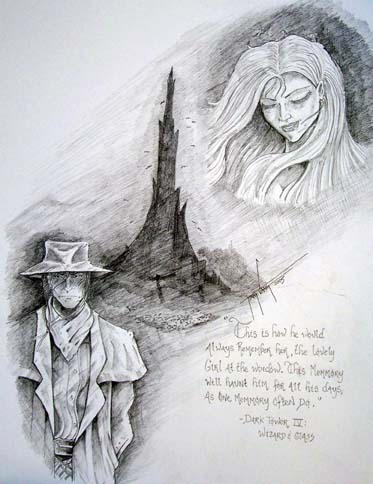
No one is safe. The sound of the thinny is a constant reminder of the serious peril that lies just outside of town, and the witch that Roland deals with in order to protect his lover becomes obsessed with avenging the death of her snake/toy. People are going to get hurt; it is just a matter of when and where.

What I admire most about this book is how it is done, not so much what happens. King’s take on the game Castles, wherein you keep yourself disguised until you are ready to attack and come over the hillock, thus exposing yourself yet hoping you have enough momentum to impose an unbending will on the opponent, is a fictional game that is a perfect metaphor for what the ka-tet is doing with Jonas’s Coffin Hunters. After some minor peaks at each other’s offensive capabilities, Jonas makes a move and destroys the boys’ guest house. Roland isn’t biting. He feigns complete ignorance, a guise they work well under, until they are captured, arrested and jailed for the deaths of the mayor and his right hand man. Murders that were actually carried out by the Coffin Hunters. This is their “all in” and aggressive attack in the game of Castles. Too bad for them, Roland is game.

After Susan breaks them out of jail we get our first look at the real gunslingers. And my goodness is it awesome. The final 2 days of the season, the Reaping Festival under the Demon Moon, are the most significant, action packed, bloody and tragic. But it is not just what is going on, again, that is my favourite part. It is admiring the universe King has created, that I enjoy most. The seasons, the Demon Moon, its effect of putting people into a trance, bringing out their rage, all the while shining down on them like an evil, bloodthirsty god. It is so brilliant.
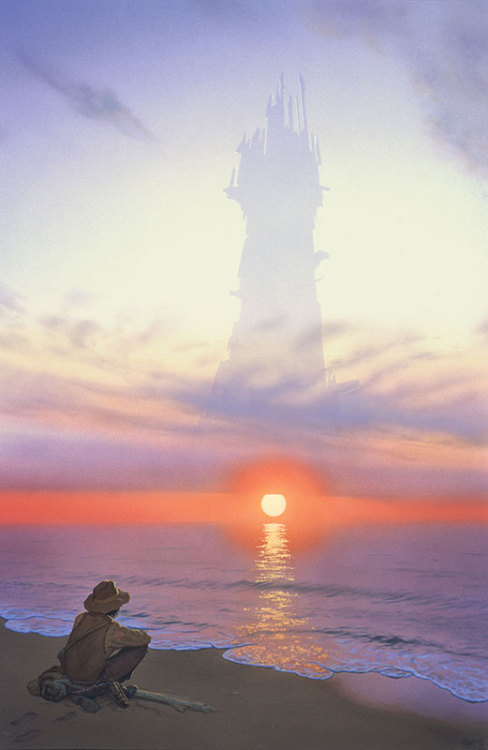
Many sci-fi and fantasy authors have created unique universes, sure. Isaac Asimov and Robert Silverberg’s Nightfall, for example, involves a planet with seven suns and a never-before-seen moon, and as people study the skies in constant daytime they contemplate the impact the sky has on them, and how terrible it could all be if their stars (suns in this case) were to align themselves in the ever-so-rare fashion that brings about an unrecognizable change. Meanwhile, fantasy books like The Kingkiller Chronicles or The Belgariad Series have fantasy worlds celebrating different seasons than ours but something we still recognize: growing seasons (summer); harvest (autumn); dark, cold dormant seasons (winter); and times of rebirth (spring).  But I don’t feel like anyone has captured it all, the ominous skies, the parallel seasons to ours, the wickedness you would expect from a demonic autumnal post-harvest celebration (Halloween, anyone?) quite like Stephen King has. Everything about it is worked out so well, so meaningful is each and every variant of the phases the Moon goes through. And I love how it crashes violently into the wild nature of people saying goodbye to the most lively, productive part of the year. Queue the insanity.

The Wizard’s Glass is another fine touch in this story, too. It is pretty much directly responsible for Roland’s threats to the witch, the capture of Susan, his loss of youth, the quest for the tower and several other horrible crimes he commits after he leaves Mejis. And it reappears, Wizard included, to issue more warnings to Roland and his new ka-tet of Susannah*, Eddie, Jake, and Oy. The Wizard is powerful, yes, but vulnerable, we see. After all the drama, Roland has apparently lost himself only to have the ka-tet bring him back to his senses. They are not breaking up, there is no going back, and they will all push on towards the Tower. A great continuation of the series, in my mind.

*Author’s Note: Can I just say (oh of fucking course I can! This is my blog, what am I drunk? Who prefaces statements with that other than drunks?), in a quick, unrelated, side-bit about Susannah, that as much as I absolutely despised her as a character when she was first introduced, mainly as Detta Walker, that I now enjoy her equally as much, if not more so? Not because of a monumental change in character, but because she remains an artistic rarity. Think about the character she represents: confused, multiple personality disordered, racist southern black lady who may be handicap yet is still as capable as a gunslinger. But in terms of modern pop-culture black protagonists, she is quite the opposite of what we’re used to. Django Unchained, a very unoriginal and uncomical take on comedy legend Blazing Saddles, tells a story of one African American’s revenge on a greedy, slave driving white frontiersman. Stephen King could have used Odetta Holmes/Detta Walker as his contemporary of the year-2013-cliché-racial-allegory-to-promote-white-hate-crime-comitting-awareness. Yet he did not. Instead, he uses her as an example of how horrible one person can be, driven by racism, and yet how they can overcome that, gain hold of their senses, and turn into a leader and key contributor to a small group on a very important mission. Almost making it as though whichever side of the 1960’s/1970’s race war she is on, completely irrelevant. And for that, I give Stephen King mad props. Because it seems it is just way too easy for people to in Hollywood and pop-culture these days to say “here’s a colored person who is showing outrage to illustrate how hateful/corrupt/racist white people are, let’s watch it happen and talk about how brave this person of color is, but only if the white people fail miserably and/or die.” Stephen King brings an element of not really giving a shit about colour, only pointing out that extremists lose sight of what is really at issue. But they can recover, and redeem themselves. For that, I tip my hat to you, Mr. King.
Wednesday, April 10, 2013

Wizard and Glass - The Dark Tower: Book Four (Part I)

That Part I bit in parentheses is due to the fact that I wrote so much to this book, I wanted to share it in two parts. Oh and I sort of read it in two parts, breaking midway through (which this review covers, obviously) to pick up a book for our Book Club, the CBC, which was Nation (reviewed last month).

We join Roland and the gang right where we left them at the end of Book III; aboard Blaine the Mono hauling ass through the Waste Lands at an incredible rate of speed. Blaine is a psychotic self aware and extremely violent computer system on board the at-one-time state of the art monorail, and enjoys riddles even more than he enjoys slaughtering everyone within the city of his resting station.

Thus far the series has evoked villains from so many different backgrounds it is difficult to expect anything but the unexpected next: old west druggies and undead folks; a crazed religious figurehead that turns to an extremist leading a deathgroup; zombies at the way station; a mysterious wizardly man in black; demon-fairies and just straight up demons; Jack Mort the insane violent psychopath in contemporary New York City; Guido Druglords; giant evil venomous lobstrocities and their lawyering questions; A giant bear that is actually a robot with some sort of disease; a plaster man that jumps out of the walls of a haunted house and eats people; and some wackos within the city in which Blaine the Mono reigns, unbeknownst to the wicked ruler we only know as Tic-Toc. Not to mention the monsters that the gang sees on their way through the Waste Lands.

That being said, this universe is very fucked up. Stephen King is a very cynical writer and most characters are either terrifying to imagine or just plain twisted. Everyone thinks of some pretty nasty stuff on occasion, but we maintain that we are mostly normal. The characters thus far, though, seem to be composed entirely of the very things we find repulsive in one another or, worst of all, deep within ourselves. Which is what I like about King and what I really like about the series. Not a lot of good people, not much in the way of innocence and sure as hell there is nobody who is remotely innocent here that doesn’t get side-swiped by some unfortunate turn of events.
Stephen King is also a man with children in his stories. Nearly every book I have ever picked up of his, save maybe 1 (Misery I think?) has a child character or a scene where a character is flashing back to being a child. And he loves cashing in on the discomfort of growing up, and also of being afraid. So after Eddie, against all odds, bails the gang out with nothing other than quick wit, silly New York humour (i.e. dead baby jokes), and a face melting explosion of shit talk, Roland is faced with the difficult task of regaling them with the story of Susan, the woman he oft refers to in his incoherent mumblings.
I mentioned it just now but I have been drinking so I will say it again, before we get side tracked with the legend of Roland, Eddie Dean’s trash talk is a truly magnificent piece of this series. Everyone has a weapon in life. Some people throw their weight around, some are gunslingers, some are quiet and polite but are real killers underneath with a quick hand and a lethal touch. Eddie Dean is a man I can relate to, though. His weapon is his mouth. His big fucking idiotic mouth. Issue him a challenge and the fight is over before it even begins, literally, as it probably will not reach the point of fighting since people like him are the sort than can break a man (or machine, mind you) down with harsh language so effectively that everything the challenger hates about him, he is brought to see in himself and absolutely loses his mind, composure, and all ability to maintain the upper hand. I dig that.
Back to the Legend. Roland sets the stage with this young hottie Susan real well. We are transported to another world - or another where and another when, in this series - and it turns out this one is a Western with a small Western-like town and a witch just outside. The witch is pretty nasty, truly vile in the Stephen King sense but also a bit comical, as she is quite terrible at being a witch at her old age. I really like the setting, especially as we learn more about it. Not just a Western, but a post-apocalyptic Western where some of the carryover from a world we might recognize (oil fields, tankers, refrigerators) make appearances but there is mystery as to how anyone could make honest use of them. The references to mutants amongst the horses, cattle, and pets gives the reader more hints at this universe, lending more to the debate of “our world that was split by nuclear warfare, or just a fantasy world that is similar to ours and then split by nuclear warfare?” Bog (and King) only knows.
It is better to just sit back and let the worlds unravel themselves. And pay attention to the hot broad that catches Roland’s eye. Teenage Roland, that is. And even a complete badass like him, the youngest gunslinger of all time, needs to have a good alibi for fucking the holy Christ out of a tragic young blonde like Susan Delgado; so he says it is Ka. “No, no, don’t get me wrong, I don’t want to do these awesome things to her, I just have to. It’s Ka!” (not an actual quote from the book).


This is also our first real introduction to the character from Roland’s youth that we have come to learn is much like Eddie Dean, Cuthbert Allgood. The kid is a phenomenal character. Always talking, like Eddie, always trying to make a joke, and never at an appropriate time. And really, all Roland wants is for him to shut up. But the kid also has talent. He can talk his way out of a jam as easily as he can talk his way into it. Plus, he is a killer just like Roland. Very understanding of the ways of a gunslinger, even if he has not passed through his rite yet. Also a bit of a jealous bone, which makes him very human but very much the identifiable young, envious, right-hand-man to Roland’s young alpha-male group leader personae.

Friday, January 11, 2013

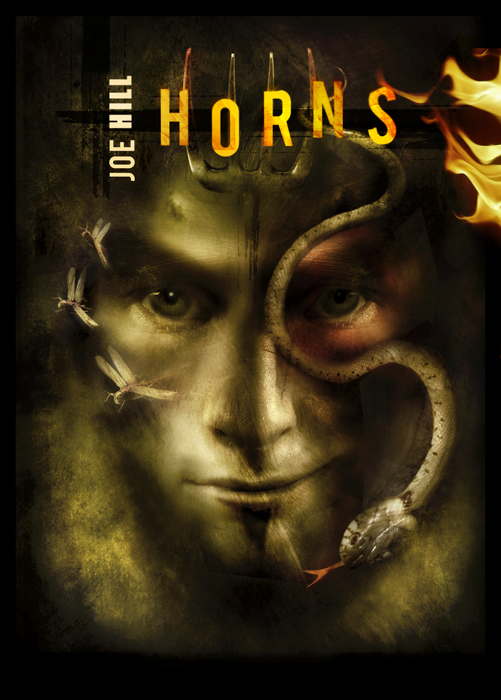
Horns - Joe Hill


I was discussing this book with a friend before I was finished. A dangerous game, sure, but I am always sure to mention I am unfinished with it when I have such talks. And my friends are decent enough people not to ruin it with a devastating spoiler. But she told me she really loved this book, and I said “yeah, it’s pretty good. I mean, as far sex murderer stories are concerned.” She responded with “but it’s so much more than that!” and I honestly didn’t feel, at that point in the story, that it was. Well only a couple of chapters after thinking that horrible thought, there was a majour turning point in the book. I got hit like I’d insulted someone’s mother with a twist I didn’t expect. And not just a plot twist, but one that changes what you feel the story is really trying to convey. It was beautiful. I mean, tragic, and I wanted to cry or take shots or break something, or maybe do all that at the same time, but it was still a very moving moment in the book.

And it is in regards the most important topics with which one can concern his/her self: life, death, and love. Life is no guarantee, but once it is obtained it is your right to keep it, and let others keep theirs. Death can only come once life is granted, and will follow life where ever it may exist. Love, unfortunately, is no guarantee either, and the worst thing to think of is people who experience life until death but never get to experience, or exercise, their right to love. And dying before one can experience love is the greatest crime of all for humanity, in my opinion.
This book takes all of that and, instead of elaborating on it, concentrates it into one vicious strike to your heart. It happens all in one moment. One moment realized after the person everyone loved has been dead for some time. It is truly tragic but truly wonderful.  I really cannot stress that enough.

There is also a very King family influence, and much of the book can be looked at as being written by “Stephen King’s son”. There is that lovable, cynical charm and the dirty, nasty secrets everyone holds within with hidden evil, dark desires that mostly revolve around sex or violence, or violent sex.


But even with that, he is still a unique author, and the book is great on its own, regardless of the fact that you might think, at many different points, it seems like something written by a young Stephen King. “Huh, I could imagine a universe in which the guy that wrote The Dead Zone also wrote this book” I said to myself on more than one occasion. Like, for example, when he touches someone and knows everything about them.

I did find a few faults with the book, I think the plotline of illness making people turn into real assholes is a common enough issue that he may write about it, but not so common that it is on the level of common knowledge that everyone turns into a wicked person when they are ill. I also felt there was some really good irony when he had his horns and people were coming out with these horrible secrets, but sometimes they would act upon their desires with the removal all inhibitions (the true effect of his horns) but there was never any follow-up as to what resulted from people making good on their horrible actions.

Really look forward to more from Joe Hill though. This story had a very “early stages of a great author” feel too it, not a perfect but still very good, and I hope he only improves with time. But then again, he is Stephen King’s son, so who the hell knows.

Tuesday, August 28, 2012

The Waste Lands - The Dark Tower: Book Three


Book III picks up essentially where Book II leaves off, plus an intro by Mr. King really recaps everything that has happened in the first two books well. We start out with Eddie Dean, Detta/Odetta-now-Susannah/Mrs. Eddie Dean, and the hero Roland as they reach the forest and have moved away from the coast lines with giant evil fucking lobsters. Now their diet consists of deer meat rather than lobster meat. So good for them.

The pace of this book is entertaining for me. It starts out with a brief “here we are now, moved on from the lobstrocities,” and then enters the “Holy shit, a hostile giant grizzly robot bear with a parasitic disease, headed right for Eddie!” This happens, of course when Susannah is learning to Gunsling (I’ll note here that both her and Eddie learn the craft) and she ends up being able to shoot the fucker right in its fucking robot antenna. Cool shit.

From here the book continues with Roland being haunted by a new take on alternate realities, which can sort of be compared to time travel paradoxes. Being a huge, huge nerd for time travel paradoxes, it’s cool to see how this variant unfolds. Roland met the boy Jake in Book I, and he and Jake bonded a close relationship up until the kid, terrified of being left for dead in that world, basically said “ah fuck it, I can tell the Tower means more to you than this. Go on.” Since then Roland had felt very guilty. But the moment Jake left his current world (which is essentially our world circa 1987) for whatever fucked up place he met Roland, he was dead. Dead because the Man in Black or Jack Mort pushed him into a car on the streets of New York and he came to, post-mortem, alive and well (somehow), to meet the Gunslinger and hunt down The Man in Black. Confusing, I know, but when you are reading Book III it all makes sense.

Anyway, what’s cool is how haunted and mind-blowingly mind-fucked Roland now is. He explains that when he was in control of Jack Mort (in Book II), he saw him about to commit the act of pushing Jake in front of the car and thus, killing him, which sends him to meet Roland back in Book I. But since Roland saved him from this fate, meaning he did not die there, he never technically got sent to Roland’s world; meaning they technically never met. So his mind splits between a reality that says “the boy was saved, of course he never died and went to your world” and another that says “but you met him, he was there.”


Roland tripping balls on this helps add to the nightmare landscape King creates in this book. Dreams, both crazy nightmarish and important event-foreshadowing-signals dreams, are involved in making the book read like a scene from a Freddy Kruger nightmare world in which the landscapes and monsters seem just as impossible as the notion of escape. I was really digging it. Then Jake came into the story, as he suffers from not only the same paradox as Roland, but much worse because his involves himself being killed, blood and trauma and all. This not only makes things interesting for me, but the pace continues, all the way up until we all cheer Jake onto the gate that brings him into the Gunglingers’ world; every one antsy, giddy and hollering for the little fucker to escape the monster made of plaster (I also had trouble envisioning it, don’t worry) and Susannah fucking a demon.

The demon fucking is actually what I use as the turning point. That is about where things got weird. Once they are all together, things get a little slower paced. The city and the bridge and the people and villains they stumble upon, from here on out, are not really from the genre the story seemed to be carrying me. There are post-apocalyptic settings, with worlds and universes mixed together like Jake mixing in with Roland in Book I, and that’s all great, don’t get me wrong. But something about the sophisticated fallout shelter and the hyper advanced train co-mingling with idiots who murder each other every hour and our Clint Eastwood figure gunslinging seemed to branch out in too many directions. Plus I wasn’t as excited to see Roland with a six-shooter blasting people in a fallout shelter and running for a monorail as it electrocutes people in front of him as I thought I was.

The book ends with them headed through the real Waste Lands, which are one of the most nightmarish environments ever imagined. I really respect the way he creates the world that is passing underneath the gang as they travel on a super evil, badass monorail.

What I liked most about this book is not just his ability to talk about nightmares and nightmarish worlds, though. It was two other important things:

  1. The ability to relate to characters that are kids, and make you feel the same emotions you felt when you were a kid, whether it be petrified fear of something that scared the bajesus out of you, or that awkward feeling of being near people who are complete assholes and you were unable to understand a world of such blatant assholery.
  2. The snark, the comic relief, the King-humour. It is that little, tiny bit of dirty charm he offers and it works really well in this story.


Sometimes it is too cheesy, sometimes it adds nothing to his novels, but in this book it just works. The subtle humour that is worthy of a reader’s smirk is a good quality, and it makes him a great, cynical ass. As opposed to a cynical assHOLE, like me.

Interestingly enough, Stephen King’s Dark Tower series seems to coincide with shit that happens in real life that makes me think, “if Ibelieved in coincidences, this wouldn’t mean shit, but since I don’t, this is pretty weird.” So as the book concludes with Blane the Mono taking them over some weird ass freaky world, a friend (not a reader, I might add, and certainly I don’t keep people up on what I’m reading, so this is out of the blue) posted this on my Fbook wall:


Creepy? Yup.

I would say overall it was very good until things went downhill from the point they brought the other one into the world. The Demon fucking, which I later told a friend I referred to as the gift that keeps on giving, since it happened in the first one and also since Susanna was certain she was pregnant around the same time (weird, isn’t it?), was difficult. Not difficult in terms of “handling it,” – which it was, that demon was packing – but difficult to follow in a world that worked. This just did not seem like something that belonged. Seemed more like the Stephen King I have come to know and like only a little bit.

The book generally had a downhill cheesiness from there for me; but again, because I enjoyed the first half so much, I would still say it is a very enjoyable read. Just don’t get your hopes up after the first half. The momentum and general awesomeness does not maintain its thrilling pace.

Tuesday, July 3, 2012

The Drawing of the Three – The Dark Tower: Book Two


 Very discontinuous from my post on Book One: The Gunslinger, sure, but review that one if you need to, because I wrote this one shortly thereafter and it follows a similar style and train of thought. Here we go:

Well now this is more like it. I recall saying something along the lines of

Besides, I don’t dislike all of his work, I just find him a bit too bizarre and gory for me sometimes; really drawing out the scenes that are intended to make one uncomfortable but don’t add much, if anything at all, to the story.”

And guess what? It happens…but not in such a way that I can’t enjoy the story overall. The truly horrible thing (he is a “horror” novelist, right? Even if these aren’t particularly scary books) is that it happened at a particularly odd time. Being a man who doesn’t believe in coincidences, I have to say this may be an event that will stick with me for a while. How it happened was that I was listening to an Audiobook of this story, narrated by Frank Muller and using my Audiobook application on my smartphone as I traveled to Phoenix from Safford to watch a Red Wings game.

Stephen King’s “Kinginess,” wherein he describes the gruesome crime that leads to Odetta Holmes losing her legs above the knee after being pushed in front of the A-train in NYC, was more gore with less plot-relevancy than I felt I should be putting up with during a narrow canyon pass through the most dangerous part of my drive. I promptly switched from Audiobook to music on my smartphone, and as I did, there was an accident ahead of me. The details of this accident relate more to another story, which can be found at another blog for which I sometimes stop by and write. And that story blossomed to even more unexpected, stranger-than-mere-coincidence, deeper relationships. Very strange, to say the least.

I think for that, this book will always be looked upon strangely, and fondly. To get away from what happened in my life as I went through this story, it was very much fun. Eddie Dean was a very enjoyable character and his rite of passage from drug mule in his world to sidekick of the Gunslinger was well done, and at times fun to cheer along with. Odetta Holmes/Detta Walker, not so much. But the drawing of the third one made it all better.

And of course, how can I recap this story without mentioning the giant, bloodthirsty lobsters? Does Stephen King really hate lobsters? Being a native Northeastern US celebrity and representative of that region, I can imagine. But maybe the man had nightmares of them when he was a kid. In any event, the narrators take on their psychotic questioning (“Dum-a-chum? Ded-a-chek?”) makes me laugh everytime I think about it. It was perfect.


I also really enjoyed the gunslinging in this book. Whether it was his threats, a blasting of a human-hungry lobster, killing off people from Eddie Dean’s world or doing his thing with ammo and drugs in Jack Mort’s world, it was always entertaining. And Jack Mort represented a typical Stephen King villain to me, and I’m glad he wasn’t in there long enough to ruin the book for me. A sociopath who gets off causing serious injury to people…and yes, I mean actual orgasms when he does. Very King-y, I should think.

But there’s a great plot development with him at the end, and great character development too, pulling everything together and preparing you for the long, difficult journey onwards as they leave the coast and head up into the foothills on their quest for the Tower. Not much is said about the Tower in this book, but with the Man in Black gone, it’s not as though any one here knows that much.

Needless to say, I liked this book more than its predecessor and if the third one is half this good, I’ll enjoy it as well.