Popular Posts

Thursday, January 31, 2013

Red Prophet - Alvin Maker: Book Two


Continuing from Seventh Son, Orson Scott Card picks up the story with an entirely new plotline, which sees a whiskey runner coming to visit William Henry Harrison in Fort Dekane. This runner's knack is that he is a spark, in that he can focus his energy somewhere to create a heat source. Of course it's difficult to burn a forest this way, but something highly flammable/explosive is easy for him to ignite. And since this is a bit more of a sinister knack, it's best he keeps knowledge of it to himself and use it as a defense. All sorts of double crossing is going on, and we are introduced to Tenskwa-Tawa and Tecumsaw, a couple of badass natives from the Shawnee tribe that are influential throughout this book and I’m guessing throughout the rest of this series. It ends up that Tenskwa-Tawa meets Alvin and we get a replay of the vision he shows him when he appeared in Alvin’s room to teach him about his powers. He is only able to do this as he quits drinking whiskey, and from there on goes to lead a movement that teach all of the reds to refrain from consuming alcohol, much to the dealer AND Bill Harrison’s dismay.

But we also meet another figure in the beginning, when we are being introduced to the natives and Mr. Harrison, a rude southern man from Tennessee nicknamed Old Hickory. For those of you not up on your southern American history, that’s Andrew Jackson. Nobody hates the reds quite like him, both historically and in Card’s second Alvin Maker book. Except of course, maybe Bill Harrison. Who is a real SOB.

In fact, Harrison and Jackson have such a hatred for the reds that it scared Tenskwa-Tawa straight. He is a noted drunk and constant dependent on the whisky which he uses to drown out the horrors of watching Harrison murder his father when he was just a boy. Well thanks to his brother Tecumsaw he sees the light and weens himself off of it, becoming a wise man, or shaman, or whatever.

There are other chapters up front that bring in the French, who are operating out of Ft. Detroit (DETROIT Represent!) and are paying money to the reds for scalps of white Americans to help manufacture some majour conflict between American settlers and native Americans. In this French campaign, being led by General de Lafayette, we meet a young Napoleon Bonaparte, whose knack is the ability to get anyone to fall head over heels in love with him. Too bad Lafayette has a charm that acts as a shield from his knack. Lafayette also despises the French King, Louis XVI (at least I think that’s the number) and would rather the loyal, fiery yet ambitious Napoleon break away from servitude to the French King and begin a new world and a new order. So there's another agenda.

There is enough American folk magic and historical fiction to be really great in this book, even if the premise is a bit weak in places. William Blake, better known as Tailswapper in this series, is still a phenomenal character, even if the guy doing his voice in the audiobook is really annoying. He still understands enough about visions from his always wanting to have one, to recognise Alvin's. He also takes part in an adventure/vision that requires him and Tecumsaw as they battle fate and their own understanding of what humanity requires with their own stubbornness. They must unite to escape with their lives, but they can’t stand each others' ideals and are even more appalled at the glimpse of each other’s destiny.

I guess it is an adventure story of sorts from the moment Measure and Alvin are kidnapped in the woods until the very end, and that makes it quite a bit different from what I was expecting after finishing Book One. But not necessarily in a bad way, I was just hoping for mystery and freaky unexplained characters and their conspiracies than an adventure story solved with a series of visions. But since things are somewhat reset after a brutal massacre of thousands of Indians and some failed wars, I bet Book Three gets to be more to my style. Looking forward to that one.
Friday, January 11, 2013

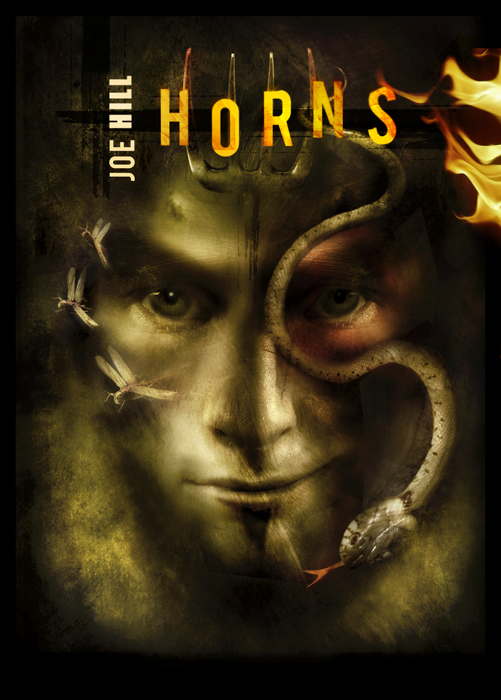
Horns - Joe Hill


I was discussing this book with a friend before I was finished. A dangerous game, sure, but I am always sure to mention I am unfinished with it when I have such talks. And my friends are decent enough people not to ruin it with a devastating spoiler. But she told me she really loved this book, and I said “yeah, it’s pretty good. I mean, as far sex murderer stories are concerned.” She responded with “but it’s so much more than that!” and I honestly didn’t feel, at that point in the story, that it was. Well only a couple of chapters after thinking that horrible thought, there was a majour turning point in the book. I got hit like I’d insulted someone’s mother with a twist I didn’t expect. And not just a plot twist, but one that changes what you feel the story is really trying to convey. It was beautiful. I mean, tragic, and I wanted to cry or take shots or break something, or maybe do all that at the same time, but it was still a very moving moment in the book.

And it is in regards the most important topics with which one can concern his/her self: life, death, and love. Life is no guarantee, but once it is obtained it is your right to keep it, and let others keep theirs. Death can only come once life is granted, and will follow life where ever it may exist. Love, unfortunately, is no guarantee either, and the worst thing to think of is people who experience life until death but never get to experience, or exercise, their right to love. And dying before one can experience love is the greatest crime of all for humanity, in my opinion.
This book takes all of that and, instead of elaborating on it, concentrates it into one vicious strike to your heart. It happens all in one moment. One moment realized after the person everyone loved has been dead for some time. It is truly tragic but truly wonderful.  I really cannot stress that enough.

There is also a very King family influence, and much of the book can be looked at as being written by “Stephen King’s son”. There is that lovable, cynical charm and the dirty, nasty secrets everyone holds within with hidden evil, dark desires that mostly revolve around sex or violence, or violent sex.


But even with that, he is still a unique author, and the book is great on its own, regardless of the fact that you might think, at many different points, it seems like something written by a young Stephen King. “Huh, I could imagine a universe in which the guy that wrote The Dead Zone also wrote this book” I said to myself on more than one occasion. Like, for example, when he touches someone and knows everything about them.

I did find a few faults with the book, I think the plotline of illness making people turn into real assholes is a common enough issue that he may write about it, but not so common that it is on the level of common knowledge that everyone turns into a wicked person when they are ill. I also felt there was some really good irony when he had his horns and people were coming out with these horrible secrets, but sometimes they would act upon their desires with the removal all inhibitions (the true effect of his horns) but there was never any follow-up as to what resulted from people making good on their horrible actions.

Really look forward to more from Joe Hill though. This story had a very “early stages of a great author” feel too it, not a perfect but still very good, and I hope he only improves with time. But then again, he is Stephen King’s son, so who the hell knows.

Wednesday, January 9, 2013

The Man Who Sold The Moon

Early Robert Heinlein! Always a great read, no matter where in his career you find yourself as you dig through  the gems of his literature.

I read this book not too long after watching the History Channel series, The Men Who Built America. Which is about how strong armed, cut-throat, ruthless, ambitious, and never-satisfied our turn of the century (the earlier one) entrepreneurs were. It chronicles the corporate lives of Cornelius “The Commodore” Vanderbilt, JP Morgan, John D. Rockefeller, Andrew Carnegie, Thomas Edison, and to some small extent, Tesla, Ford and Charles Schwab.


The fun thing is how people revere what these assholes did for American free market Capitalism. Which is to say, they forced federal regulation in a lot of areas. They also were key in bringing about labour unions, ending monopolies, and breaking ground on federal anti-trust lawsuits. Plus a few other things in terms of stock market and inner-company control were made illegal after these guys had their way. I mean, whoa, I know they were crooked back then, but to be the wealthiest humans in the entire world and battling like that, trying to end the other moguls? It was crazy!


How does that relate to this book? Well free market capitalism, when we can find loopholes in the federal government, really helps the rich get richer. But in this instance, the rich man, Delos David “D.D.” Harriman, isn’t out to make himself personally wealthy just for the fuck of it (like Steve Jobs). He is out to do it and raise enough money to get us to the moon. And eventually, get us to expand to more than just this tiny planet (which isn’t dying, by the way).


The concept of expansion, colonization in space is favourite of mine in Science Fiction, I feel we need to help support that. Companies like Planetary Resources backed by Google billionaires trying to expand our natural resources, Blue Origin backed by Amazon founder Jeff Bezos, and Red Bull with their Stratos jump are all examples of privately funded space exploration opportunities that provide more science and learning than NASA alone could ever dream to offer. And I like all that. And so does Robert Heinlein.


The difference is that he wrote this in 1949 before NASA was what we think of when we think space exploration. So he wrote about a corporate mogul, a real wealthy bastard swindling his way to get ownership rights to the land, and mineral rights, and a space craft, for the goddamn moon! Maybe it is difficult for some to put themselves in the position of how it could be exciting to try and claim the moon in the name of exploration and exploitation in the days before NASA, but not for me.


How does he do it? Simple. First there are some mergers and investors coming online with loads of more cash to support this venture and claim some part of the moon once they are there, plus corporate advertising giants and why not sell out to the media and take the highest bidding studio to make the documentary of the project? Then there are children. Like 40 million of them or whatever. He says if they each send a nickel to him, he’ll have their names individually engraved on a plaque that is going to be planted there as a memorial for the first ever lunar landing. But if they send 1 dollar, they get an autograph from the astronauts, plus other cheap swag! He neglects to mention this plague’s engravings are microscopic so as not to take up weight on the craft’s journey. He also sets up a non-profit organization, like National Geographic or B&MGF shit, which allows for a massive amount of money to roll in from people interesting in this project, and since it is led by the same tycoons all their work goes to it, but at the last moment the non-profit foundation makes a massive donation to the project. Awesome.


It is a future history tale, so there are chapters of other things going on, plus some corporate/federal regulation fights over patents that aren’t so pretty, including some pretty damn accurate conspiracy theories. Or at least, close to what we have seen in our history with some innovative minds *cough* Tesla! *cough*cough*.


I love American capitalism when it works this way, and I love people’s ambitions to get us off this fucking rock, before everyone goes mental. Let us expand! Let us conquer! And regardless of what that tree hugging hippie next to you says, don’t ever lose that ambition and drive to conquer all, it is our key to getting off this fucking rock and putting our roots in other places. Earth first, moon next, Mars after that, and later on, the rest of the stars!

Tuesday, December 25, 2012

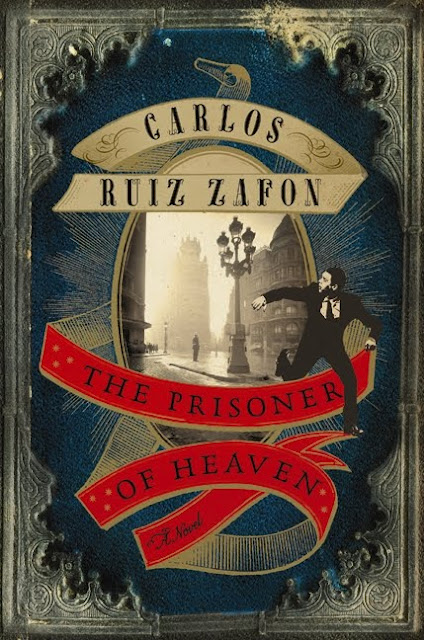
Prisoner of Heaven


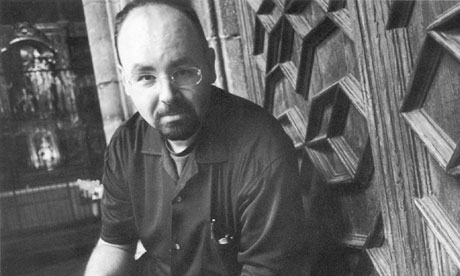
Or Shadow of the Wind Part 3, or Cemetery of Forgotten Books vol III, or Angel’s Game Part 2. Whatever it is called, it is Carlos Ruiz Zafon’s third book in a gothic series relating Barcelona post-Spanish-Civil-War to a family struggling to maintain a bookstore, a real awesome cemetery of forgotten books (which is like a library of Holy Grail conditioned books banished from contemporary society for any number of reasons), and the Sempere family. Though the series started out with one of the best books of the last ten years, and I am not exaggerating to reinforce my point on the other two, the books that followed just didn’t seem to contain the same awesome crime-mystery-thick plotlines with great points on the wickedness of people keeping secrets, the twisted nature of war and its longterm affects, and the general magic with which Zafon writes. It was almost as if the second two were written by another person trying to cash in on the fame of the writer of the first one.

Anyway, this book deals a lot with the same family we were introduced to in the first book, only at a much later time. Daniel is all grown up now and is a father. Fermin is looking to get married to Bernarda and the bookstore is, predictably, struggling. Fermin’s wedding prompts the issue we were introduced to in the first book but didn’t worry too much about, his fake name. His lack of real identity. His true identity cannot be known because he changed it during the civil war and for all intents and purposes became this Fermin Romero de Torres.


 So he tells Daniel why he did it, and that story becomes the plot, or most of it, for this book. It covers his time in prison during the conflict (or shortly after the war, I am not really familiar with the history of Spain), and his time in a cell across from the guy who is the main character of the second book. Not only does this plot totally try to mindfuck what the reader thought was going on in the second book (if you haven’t read it yet, The Angel’s Game, don’t bother, as The Prisoner of Heaven suggests none of it happened that way anyway), but it also weaves its way into about a 100pg section recreating the prison scene of The Count of Monte Cristo.

Don’t get me wrong, I completely agree with Mr. Ruiz Zafon, The Count of Monte Cristo is one of if not thee greatest book written in modern literature. But you can’t just take a scene from it (which, since it’s a 1,000 pg book, each scene is a novel or novella in itself) and use it as the plot for a modern day book. It just doesn’t work. It also doesn’t if you’re trying to tie into another book in your series but without really tying into it, just saying “that whole time you that this was happening…well that was happening.”

Aside from all my whining, it is a good book, just with a weak plot. Its greatest flaws are that Carlos Ruiz Zafon wrote an absolutely mind-blowingly good novel in Book I of this series, The Shadow of the Wind, and each book since has disappointed fans of him and the series; and other flaws include the aforementioned Alexandre Dumas tribute gone wrong and a plot that just doesn’t amount to much. I meant the villains in the story meet unexpected ends but not in a way you’d dramatically, climactically hope for, especially after reading The Shadow of the Wind.

And apparently, Carlos is Espain's answer to Karl Pilkington
My ultimate review comes down to this: Read  the series thus far in reverse. And let me know, when you get to The Shadow of the Wind, if you liked it as much as me. Seems you will, as each book will build to that magic moment in literary history (it was good beyond description…every sentence was so well thought out and placed and written I couldn’t do it justice with a review here, honest!), until you reach the punch line or “ah-ha!” moment of it all. Just, someone, for the sake of literature and recommendations, please try it. So I can know if that’s how I should recommend these books to friends. Because I have unfortunately made a friend read The Shadow of the Wind not long after I read it and he still has not picked up a copy of the others. I could be ousted as a good source of recommendations if I tell him to continue the series…

Tuesday, December 18, 2012

The Man Who Was Thursday – A Nightmare


Remember that kids. A nightmare. It is important.

So G.K. Chesterton was a big guy who threw his weight around and liked to use rhetoric to argue with people, on all points concerning mankind and society, until he died? A man after my own heart. Truly. I picked this book up because I had found it and subsequently purchased a copy after I learned it makes its way into Neil Gaiman’s top 10 books. That he has read. In his life! That has some notoriety to it. Not that I would read all books on his list, he described one as a “slow version of Dickens’ Bleak House” and I nearly fell over with exhaustion just imagining it.

And some background on Gilbert Keith: He was a massive man, joked about it, wrote a lot about politics and religious apologetics, also wrote poetry, mystery, fantasy and spent the rest of his time arguing philosophies with George Bernard Shaw. Shaw was a modernist, and Chesterton an orthodox Catholic. But they had very spirited bouts and always remained great friends. Wish we could do that more now days. I mean I can, I don’t care who believes what, just as long as we all are good humoured about it and the views of others.

Anyway he wrote The Man Who Was Thursday as a detective novel where people are recruited into an anti-anarchist wing of Scotland Yard’s detective agency and must use their wit to infiltrate the ring of anarchists known to be amongst commoners in London, but operating out of the London Underground. The plot follows Gabriel Syme, who outwits a man named Gregory, who is an anarchist trying to prove to Syme that they are a real force to be reckoned with. Syme must protect his own identity, however, and accomplishes this by suggesting Gregory isn’t a good enough anarchist at a secret meeting Gregory drags him to where they are voting on a new leader of their local chapter, which happens to be a position in the council of 7 and is code-named Thursday. He uses leverage to speak to the council and gives such a great speech, condemning Gregory, that he wins the vote. Syme is going to be Mr. Thursday!

 
Once at these meetings of the 7, Syme learns something awful, however. That they no longer believe in keeping anarchy a secret, and instead believe the best way to appear harmless if for the heads to appear right out in the open. Has to make the detective nervous. What’s worse? (SPOILER ALERT!) Syme learns quickly that five of the seven member are also secret detectives like him, policemen from Scotland Yard sent to infiltrate the Council.

Even more mindblowing is that they learn all this as they come together, and figure out that a real anarchist revolution is going on without them, whilst they are busy hunting each other down in the woods trying to point out members that are actual anarchists. Turns out none of them are! And the anarchists move on with an insane plan, leaving them all hopeless and desperate.

In the end, Sunday is revealed as Gregory, only masked, and tells them all that his people are the ones who have suffered, hence the revolt. But good Syme responds with a “you don’t know what I just went through, what I experienced, what I suffered” speech and caps it off with a quote from Jesus: “can ye drink of the cup that I drink of?” Bravo G.K. Nightmare over. Book end.

I thought it was a nice, short and simple story with great post-Victorian British humour and rhetoric. I don’t know when I aged 120 years and started enjoying that stuff, my guess is sometime after my first go at Dickens’ Bleak House, but I really do like that stuff. If it’s not for you, it’s not for you. Otherwise, it is a fairly entertaining nightmare.