Popular Posts

Saturday, April 28, 2012

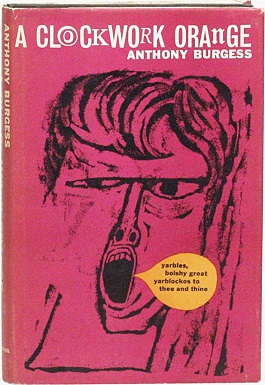
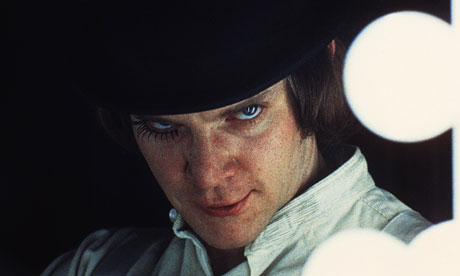
A Clockwork Orange


If you can manage sitting through the awful narration, that is to say Nadsat and all the horrors it brings on sentence structure and half-translations of sentences, then it’s a good book. I compare it to watching a movie in which the camera work is total shit and shakey, like Cloverfield or Quantum of Solace or something really nauseating (I think of this analogy because I recently viewed The Hunger Games and nearly vomited during the entire 2 hours of shit cinematography). Once you are past all that, it is really a good book, very moving and insightful.

Children are assholes, we all know this because we were all children once. But the kids in this book are fierce, terrifying and absolutely out of control. As if I was not put off enough when he destroys a man’s books in the early going, they also assault him and leave him bleeding and crawling, only to move on in the evening and commit a very horrible rape crime that is worked out in details that are not too vivid, and so less violent and disturbing at face value, but almost more horrible because the narrator and perpetrator, Alex, skims along the act and leaves a lot out and it sort of gives you the idea he isn’t all that bothered by it. As though he needs not focus too much on the act because it just is not that big a deal to him. Really terrible.

He moves on to committing a few too many senseless crimes and is later imprisoned for them. Rightfully so. Good, we can all inhale deeply and take solace in the fact that the justice system is doing its work and bad people are punished, learn their lesson and life is good, right?

Alex begins to lose his identity in prison, beginning with losing his name and being referred to only as 655321 during his stay. Sometimes criminals get out on good behavior, but Alex chooses to get out early via the Ludovico Technique, a controversial brain-conditioning program that will reset his behaviours to fearing, terribly, any act of violence or cruelty. His chaplain, whom he is closest too, warns him of the dangers of losing his free will and all ability to choose the proper path, but he ignores it. And just before his procedure, he commits one final act of superior violence by killing the new inmate that is stirring up trouble with the four of them living in their cell.

Alex is released to find himself in a struggle. His family has moved on and so have his old droogs. Though he would like to move on as well, he is still recognized as a menace and not given the chance he was promised to fit into society. One of his old droogs and a former rival are now members of the police and use their power to intimidate, beat and ultimately, rape him. He’s rescued by the man he once met and knows only by two facts: (1) that he is the man who writing A Clockwork Orange when Alex broke into his house and (2) he is the man whose wife Alex and the gang raped. He learns that she committed suicide sometime after that and Alex finds himself as a martyr for a cause that is trying to bring down the oppressive government regime that is responsible for this society being in its current state.

The pressures of it all plus some bad side effects to Alex’s conditioning, brain washing really, force him to attempt suicide and the near-death experience resets his brain and undoes all the washing. So the violent sociopath is back and really gets his way again. In the final chapter – omitted from the early US publication and therefore omitted from the Stanley Kubrick’s film – Alex realizes that he will eventually have a baby and it will grow up to be as big a piece of shit as him, and he will be as powerless to stop it as his parents were to stop him, and so on for generations. I have heard why it was omitted, that many readers would falsely interpret a happy ending, but it really does belong in there. It gives you a sense of how difficult it is to change the culture of a violent group in any society.

So the original British version had a much better ending for me, but the entire book leaves you with a kick in the chest as to how shitty crime evolves amongst misled youth, gangs, gets treated in the prison system and in the end, reproduces. Very desperate feeling to it after it is all over and I dig that.

Lastly, for a little story on how the book was written, check these strange facts out that I found on Tor.com (a favourite website for sci-fi/fantasy nerds everywhere).

Saturday, April 21, 2012

Double Star


Yet another Hugo Award winning Robert Anson Heinlein book off the shelf and into my tiny brain. Double Star is short, fast paced, to-the-point, and of most significance, “Early Heinlein.”  It takes place originally on Earth but soon after in outer space and on Mars and the Moon. In a brief synopsis, almost as brief as the actual plot, I’ll say that a down-and-out actor with too much pride is approached by spacemen for an acting role that pays well. By appealing to his sense of self-worth (The Great Lorenzo is a very self-confident man) they are able to smuggle him and whisk him away to Mars where he will be a fill-in for the politically outspoken leader of the Expansionist Coalition, Joseph Bonaparte. As Bonaparte has been kidnapped by anonymous enemies, the consequences for not showing up to a sacred Martian ritual are beyond consideration.

Lorenzo agrees and thus the transformation into Joseph Bonaparte begins. The enemies, who remain anonymous throughout the entire novel (typical Heinlein, really), eventually release Bonaparte, but he is in no condition to take the office he has just been voted into and Lorenzo ends up morphing into the role for more than any compensation can bring justice to.

The pace of the book makes it all very exciting. It is short, blunt, charming, imaginative and still carries Heinlein’s ideals but all put together so as not to disturb the flow of the story. Lorenzo is at first a very confused man, and remains that way until the breaking point when he realizes what must be done. But there is no confusion in the people helping him out, those that worked closely with Bonaparte and are helping him learn the role; they really pull together for the good of the cause.

These are the people that represent Heinlein’s ideals. They believe in putting an end to the exclusion of extraterrestrials in the Grand Assembly (which is similar to our House of Representatives, representing regions/groups to be acknowledged by the Solar Emperor) and that all sentient creatures are equals, and warrant the representation they deem necessary. The protagonists become political victors, then, as the afterword explains, losers and winners again. The Great Lorenzo becomes Joseph Bonaparte after his untimely death (affected so much by the torture during his kidnapping that his health deteriorates) and remains in office until his ousting, only to regain it again.

Political issues, especially those regarding Liberty, are at the core of Heinlein’s writing, but if you think you can’t handle any of his strongly libertarian themes then this just may be the perfect Heinlein book for you (in addition to the others on this blog I’ve reviewed).

Sunday, April 8, 2012

Doctor Zhivago


Well I thought I’d go Russian, again, for a chance to get my feet settled back on familiar hard ground. Hard, unapologising, unrelenting and completely unforgiving ground. Doctor Zhivago is a tale of…love? No that’s not quite right. War? Famine? Revolution? Journeys through the dark, lonely unknown to discover that ultimately nothing in life can bring you happiness? It is all of those things, but even more.

One of the most incredible books I have ever read, and I don’t always say that even about books I like. I have never come across a character so conflicted, from so many different facets of a life full of despair and unfair disadvantages. Even second chances are cruel to the antagonist.

I have read of characters that have perhaps more severe conflicts and sources of torture: Orson Scott Card’s Ender Wiggin, Frank Herbert’s Paul Atreides, Nabokov’s Edgar H. Humbert, Dumas’s Edmund Dantes, and so on. But no one has so many converging ideals and changes of belief, changes of heart from warring sides than Doctor Yury Zhivago.

Raised without a father – who committed suicide after losing his wealth and being misled by a conniving laywer – Yury rises through a dangerous Moscow to eventually become a member of the bourgeois class after attaining a medical degree. He sympathises with the working class’s ideals, however, being very much in touch with the heart of Moscow and realizing how unfair the current system can be.

But after traveling to the front lines of World War I, his ideals begin to shift. He no longer thinks violence should be used to convey a message, and that there are no ideals strong enough to warrant the taking of innocent lives.  And when he returns, he is appalled by the violence of the October Revolution and flees with his family and father-in-law to a small town in the Urals. Did I mention the Mother-in-law didn’t make the trip because she dies a miserable death early on, tortured so much by her past with the yet-unconnected but exact same conniving lawyer who has influenced Yury’s life? Well despair overtakes her and she tries killing herself with lots of poisons, but Yury saves her life and gives her a few more dark, depressing years.

Now that the remaining happy family has survived World War I, the February and October revolutions, they make their way out of Moscow to live on their own in the Urals. Along the journey Yury meets and deals with desperate people on the run, similar to him, as well as soldiers fighting for causes some feel passionately enough to kill for and others aren’t so sure, and become deserters even at the threat of the death penalty for these actions. Once in the Urals Yury rekindles an old flame with Lara Fyodorovna, wife of a Pavel Antipov and neighbor/acquaintance of Yury’s growing up Moscow as well as a nurse he came to know and admire and, secretly, love during their time together in hospitals near the frontline in WWI. Lara had tried to pursue her run-away husband who left her because he felt he didn’t deserve her and sought to gain renown as an infantryman, fighting gallantly to defend, and in the near future help reform Russia.

The plot thickens as Yury develops an affair with Lara, and before he comes to terms with admitting to his wife Tonya what has been going on, he’s captured by the “Forest Brotherhood,” a guerilla fighting force led by a cocaine-addict that is actually a separate entity from the Red Army, but still fighting viciously against the Whites. Forced to treat people fighting for a cause he doesn’t support, Yury begins to lose taste for his profession, especially after being pinned down by White Army cadets (which is a nice way of saying teenagers with guns fighting for the cause he does support) and forced to take action and shoot at them in order to escape. He begins to contemplate leaving the Forest Brotherhood, which is risking his own life, because of the conflicts he feels being a medic for a Red-sympathising guerilla force.

But of course, these mixed emotions about the ongoing conflict just aren’t complicated enough. So the Whites throw in an extra element when they torture a man by removing one arm and one leg and force him to crawl through the forest back to the Brotherhood’s camp. There he tells them of the unimaginable horrors in store for them all as the Whites begin to close in on their region.

Strelnikov, a displaced Pavel Antipov who is now a former POW with a new name and blood lust for White Army soldiers, ends up breaking through and the Reds move on to victory after Yury escapes from the Brotherhood. He’s no safer in public now, however, and must keep a low profile, abandoning a force fighting against the Whites in time of war is reason to face the firing squads in this time, and after he learns that the Soviet government now looks unfavourably upon the Forest Brotherhood, likely for being too independent, he has no one he can trust. Even Strelnikov falls out of favour with the Soviets (as his mysterious and charismatic nature gained him loyal followers, he also gained the attention of the Communist Party as a potential threat moving forward) and is on the move, all alone, much like Yury.

The two of them meet, whilst both in hiding, and after Yury tells Strelnikov that Lara is as inaccessible to him as his estranged wife Tonya (now living in exile in Paris with their kids and her father), Strelnikov shoots himself. Of course he does. Yury winds up making an attempt to salvage his life as a poet and translator in Moscow, living the slums, taking a wife, having children and then leaving her too and eventually suffering a heart attack on the streets. Lara makes it to his funeral and is later arrested and put into a Gulag, a sort of concentration camp in Siberia Stalin was very fond of using.

The story ends with Zhivago’s friends, Dudorov and Gordon, talking about how they survived the Gulag’s to become WWII servicemen, as well as talk of a young girl named Tonya who very much resembles Yury and Lara and the physical/personality traits by which these two came to associate them.

Needless to say, Boris Pasternak was in deep shit with the Soviet Union, Stalin, the KGB and Writer’s Soviet when the book leaked out of the USSR and was printed in several other languages before the USSR ever authorized its publication in Pasternak’s homeland. He was also “encouraged” by the KGB to decline the Nobel Prize for Literature he won that year.

I think people of my parent’s generation are much more familiar with this story, as the movie was a huge hit when it came out and everyone at the time was a big Omar Sharif fan. But for my generation, I think this book goes largely unnoticed. And I can’t see why. There are probably too many lists out there of the top 100 novels, or top 100 modern novels, or any essential book collection, and Doctor Zhivago doesn’t seem to be prevalent enough on those lists. There is no reason it should ever be placed outside of the top 25 on most of these lists. But, we do live in America, and most people can’t handle this much conflict.

Sunday, March 25, 2012

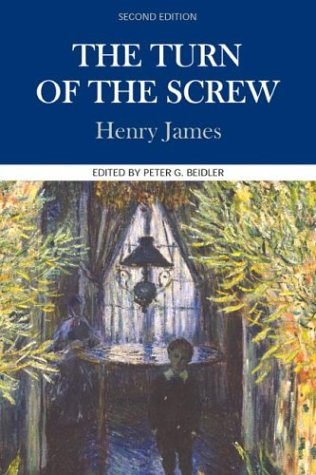
The Turn of the Screw


Well if you aren’t familiar with Henry James, he’s an author in a long line of authors and well distinguished Brits from the late 1800’s. This novella (I’m allowed to review novellas here right?) was published in 1898, same year my 30-40 Krag made its debut and later helped Theodore Roosevelt win the battle of San Juan Hill and, eventually, the Americans win the first two back to back World War Championships.

Good authors in the late 1800’s Britain are very different from good authors today (which are also from Britain, I might add). As such, plot, conflict and humour revolve around things that we don’t view in the same light. This makes the discussions which used to be tense amongst characters seem rather dry to us, but if you can get beyond that, this is actually an alright story.

It starts out as an overly complex setup to the telling of a ghost story (the setup is a bit over the top and I didn’t like it, in fact), compounded by Henry James’s extremely annoying writing style. It almost reads like American Law, very jumbly, wordy and unnecessarily complex. Beyond all that nonsense, things get interesting quick.

The narrator (once the tale is being narrated) is a governess hired to take care of a man’s nephew and niece as their parents are dead. She shows up and quickly learns of visitors from the outside. After another creepy encounter, it becomes obvious the man she’s seeing around the estate is the deceased Peter Quint. Who was a creepy bastard and child molester, in addition to being a ginger. The housekeeper confirms, without herself seeing the apparition, that he was indeed a creepy bastard and fits the description of the ghost.

There is then a female ghost, the predecessor of the governess telling the story. How she died is not quite as clear (to my recollection, she committed suicide) as Mr. Quint, who was said to have fallen and hit his head really, really hard on the ice when he was stumbling home drunk one night (the horrible bruising on his head supported this claim). Miss Jessel is the second ghost, dressed in black and appears to be mourning, and the girl of the estate, Flora, seems to ignore her during all encounters.

The children continue to creep me the fuck out, waking at midnight to walk to the window and peer out into the darkness, leaving the house entirely and hanging out in the lawns in the complete darkness of the hour and peering up towards the tower where the ghosts have previously appeared to the narrator, and so on. Despite the attempts of the governess to corral the kids, they continue to be adorable little bastards. The ghosts keep appearing. And the children keep implying they have no clue the house is haunted.

In typical British fashion (a sort of Dickens-humour) everyone keeps dancing around anything outside of old-school British propriety: like the fact that there are goddamn ghosts in this place and the kids are covering it up by being way, way too sweet and innocent, even though when they do pull stunts they seem way too clever to be good children.

The governess slowly begins suspecting the house is evil; then as she loses her shit she says the children are evil. Finally she ties up all the loose ends to point out the ghosts to everyone, and no one else can see them. I went from suspecting to declaring the lady was crazy at this point, but the ending is very open and, if you can sustain Henry James’ ridiculous law prose you might have a lot to interpret and several different arguments for which to make a case on just what the hell was really going on in that house.

Because of its relative shortness, the clever trickiness of the kids and their pranks, the humour of discomfort amongst a governess completely out of her element and slowly losing her mind, and the surprisingly pleasant ending in which someone dies, someone feels victorious and nothing is explicit, I was quite glad this made it on our book club list.

Wednesday, February 29, 2012

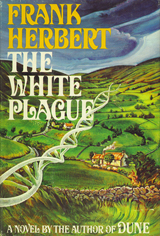
White Plague - Frank Herbert

Frank Herbert is one of the best authors of all time, not just science fiction. And if you need any proof of this, I’d recommend a fairly non-sci-fi book like this. It covers a massive range of issues, from morality and religion to violence and war, science and politics and of course, the ever interesting “what-if” doomsday scenarios.

There’s also a range of characters, predominantly American, Brits and fucked up Irish. And not the great, St. Patrick’s Day everyone wearing green and listening to U2 or Dropkick Murphy’s Irish, I’m talking about the real Irish. The ones who are violent, hateful dickbags with a penchant for getting under people’s skin and holding grudges with them until the end of the world looms near.

But through all the violence and hatred, Frank Herbert has a way of conveying the heart of the issue without actually writing anything of the violence. You just hear about it after it has already happened, it is really quite brilliant. The very beginning is the only time in which violence is described in detail, and that is what sets off the entire plague.

An American (of Irish descent) in Dublin loses his family courtesy the IRA and basically goes batshit. He spends the next stage of his life retracting into a home-made basement laboratory creating a disease that will kill women. All women. So that Ireland (the place he lost his family), the source of their extremists’ weapons (Libya), and the source of their pain (Great Britain) will know his despair when their women parish. Scientists and politicians from around the world unite to find a cure, or even just to know what is happening with this disease. Women in quarantine are held in captivity against their wills, and are unsurprisingly targeted by the lonely, mad male population. But of course, being raped by a man who is a carrier (with no way of knowing if he is a carrier or not at this point) will only kill you later on anyway. Eventually the same united scientists/politicians begin to suspect who may find the cure first and use it as leverage to become a superpower, or who may use it to protect their women and call for others as there is about a 10,000:1 ratio of male to female on the planet.

So there is unrest globally and within the groups fighting for a cure. There is also a new pope because the previous one had a heart attack as the Catholic Church is blamed by so many for their ties to the Irish and the violence in that country. This loose end is tied just enough to talk about how the new pope is assassinated because he’s fucking crazy. But in typical Herbert fashion, this isn’t a failure of religion, it is a failure of bad politics. The religion is actually a huge part of the antagonist’s soul-searching, as he is teamed with a Priest and a devastated boy to a firsthand viewing of all his damage. Then there is the asshole Irishman, starting shit and beating the Priest on occasion, coming on way too strong and making himself an opponent of not only religion, but the quest everyone is on to make it to the labs and work towards a cure (which, also in typical Herbert fashion, isn’t really what’s happening).

I also freaked out, healthwise, when I read this book…seriously. I jotted down the following passage as I crossed the quarter mark of the book:

I did realise in the early goings of reading this, though it is very terrifying and well written, I am possibly too much of a hypochondriac to read about plagues, outbreaks of disease and biological warfare. There's a couple chapters; one in which Herbert explains the creator of the disease's reaction to it, catching a stray from the lab I believe he calls it, and is overcome by less-than life threatening but still serious symptoms. In the next chapter we learn the symptons first hand from a lady intent on explaining to scientists/doctors exactly what is happening to her as she loses everything. The symptoms begin to make me nervous, and all of a sudden I'm consciously aware that, on some minor scale, I share some of these symptons with her. For example, as she's lying on her deathbed recalling everything that she has noticed lately that was even slightly different, she mentions she woke up horny, very horny. Hey, I was really horny this morning, I thought. And she follows this up by explaining how hungry she was in the morning, ate two breakfasts. Hey I could have eaten two breakfasts, I was that hungy! She goes on to mention the headache, which was no doubt similar to the one I had (and I forgot as I was reading at the time that mine was due to dehydration and alcohol consumption the prior night). Then it's the current symptoms, elevated heartrate (Oh no, my heart is beating faster than normal too), sweating and feeling cold (I think I just got the chills myself!) and dizziness (Wait for it...this is the feeling I usually get before a wave of dizziness comes. Holy Mother of God, he got me! John Roe O'Neill got me! The sonnovabitch!). But like a crazy person with a message to send as the world ends and fades to black, I hear my conscience, the voice of reason inside my head, running against the current of destruction and trudging through the rubble, arms waving and screaming to get my attention. Shouting all the while "It's not real! It's all in your head, you actually feel quite fine." And when I hear this I realise I do actually feel quite fine, and I'm not going to die of a disease Frank Herbert made up in a basement in Seattle....though, suspiciously enough, I was reading this book the same time I was in Seattle, and about the same time I'd had medium-rare pork for the first time.

So yeah, hypochondria, it'll ruin anything I'm reading about human health, disease and illness you can think of.

Anyway, if you have time to read a doomsday book, or like Sci-Fi authors bridging the gap into more of a thriller role of fiction, or just hate the lousy Irish (I am very Irish for those of you who don’t know me, so I feel fine talking this way), then I recommend this as one of the best late-Herbert books out there.

Wednesday, February 15, 2012

The Handmaid's Tale

My first Margaret Atwood book. It was fair to say this book was highly anticipated in the book club to which I belong, mostly because it marks the beginning of a set of science fiction books hereon until the end of this list. Something like eight books remained (including this one) and they all can be classed as science fiction.

I had no idea what to expect for the plot of this story, and the only warning I had going into it was the level of despair with which the antagonist recounts her days in the dystopian society. Ah, my fave, dystopias and human despair. But I think reading Doctor Zhivago (review coming up soon) just prior to this desensitized me to any sort of sad, terrible emotions the dark and depressing style with which Atwood writes was supposed to instill in me. This left me, I thought, able to appreciate the story for all it was worth. And I looked very much forward to what was going to happen without being slowed down or deterred by how awful this fictional society really is. In other words, I could see through the main character’s pain to appreciate everything this story was really about. But, to my dismay, it wasn’t about much.

I liked the idea, don’t get me wrong. It was powerful, and it represents actual societies that we know about in existence today (Taliban rule in Afghanistan, for example). But there just was not enough of a story line to make me feel it was worth all the shit she goes through. It was just a telling of what happens, almost a documentary, as there was no real climax or resolution to the plot. No solving anything.

So if I could shelve this one under “fictional documentaries,” it would probably be tops on that list. Unfortunately, it goes in my dystopian society list, and with the potential it has at the beginning I feel it disappoints by the end.

In a more positive light, I do like her writing style. It made me feel it was actually written by a reformed woman who may once have been an educated member of society but couldn’t resist the severe oppression of her new patriarchal police state. I also very much enjoyed the mysteries, the ideas that no one really knows what’s going on because viciously governed police states are great at censorship, and keeping from their people any idea of what the outside world is like (1984 anyone?). And the first page of the first chapter lets you know that this is how this society operates.

I may give Atwood another go, but overall I’d have a difficult time recommending this book to anyone who was not particularly a fan of the dystopian sci-fi genre like I am.

Friday, February 10, 2012

The Gunslinger - The Dark Tower Series: Book One

Ah yes, Stephen King. An author I gave up on when I realized he didn’t give a shit if I found his stories scary, well-thought out with plots and characters well developed or forced out with the grace of an explosive fart. There is not much out there he’s written that I’ve read, and even less that I’ve enjoyed, but I’ve never met someone who read the Dark Tower series and had anything bad to say about it. In fact, the closest thing to a negative review I’ve ever heard from any of my friends about the books is that some in the series are “very Stephen King-y.”

This had me worried at first, but after finishing the Gunslinger (and now finished with The Drawing of the Three) I think I can say this is that bit of Stephen King I enjoy. Besides, I don’t dislike all of his work, I just find him a bit too bizarre and gory for me sometimes; really drawing out the scenes that are intended to make one uncomfortable but don’t add much, if anything at all, to the story.

But this book was a mix between a slow, painful trek through the desert (don’t I know a thing or two about those having lived here all my life) and some mind blowing revelations. There is also a little bit of action, which helps define what the Gunslinger is, rather than whom.

We don’t know much about whom he is, really, there are some brief flashbacks, but for the most part he is a man of mystery. It’s a while until we even hear his name. We know he is skilled, but we don’t know where he comes from. For that matter, we don’t know where he is. Is this place in our world or not? It seems like it, as he recognizes the lyrics to ‘Hey Jude’ by the Beatles, but does not refer to it as a Beatles song.

There are also hints of some terrible apocalypse, as this world has “moved on” and left behind some technologies like pianos and revolvers, but not all that we have. For a better speculation by a very thorough book reviewer, I recommend you see what the good people at Tor.com have to say about this book, which includes more speculation and more guessing than I did as I followed the story:

Constant Reader analysis from Tor.com
http://www.tor.com/features/series/a-read-of-the-dark-tower
Very inquisitive review, for sure, by Tor.com

The last bit of description about the Gunslinger’s world is when the boy, Jake, says “there are other worlds than this one.” And this comes after he describes to him how he died and the Man in Black brought him back to this world. So it is like a freaky, Stephen King-y purgatory, I gather.

The book ends with his conversations with The Man in Black. This involves some pretty weak tarot card readings (didn’t like that addition) but ultimately sets up the next book.

I felt it was so short and brief that it really did nothing other than set up the rest of the series, but it did a good enough job of that. The scene in which he gets the Pentecostal preacher woman off with his pistol, then blasts the rest of the town one at a time with a gun in each hand really made everything worth it. Plus, getting to know a bit more about the Dark Tower at the end made me feel better about being dragged through the desert not knowing what the hell for.

Really looking to vent about The Drawing of the Three soon. Stay tuned.

Sunday, January 29, 2012

V for Vendetta


I picked this book up because I felt inspired to see some ass kicking against a corrupt, overzealous, powerful oligarchical governmental system in a dystopian future police-state after reading 1984, wherein I was heartbroken to learn that the supposed “counter-revolution” is a mean trick to find counter-revolutionaries and imprison them, torture them and re-educate them using the people’s own fears against them.

Alan Moore doesn’t disappoint, of course. But I couldn’t help read this and compare it to the movie, which I’ve seen only a few thousand times (one of my favourites). I’m sure Mr. Moore appreciates that fact too. At least I don’t feel as bad as the Occupy Wall Street kids he met, wearing the Guy Fawkes’ masks because they liken their movement to “what happened in the movie.“  Kids these days.

In any case, I believe I can enjoy both the movie and the book, even though they are very different. It feels like the book is more about the message, where the movie tends to focus more on the violence and V’s revolution. They even add more people he needs to slaughter into the movie. And in the scenes in which he does kill, it’s very stealthy and low-key, almost anti-climactic in the book. Moore doesn’t seem like he wants to focus much on V’s methods or his killing of guards, henchmen &cetera.

And I quite like that. The characters, save for V, Evey and Detective Finch, are all magnificent pieces of shit. 
Really love to hate those types of characters, not only for how they treat other people and their views on racial/political supremacy, but also their goals and what they value. And it feels great to watch them destroy themselves with very little prodding and setting up from V. It really is comforting to think that, of all the horrible people in life we come across, it’s okay not confronting them and pointing out their wretchedness, because eventually their own misery will catch up with them. And they likely wouldn’t understand any sensible conversation anyway.

Alan Moore seems a fan of letting crappy, awful people carry on and continue to be crappy and awful until they learn their ultimate lesson, whatever that may be. That alone makes this book worth reading, but I also loved V himself. A really amazing, driven character who’s even quirkier and stranger than I expected. I’d recommend it just for him alone, but the misery of the other characters and his vengeful, yet hands-off approach to watch them destroy themselves combines a very Count of Monte Cristo feel to it all.

Furthermore, I love the idea of Anarchy being a ruling system for society. He makes clear the difference between Anarchy and Chaos, which most people confuse, and maintains that it’s okay for humanity to operate without any central ruling body, taking care of themselves and enjoying their own personal freedoms, giving up only what they choose. I first was taught about the difference between anarchy as a political ideal and simple chaos amongst the public by the professor in The Moon is a Harsh Mistress, and I love when an author can defend these ideals.

I also love Moore’s ideals towards sexual freedom, his dears of government and leadership that aims to criticize and even ban homosexuality in some circumstances. Written during the reign of Margaret Thatcher, I can’t really sympathise with his fears, but I do have this to bring to the table:


(Is that the theme from Red Dawn?)

Always a pleasure to read anything Alan Moore wrote, his strange nature draws me in and I thoroughly enjoy the warnings he issues about the direction he thinks society is headed.

Monday, January 9, 2012

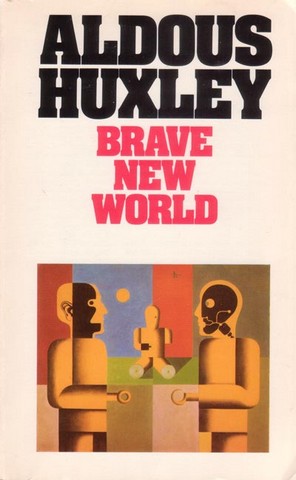
Brave, New World.

What I liked about reading this was how quickly it came after reading 1984. A little over a month, for me. My favourite part of Brave New World is that no matter where you dig through Aldous Huxley's collection of analysis and review and "Revisited" literature, he never refers to this world as a Dystopia. Rather, it is a satirical take on a Utopian society in which nobody need worry about anything that makes us human today. Our way of life, as progressive as we may think it be, is savage to them.

I read it with a comparison of 1984 in mind, and though I thought myself clever at the time there exists many takes on comparing/contrasting the two, mainly these websites: 

They both carry basically the same message to readers, written from authors with similar goals writing in the same time period, and both works remain equally timeless, regardless of the warnings that the future holds no room for reading. And the message is that our society is trending in a very scary direction, we should all be concerned and we should all keep an intellectual assertiveness to keep this from happening to us.

But how this comes about is totally different in Brave New World. The ruling bodies and powers that be have no need for censorship, and rely on the fundamental truths that if society is given enough freedom to engage in fun yet ultimately unrewarding behaviour, that their need to continue to have fun and be worry free will outweigh their desire to learn, be independent and seek greater knowledge. I compared it a lot more to Fahrenheit 451 (review out soon, hopefully) because people, for the most part, have better things to do than to think and learn and philosophise and expand their minds. They have girls to play with, erotic games to engage in, orgies to attend and soma to take if they ever feel stressed. It reminded me much of the crowds of frat guys in college who think the last thing in the world they want to do with their free time is read a book or study history or visit a culture that lacks our technologies which is firmly rooted in traditions we may find savage.

Just thinking about things, who we are, what others did and what could be or thinking up scenarios for how people react and what makes us human, what is an acceptable reaction to any stimuli, is a fairly basic concept of philosophy. And of Brave New World, Fahrenheit 451 and 1984 I love how the authors make these ideas, these thought processes obsolete so that society can sleep peacefully at night and not deal with the horrors and brain cramps that deep thinking brings about. But nobody did it quite like Huxley.

He makes a satirical Utopia so easy to relate, even for us, 80 years later. There's no need for any intellectual tools anymore because there's pleasurable stimuli all around you, plus the social norms and peer pressure prevent many from wanting to seek knowledge and the tools that will expand their mind. It's very comparable, in my view, to those that put off fulfilling activities to watch ABC, NBC, CBS and FOX weekly and nightly programming or Hollywood blockbuster movies with their shitty writing, shitty plots and great special effects and excessuive use of PG-13 tits and ass (Transformers, anyone? What a pile of shit).

But rather than instill fear and scare you, Huxley makes fun of it all. And for that, I think he's done something no one else can match, and few even attempt to.

Wednesday, January 4, 2012

Glory Road by Robert A. Heinlein


I've always loved Medieval literature, and though I don't read nearly enough fantasy as I should (I do like Tolkien, think I'll like David Eddings and even Robert Jordan, like Patrick Rothfuss thus far, really not a Terry Brooks fan though) I feel there's a connexion between those two that I can appreciate: warriors on horseback with swords fighting entire armies, adventuring, slaying dragons and rescuing queens. Love it! This book lets me feel that way without being pretentious or overdoing the whole “this world isn't like our own” bit that perturbs me; Medieval literature didn't care to make such disclaimers and was so bold as to suggest dragons could be killed in our world. And if not, who cares, it's fiction! At least Heinlein has the decency to say “we're leaving this world, from now on, anything goes.”

And of course, there's something special about the way Robert Heinlein writes. Mostly its his ideas for novels; they seem less like they come from the demand of a publisher or demand from the public and more from his own will to write about his passions in life. And even when he's firmly rooted in a fantasy story, you still get touches of his ideals for society, government, combat, relationships, sex and everything else he loves to talk about.


Robert Heinlein's first novel after he wrote Stranger in a Strange Land (a book that defied social norms and used his love of science fiction to relate a more passionate topic of his, that being sex) is the author's only work of fantasy.

But really, who expects to pick up a Heinlein book and read about dragons slain? Or magical powers used by an Empress to make a young warrior believe in himself and wield a sword with enough confidence that he can storm a highly fortified castle? It is still him, yes, but it is different. Not different in a way that makes you think he is trying too hard to re0define a genre; no it is actually quite basic fantasy stuff, but different because he has no other work like this.

If I were a harsh critic, I'd say it doesn't work, or that it doesn't fit. But I'm a Heinlein fan, and I say it's just good fun. About the only thing I didn't like is that need for an object, something physical that people use or need to possess or are trying to destroy. Plots that revolve around something so simplified as a physical, tangible object being obtained/destroyed really put me off, and it's really the only one of his works I've read to this point that uses that technique.

There is also a pretty lengthy bit at the end of their marriage and it reads like an instruction booklet on how to avoid a counselor with your spouse and still be happy. Maybe it drags on a bit too much and maybe I just get bored when he lacks violence or nudity for 10 pages.

Overall though it is definitely not what I expected when I picked it up, but what I like about the fantasy genre is how it reminds me of Medieval literature, and this has some pretty good parallels to that whilst still being absolutely Heinlein.