Popular Posts

Wednesday, July 11, 2012

Lamb: The Gospel According to Biff, Christ’s Childhood Pal (a novel)


Long title. Not a very long book considering it covers Jesus’s life from when he is 6 years old through to that point in his life when they made that movie The Passion of the Christ. 31, was it? Whilst not crazy about it, I think overall I really liked it (the book I mean), but of course I cannot just simply say “I like it” or “dislike it” because I am just not cut out that way.

I would say this was otherwise a pretty damn funny book. And the reason I would not say no to a book of this caliber is because I listened to it on Audiobook. I have been doing Audiobooks for a while now and they help break up the nasty, grueling drive I make to reach Phoenix every other weekend to see my lady and on other occasions, hockey team. I keep track for my purposes which of these reviews I Audiobook, and the prior review of The Drawing of the Three I was listening to, a gory enough scene to make me not want to drive listening to it anymore, forced me to turn it off and when I looked up BAM! Car accident. So I switched to humorous books instead, like this one. And well, here is the review of that.

Getting to the meat of the book, this was a very blasphemous story about reviving Levi so he could write a gospel about Joshua (a much better translation of Yeshua’s name) as he spent nearly every moment by his side growing up, through adolescence and into adulthood. Levi, who is called Biff, is an extremely loyal yet crude, unsophisticated simpleton with a foul mouth and a temperament for blasphemy. The story primarily involves their quest for the Three Wise Men at Joshua’s birth, which we learn are a Magician, a Buddhist and a Hindu Yogi. Joshua and Biff spend years with each, and each person teaches him more about how to become the Messiah, whilst he more than masters what they have taught him and in much less time than anyone expects.

Biff, during all this, is helping Joshua by continuing to be an example of what he will never be, a true debauchery fanatic and the only one with vice and terrible qualities enough to bail Joshua and him out of trouble. Most of this is really fun, and when not fun, blasphemous (which is as good as fun, most times).

The twists of what Joshua learns from these people and how it applies to his miracles he performed in the Bible are an extension of the humorous-blasphemy I enjoy. The idea that Jesus learned all that we associate with his mystical side from pre-existing sources by consolidating different aspects of Sun-Tzu, the Bahgavad Gita, Tao Te Ching, Diogenes’’ Cynicism and various other philosophies, is just great to me.

Still, not a great book in my opinion. Felt like it was great when Joshua spends time with the last Yeti, and the jokes that Biff has about that creature, but the end came a bit abruptly and was a bit too unbelievable for my liking. Really, the final scene comes out of nowhere and is completely unnecessary. And what is supposed to be the takeaway from it? That if you serve Joshua as a means to his ends you all get second chances? Unless his other friends didn’t like you? Really the bit about Judas and how it ties into the resolution/conclusion left me a bit confused.

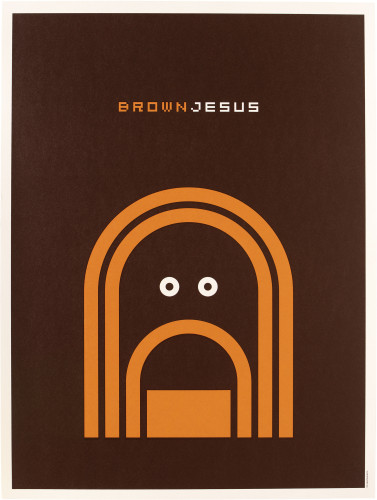
Anyway, if you like to laugh and love blasphemy, it is worth reading, but I do not otherwise have too many great things to say about it. Good enough, I suppose. I will leave you with one last bit of religious history that always makes me chuckle, fan art from an African on Jesus.

Tuesday, July 3, 2012

The Drawing of the Three – The Dark Tower: Book Two


 Very discontinuous from my post on Book One: The Gunslinger, sure, but review that one if you need to, because I wrote this one shortly thereafter and it follows a similar style and train of thought. Here we go:

Well now this is more like it. I recall saying something along the lines of

“Besides, I don’t dislike all of his work, I just find him a bit too bizarre and gory for me sometimes; really drawing out the scenes that are intended to make one uncomfortable but don’t add much, if anything at all, to the story.”

And guess what? It happens…but not in such a way that I can’t enjoy the story overall. The truly horrible thing (he is a “horror” novelist, right? Even if these aren’t particularly scary books) is that it happened at a particularly odd time. Being a man who doesn’t believe in coincidences, I have to say this may be an event that will stick with me for a while. How it happened was that I was listening to an Audiobook of this story, narrated by Frank Muller and using my Audiobook application on my smartphone as I traveled to Phoenix from Safford to watch a Red Wings game.

Stephen King’s “Kinginess,” wherein he describes the gruesome crime that leads to Odetta Holmes losing her legs above the knee after being pushed in front of the A-train in NYC, was more gore with less plot-relevancy than I felt I should be putting up with during a narrow canyon pass through the most dangerous part of my drive. I promptly switched from Audiobook to music on my smartphone, and as I did, there was an accident ahead of me. The details of this accident relate more to another story, which can be found at another blog for which I sometimes stop by and write. And that story blossomed to even more unexpected, stranger-than-mere-coincidence, deeper relationships. Very strange, to say the least.

I think for that, this book will always be looked upon strangely, and fondly. To get away from what happened in my life as I went through this story, it was very much fun. Eddie Dean was a very enjoyable character and his rite of passage from drug mule in his world to sidekick of the Gunslinger was well done, and at times fun to cheer along with. Odetta Holmes/Detta Walker, not so much. But the drawing of the third one made it all better.

And of course, how can I recap this story without mentioning the giant, bloodthirsty lobsters? Does Stephen King really hate lobsters? Being a native Northeastern US celebrity and representative of that region, I can imagine. But maybe the man had nightmares of them when he was a kid. In any event, the narrators take on their psychotic questioning (“Dum-a-chum? Ded-a-chek?”) makes me laugh everytime I think about it. It was perfect.


I also really enjoyed the gunslinging in this book. Whether it was his threats, a blasting of a human-hungry lobster, killing off people from Eddie Dean’s world or doing his thing with ammo and drugs in Jack Mort’s world, it was always entertaining. And Jack Mort represented a typical Stephen King villain to me, and I’m glad he wasn’t in there long enough to ruin the book for me. A sociopath who gets off causing serious injury to people…and yes, I mean actual orgasms when he does. Very King-y, I should think.

But there’s a great plot development with him at the end, and great character development too, pulling everything together and preparing you for the long, difficult journey onwards as they leave the coast and head up into the foothills on their quest for the Tower. Not much is said about the Tower in this book, but with the Man in Black gone, it’s not as though any one here knows that much.

Needless to say, I liked this book more than its predecessor and if the third one is half this good, I’ll enjoy it as well.

Saturday, June 30, 2012

Michael Crichton's Sphere


Oh right, I have read Sphere, I had almost forgotten. I am unsure as to whether or not it is because I am getting older, or maybe just evolving in my taste for literature, but though I respect what Michael Crichton brings to the table (Science! Reason!), it never seems to match up, even comparably, with what I felt when I read Andromeda Strain. Again, that's not a knock on Crichton, but I just do not find much of his later books – or maybe any of his other books for that matter, including his earlier works (The Great Train Robbery, The Terminal Man to some extent) – all that engaging.

So Sphere, I shall start with what I liked. Of course, I always like the pace with which he writes. His books read like you are watching a movie. Just like Dan Brown novels. But there are things you lose in those types of books. Unfortunately, this is not a Michael Crichton review it is a Sphere review so if you do not understand what that pace is like and how it affects book/movie plotlines, I won't be covering it here. Moving on.

I also liked the influence of science. Of all the criticisms we can give Michael Crichton, one we cannot dish out is that the mother fucker didn't do his research. This guy had a mathematician, an astro-physicist, a psychologist and a biologist, plus Navy/Military and US Defense aspects all effecting the plot in a way that twists the story into itself and forces the people's ideals to clash and at times implode on their little underwater society.

It takes us some time to research these different fields and weave a story with them, and we have the benefit of internet. I have to believe Crichton's struggles to intertwine all this in 1987 (yeah, that's another thing, can you believe this was published in 19fucking87?) were a bit more difficult than I would guess, being a child born shortly before the book was published. In other words, he got off his ass and went to the library more than I have ever felt the need to, of that I am certain.

A very novel concept, with very novel science and well-thought out backgrounds, characters and plots, typical Crichton. But, in typical Crichton fashion, it just doesn't pull together in a way that grips me. Sure, it is a real page-turner, but more because of the pace and less because the writing is great. The writing is actually, to be honest, not good. I think what drew me in was that I am a man of science, but that sometimes acts as a double edged sword and I get annoyed with little mistakes, which seem to me in certain lights as glaring, obvious errors.

So when I read “strong odor of ammonium” and “ammonia fumes” on adjacent pages, I flip shit (Sphere, Michael Crichton, Harper Collins © 2006). Ammonia is NH4+, making it a cation where ammonia is the chemical we smell and clean with. If you have had a chemistry class you know they are very, very different things. Still, this is not Crichton's biggest error.


His biggest error in this story for me was just how weak and feeble a military organisation trying to investigate the biggest discovery in human history (and trying to weaponise it) could be so insubstantially backed up, in terms of personnel and contingency planning. I know we always portray the military as being short-sighted, gung-ho and absolutely confident the point of no return at times, but having family in the military I know they're actually very thorough most of the time. And that “one time” they aren't thorough seems to be the whole punch line of every book that ever uses military intervention as part of its plot.

Can we get over that, yet? It really is an annoying trait stories need to rely upon to get the message through. Other than all that, I thought it was a decent story. The movie gets some of it right but ends up in a mess of people unable to control their thoughts and narrowly escaping, and with way more unnecessary dramatics, but I'd honestly say you don't lose too much watching the movie over reading the book (even thought I'm a smug bastard who typically, pretendingly, judges people who watch movies over reading the books). Plus, I cannot hate the movie too much, it does have Peter Coyote, with his voice in all its glory, and Sam Jackson. He doesn't make bad movies, does he?

Not a poor book, but certainly nothing to be smug about having read it. That's my final thought.

Tuesday, June 26, 2012

Jonathan Strange and Mr. Norrell (with minimal spoilers! If any...)


Sorry for not getting this out sooner. I thoroughly enjoyed Jonathan Strange and Mr. Norrell but life got in the way of my blogging with a terrible accident that ended up costing me many extra, very late hours and weekends at the office. So I’m just resuming some sense of the normal status I knew before the accident now.
This novel is Susanna Clarke’s first, shamefully, and was on our radar for the book club as well as talked about when I visited a website showcasing Neil Gaiman’s Top 10 favourite books, if that sort of list means anything.
It is broken into three volumes, “Mr. Norrell,” concerning the curmudgeonly snobbish and angry old Mr. Norrell who is trying to monopolise English magic; “Jonathan Strange,” a less-than-heroic hero who acts, figuratively, as a sort of knight in shining armor but is really just a nerdy, unhandsome, very studious and quicklearning magician on the rise; concluded by “John Uskglass,” the semi-mythical hero-king and founder of English magic.

This book’s depth and range of humour and magical is always engaging and tends to focus less on the conjuring of magic, like Harry Potter (as I understand it, anyway), and in fact skips over that entirely in most parts, and instead focuses on the magic itself, its manifestations and ends. The creations by Mr. Norrell in the first book, what he is able to master and prove to innocent citizens and enemies of the English alike, are spells or some other conjuring that is kept entirely away from the reader, which is a very Norrell quality. He absolutely hates sharing magic.
And about the enemies, this book takes place during the world’s conflict with the French, specifically Napolean Bonaparte. I’m not too familiar with that part of history (because I grew up in ‘Merica) but Clarke does an excellent job of making the reader feel comfortable moving with the story and not touching upon trivialities that history buffs would know and semi-educated folk should know. I guess the key there is that I do not get the sense, as a reader, that she is ever talking about something I should have known about.
The conflict with Napolean features some magic by Norrell, but it really is a feature that showcases the badassery of Jonathan Strange. Although his magic helps England prevail, he is a very relatable character. Norrell represents a very shitty mentor and horrible teacher of magic to him, almost like working for a horrible boss, but Strange persists and is a very touted magician in not-to-long a span of studying the art; mostly on his own as Norrell’s weird sense of hoarding all literature and knowledge of magic persists, even when he takes on a pupil. The best thing about his rise is that his explanation to everyone of what he learned is very simple, and that he picks things up because they really are not that difficult and he applies himself, and tries new things when they do not work rather than giving up.
Relatable because I work around many people who go through each day doing the same things with very poor results but because they cannot bring themselves to work around problems and challenge their own way of thinking, they never progress.
Aside from a very British book with a very British sense of humour and propriety, Clarke also weaves a web of lies and deceit that I just couldn’t wait to be resolved. Sure, I had to wait about 800 pages for it all to work out, but it was a fun ride to get there and the plot thickens in a well thought-out way the entire time.
I honestly have no complaints or none that I can recall in regards to this book. To paraphrase a fellow literary assessment club member, the book is like “if Bleak House and an Elizabeth Gaskell novel had a child, and was modern enough to be appreciated by our generation.” Accurate or not, that statement may scare off some potential readers. As well it should, I’m not sure everyone will appreciate this book for all it has to offer as people these days seem not to like books that are this long (to which my Count of Monte Cristo friends and I say you can go fuck yourselves!).

Tuesday, June 19, 2012

My Book Blog's Review of Prometheus


I meant to get around to this a lot sooner, I apologize, sincerely, for the poor timing, but unforeseen events/emergencies have forced me to delay this post I so desperately wished to write.


It is, if you have been following me on the Twitbooks ,about the one thing I cannot stop talking about of late, the film Prometheus. This is a film that has garnered much attention and much hate from nerds, casual science fiction fans, regular movie-goers and unintelligent, uninformed action film fans alike. Oh and atheists, they especially hate this film. There is something inherently wrong to them about people believing in God and the existence of aliens at the same time. I personally think it is the existence of God bit that winds them up but the primary atheist I talk to does not actually have a problem with what I just mentioned, because he has a brain that is useful.

Anyway, this film, this fucking film! if you will, really has not been well received. People just are not talking about it in a very positive light. And it makes me wonder what things people were saying about Alien in 1979. All I know about that one is from my father, who says it was “freaky.” Prometheus, a great prequel when you consider how many even-remotely-decent-prequels there are out there, is not necessarily freaky. Nor is it entirely intended to be. Whilst Alien was a groundbreaking, revolutionary horror/sci-fi crossover, combining elements of each in such a way that viewers were never really sure which it was supposed to be (hint: horror), Prometheus is more sci-fi adventure but keeps some of that chest-bursting charm we have come to admire from Ridley Scott.

I know, I know, it has a terribly convenient setup and we are whisked away to a foreign planet before we can even judge for ourselves whether or not we want to sit through this whole adventure. And I know, the characters are sometimes weak, with ambitions that do not line up with the policies onboard the ship and hence the trouble, and some characters, especially the old ones, are entirely unnecessary whilst still others are completely necessary and great but are killed off in a very weak and silly fashion.


But there is more to the movie, especially to a person in the field of science who has had interactions with many different fields, that stands out. The Geologist was perfect, ditto for the biologist. Has anyone ever been a part of a job with a geologist? That role was cast perfectly. Almost made me feel as if Ridley Scott came to my worksite sometime in the past when I was not there. And his relationship with the biologist – absolutely spot on. The scientists I know and have known in the past clash with geologists, and the rock-folk seem all to quick to defend themselves against the fact that their field is a speculative science, not an actual science. Just as engineers are applied sciences. One thing they hold dear is that biology is not an exact science and should not be looked at as such. I personally love the conflicts between these careers, and being in a work environment for NASA’s Phoenix mission and my current job affords me all of the tension I can handle with varying fields of science using their careers to shield themselves from actually needing to make friends. This is reflected beautifully in the film.

I am not sure if this was by accident in the movie, or if Scott knew what he was doing, but based on the evidence of Alien and his accuracy of depicting the brotherhood-conscious and money/security-conscious yet production/safety-oblivious  union miners in characters Parker, Lambert and Brett (something I am unfortunately all too familiar with), I think he knew exactly what he was doing with these characters, no matter how small their role.

Then there is the Alien influence. The part that makes it either a prequel or an addition to what is my favourite science fiction film franchise. As a man who enjoys and appreciates the story of Alien 3, I can definitely appreciate the tie-ins from Prometheus to the franchise. I squirmed when I saw the life forms for the first time. Shitty exploration scientists do not seem to catch on, but aliens from Ridley Scott films are almost painfully obviously fallic and usually are successful in raping male characters’ mouths. Of course, we know by now what they’re doing, and much like Ellen Ripley we never seem to get over the dread of watching them burst out of someone’s chest,  and like her, we cannot seem to look away.

And when you need a hero, no one seems to step up quite like strong, logical and independent women. They seem to make better engineers in my field and I would not be surprised if they actually make better leaders under pressure. But it is controversial, and uncomfortable for men to accept this. That is another reason I love Ridley Scott, he shoves that shit in our faces. Women are also less fidgety and uncomfortable when something is living inside someone, they have to be, that is just a part of nature, but for us men, holy shit Scott knows how to make us squirm in our seats.


All these reasons and more helped me enjoy Prometheus, and I was not one who was a bit turned off by the fact that a belief in God and the existence of aliens can coexist. They can. Christianity might have to change some of their sermons, if we are all to accept this, but there is absolutely nothing wrong with the premise. God, teachings, Christianity, these are things that are (or at least should be) about values. Atheists need not get angry that there is a contradiction here, but be happy that a Christian – a type of person most atheists find hard-headed – can accept this coexistence and back it up with a simple statement of “because it is what I believe.” That’s not being too pushy, that is totally fair and I will allow anyone of any creed to tell me that, absolutely no questions asked on my part.

Each and every one of the persons that sees this film is entitled to his or her own opinion of it, and need not justify that opinion to me. But I have read and heard many sour, negative reviews and disfavourable opinions towards it. I say that there are a great many more terribly written movies with bigger plot holes and worse plot-lines altoghter that have received much more acclaim in recent memory (Avatar, Transformers &cetera). Sure, that is no excuse for a disappointing film to rely upon; and sure, it may have its contradictions, its loose ends, its redundant characters, some of which are poorly casted and their silly reasoning for existing in the first place that fails to fully engage viewers in the expedition, but it is a very unique idea for a film, along with a very challenging idea, and opens up to another chapter yet to be discovered, capped off by brilliant special effects. And that unto itself is more than most films have to offer in the modern era. And that is truly all I can expect from a good film anymore, good ideas with passing storylines and great, but not sensory-overloading, special effects. Also, if you are a true film snob artsy person like some people I know, and enjoy solid acting and well-timed music, then Prometheus offers that as well, just not throughout every character like I had hoped it would.

Friday, June 1, 2012

Neverwhere


There has almost been a trend of late of my reading books that are possibly more popular on the screen than in the library. Did not have much in the way of friends, if you can believe it, who had read 2001: A Space Odyssey, even fewer that had the pleasure of enjoying A Clockwork Orange in book format, but the novel Neverwhere seems to be quite popular amongst the US population, at least more popular than the BBC television series by the same name written by the same guy.

And because of something that caught my eye on Tor.com recently in regards to Mr. Gaiman, I decided to do something a bit different with this review. Firstly, the review; then, a response to the article linked here from Tor.com.

Now, to the recap/review of a book I thoroughly enjoyed.


Richard Mayhew discovers a bleeding-to-death Lady Door on the sidewalk as he is being berated by his mega-bitch of a fiancée. He saves her life and is rewarded with a visit from the goons that are out to get her. Once they realise they cannot kill her and he is an accomplice, his life is turned on its side and nobody recognises his existence. This is where the separation between London Below and London Above really starts to take place; Richard is completely ignored and can make a complete fool of himself and no one will notice, except when he gets in their faces and asks them directly, at which point people either do not seem to recall who he is or cannot answer his questions.

When walking downtown he realises a vagrant recognises him, and though this brings him joy it is yet another part of the transition for him to accept that he is now a member of the Underworld, with its Ratspeakers (people who can communicate with rats), feudal system, and lack of currency to sustain the basic needs to continue life in favour of a strange trading system.

Gaiman's talent and charming humour have a way of making these ridiculous obsurdities (which are rationalised as impossible feats at first by Richard, only to have his rationale proven useless as the impossible unfolds) blend into the story seamlessly. The subways filled with a complete court, including guards and court jester; the angel; the walking into London Below by walking into an alleyway and turning around to see what was once behind you is not where you came from; the Bridge; the Markets; it is all a work of fantasy that a lesser author would force in and trip you up, preventing you from being engaged by the story, but it just seems to work when Gaiman is writing it out. Partly because it is silly, sure, but also because it just works in a weird, wild, way.

Richard is a sad and depressing character, not much assertiveness out of him and very reliant on his sad comfort-zone in the modern world. So his reliance on The Lady Door is made more complicated as she tells him there is no going back to the world from which he comes and she is powerless to help him. After a bit of adventure he ends up back with her and proves his worth in a rite of passage that no other Underworlder has passed.

This is where his acceptance into the group is finally realised, and as a hero he can now travel with the Marquis de Carabas and Hunter, the sexy assassin turned body guard, through the labryinth beyond Down Street into the dwelling of the Angel Islington. Turns out his awesome palace is a prison and the key Richard recovered is actually a key to Heaven, but as doom ensues the Lady Door, who can "open anything," has planned ahead and the Door-hunting, vile, venomous assassins Croup and Vandemar along with the fallen Angel are cast out to Bog-knows-where. Richard can move on with his life, and Door and the Marquis can begin uniting the Underground.

I quite like the little twist at the end, as we feel Richard has learned to grow a pair from all of this, and adventure and renown are always worth more than a steady job and a peaceful living situation allowing one to feel secure and in his comfort-zone. Have not watched the series at all yet but I think I will, as the plot and characters are all the exact same and Gaiman had almost just as big a part in its writing as he did the novel.

And now, the message of the tor.com article linked above (which you may already have read, if you are the reading type):

I’ve read a fair amount of Gaiman over the years: was enthralled by Sandman, really liked Good Omens, liked Stardust, thought Neverwhere was OK I guess, flipped through Smoke and Mirrors without much interest, and just this week read American Gods, which had some good bits but overall I didn’t much care for…
[lots of anti-Gaimanian words]
…but at the same time, I genuinely don’t understand what other people are getting out of his work that I’m not. So I ask you: why Gaiman? What about his work do you find so compelling? What am I missing?

Well I actually liked this article because it made me question what I like about Gaiman. I guess I will say that I really enjoy him taking very average, dopey and common people as main characters, adults in their twenties and thirties that are easy for me to relate to, and thrusting them into a world of magic and mysticism and mythical realities, and then observing their reactions. It is almost like these things happened to common folk and we are all just along to observe how they handled it. The mystics and Gods and liminal figures come from a place we might identify as a fantasy world but factor into the lives of people we would see as being more like us. I think that is very enjoyable. Plus, it doesn’t hurt that Gaiman is funny as hell. Not just anybody can crank out comic gold like this shit:
“You've got a good heart. Sometimes that's enough to see you safe wherever you go. But mostly, it's not”
Gets me every time. Anyway, I like the man for many reasons, more than I can coherently piece together here and more than I can incoherently jabber on about with friends after a dozen beers. So read it, or anything else by him, like Stardust or American Gods, if you have time.

Thursday, May 3, 2012

2001: A Space Odyssey


Author’s Note: the novel, not the movie

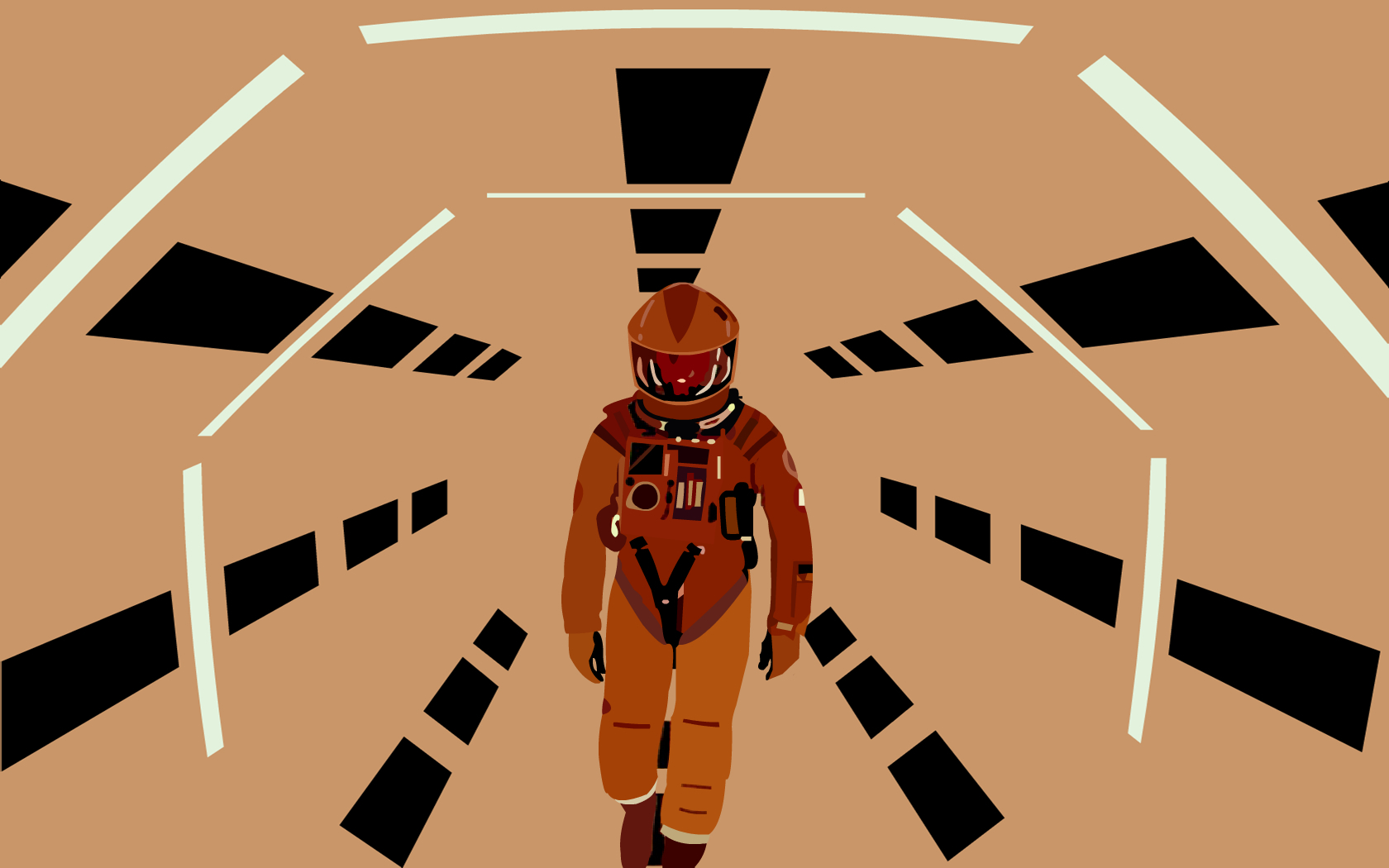
Which is worth noting, as for whatever reason Arthur C. Clarke decided to do both, virtually at the same time. Although I can think of better things to do two of at the same time, he felt that the story needed proper explaining, specifically the Star Gate and the alien intervention, whereas Stanley Kubrick felt that the movie should be mysterious, enigmatic, and move the viewer into a gripping sense of wonder. I like Arthur C. Clarke’s decision more; books are just better and you can draw ultimately the same conclusions with two very different tactics but visually, especially visually as of 1968, I feel like you lose some emotional and psychological unseen aspects that films cannot offer.

That being said, Clarke wrote a very good but not great story, in my humble opinion. I love science, I love space and I love fiction. Anything with space exploration, space treachery, novel concepts of galactic travel, self-aware computers, bizarre ends to interaction with hyper-intelligent creatures and so on, I am all for it.

In fact, I loved just about everything in this book. The symmetry between Moon-Watcher and the Star Child, inheriting powers from the aliens that help shape humanity at the beginning and end of the book, 3 million years apart; great stuff. The will and drive of the cosmonauts to further space exploration knowing their chances of success were terrifyingly low but would stop at nothing to complete the mission; awesome. Even the little things about how physics works differently for them, and with the confinement of the ship and the peril of being alone at the edge of our solar system mounting, their brains are still so well suited that they can work through conflict and keep you interested in their quest to reach Saturn.

I would like to say the only negative of the book was the same thing that usually gets me involved in sci-fi books: aliens. Maybe it is the fault of the creators of the television show Ancient Aliens, but anytime one tries to link humanity’s early advancements with alien intervention (e.g. The Great Pyramids; the Nazca Lines; Stonehenge) there are often silly jokes or strange looks given in response rather than intelligent conversation being sparked. So yeah, alien assistance to shape us the way we are is met with ridicule because it is fairly silly. But Clarke and Kubrick made a really good story about it. And that is not at all what bothers me about this book.

It is really HAL 9000. I guess I have read too much of Robert Heinlein’s self-aware computers (The Moon is a Harsh Mistress with MIKE/MICHELLE/Adam Selene or Time Enough for Love with Dora and Minerva) or droids in stories like The Hitchhiker’s Guide to the Galaxy. But for some reason I simply could not go from a semi-advanced human race in the not-to-distant-future, which 2001 presents to us, to a race with computers that have emotions, feelings, show enthusiasm about completing a mission and ultimately kill humans in the process but with some guilt along the way. They do not fit into the same era, for me.


Okay, I get it, there are self-aware computers in this universe. Good, nothing new for me. But why? How? And if we are newly gaining the ability to travel beyond Mars, and newly gaining the ability to have a supercomputer, then give us some insight as to how it came to get a personality.

In The Moon is a Harsh Mistress, for example, MIKE’s personality is gained quite by accident as it makes a computer’s attempt at a joke. Far out, yes, but that’s Heinlein. It is also an error, as in, not supposed to happen and a complete mistake in the computer. In Time Enough for Love, Dora and Minerva are given their personalities, Dora by Lazarus Long in an attempt to remind him of the mortal girl he once loved since she was a child. Sure, it’s sweet, but it is also a design feature.
HAL 9000 just is. And that was a noticeable gap for me that I tried to overcome and enjoy the story, which I did, but just cannot give it credit for being great. The hole that represents HAL 9000 aside, though, everything else is really enjoyable. Even aliens helping us evolve into what we have become (ideas that have since been humiliated by Ancient Aliens. Thanks a fucking lot Ancient Aliens). Going to watch the movie soon, maybe I will let you know how I feel about it. I can already tell you now though that Stanley Kubrick creeps me the fuck out.

Saturday, April 28, 2012

A Clockwork Orange


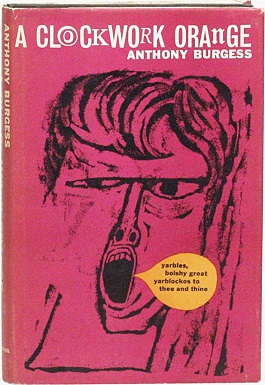
If you can manage sitting through the awful narration, that is to say Nadsat and all the horrors it brings on sentence structure and half-translations of sentences, then it’s a good book. I compare it to watching a movie in which the camera work is total shit and shakey, like Cloverfield or Quantum of Solace or something really nauseating (I think of this analogy because I recently viewed The Hunger Games and nearly vomited during the entire 2 hours of shit cinematography). Once you are past all that, it is really a good book, very moving and insightful.

Children are assholes, we all know this because we were all children once. But the kids in this book are fierce, terrifying and absolutely out of control. As if I was not put off enough when he destroys a man’s books in the early going, they also assault him and leave him bleeding and crawling, only to move on in the evening and commit a very horrible rape crime that is worked out in details that are not too vivid, and so less violent and disturbing at face value, but almost more horrible because the narrator and perpetrator, Alex, skims along the act and leaves a lot out and it sort of gives you the idea he isn’t all that bothered by it. As though he needs not focus too much on the act because it just is not that big a deal to him. Really terrible.

He moves on to committing a few too many senseless crimes and is later imprisoned for them. Rightfully so. Good, we can all inhale deeply and take solace in the fact that the justice system is doing its work and bad people are punished, learn their lesson and life is good, right?

Alex begins to lose his identity in prison, beginning with losing his name and being referred to only as 655321 during his stay. Sometimes criminals get out on good behavior, but Alex chooses to get out early via the Ludovico Technique, a controversial brain-conditioning program that will reset his behaviours to fearing, terribly, any act of violence or cruelty. His chaplain, whom he is closest too, warns him of the dangers of losing his free will and all ability to choose the proper path, but he ignores it. And just before his procedure, he commits one final act of superior violence by killing the new inmate that is stirring up trouble with the four of them living in their cell.

Alex is released to find himself in a struggle. His family has moved on and so have his old droogs. Though he would like to move on as well, he is still recognized as a menace and not given the chance he was promised to fit into society. One of his old droogs and a former rival are now members of the police and use their power to intimidate, beat and ultimately, rape him. He’s rescued by the man he once met and knows only by two facts: (1) that he is the man who writing A Clockwork Orange when Alex broke into his house and (2) he is the man whose wife Alex and the gang raped. He learns that she committed suicide sometime after that and Alex finds himself as a martyr for a cause that is trying to bring down the oppressive government regime that is responsible for this society being in its current state.

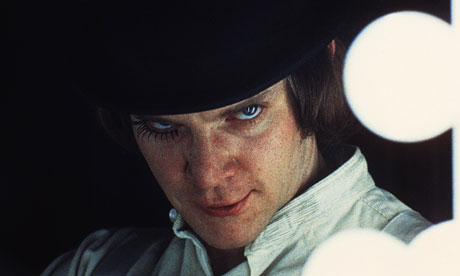
The pressures of it all plus some bad side effects to Alex’s conditioning, brain washing really, force him to attempt suicide and the near-death experience resets his brain and undoes all the washing. So the violent sociopath is back and really gets his way again. In the final chapter – omitted from the early US publication and therefore omitted from the Stanley Kubrick’s film – Alex realizes that he will eventually have a baby and it will grow up to be as big a piece of shit as him, and he will be as powerless to stop it as his parents were to stop him, and so on for generations. I have heard why it was omitted, that many readers would falsely interpret a happy ending, but it really does belong in there. It gives you a sense of how difficult it is to change the culture of a violent group in any society.

So the original British version had a much better ending for me, but the entire book leaves you with a kick in the chest as to how shitty crime evolves amongst misled youth, gangs, gets treated in the prison system and in the end, reproduces. Very desperate feeling to it after it is all over and I dig that.

Lastly, for a little story on how the book was written, check these strange facts out that I found on Tor.com (a favourite website for sci-fi/fantasy nerds everywhere).


Saturday, April 21, 2012

Double Star


Yet another Hugo Award winning Robert Anson Heinlein book off the shelf and into my tiny brain. Double Star is short, fast paced, to-the-point, and of most significance, “Early Heinlein.”  It takes place originally on Earth but soon after in outer space and on Mars and the Moon. In a brief synopsis, almost as brief as the actual plot, I’ll say that a down-and-out actor with too much pride is approached by spacemen for an acting role that pays well. By appealing to his sense of self-worth (The Great Lorenzo is a very self-confident man) they are able to smuggle him and whisk him away to Mars where he will be a fill-in for the politically outspoken leader of the Expansionist Coalition, Joseph Bonaparte. As Bonaparte has been kidnapped by anonymous enemies, the consequences for not showing up to a sacred Martian ritual are beyond consideration.

Lorenzo agrees and thus the transformation into Joseph Bonaparte begins. The enemies, who remain anonymous throughout the entire novel (typical Heinlein, really), eventually release Bonaparte, but he is in no condition to take the office he has just been voted into and Lorenzo ends up morphing into the role for more than any compensation can bring justice to.

The pace of the book makes it all very exciting. It is short, blunt, charming, imaginative and still carries Heinlein’s ideals but all put together so as not to disturb the flow of the story. Lorenzo is at first a very confused man, and remains that way until the breaking point when he realizes what must be done. But there is no confusion in the people helping him out, those that worked closely with Bonaparte and are helping him learn the role; they really pull together for the good of the cause.

These are the people that represent Heinlein’s ideals. They believe in putting an end to the exclusion of extraterrestrials in the Grand Assembly (which is similar to our House of Representatives, representing regions/groups to be acknowledged by the Solar Emperor) and that all sentient creatures are equals, and warrant the representation they deem necessary. The protagonists become political victors, then, as the afterword explains, losers and winners again. The Great Lorenzo becomes Joseph Bonaparte after his untimely death (affected so much by the torture during his kidnapping that his health deteriorates) and remains in office until his ousting, only to regain it again.

Political issues, especially those regarding Liberty, are at the core of Heinlein’s writing, but if you think you can’t handle any of his strongly libertarian themes then this just may be the perfect Heinlein book for you (in addition to the others on this blog I’ve reviewed).

Sunday, April 8, 2012

Doctor Zhivago


Well I thought I’d go Russian, again, for a chance to get my feet settled back on familiar hard ground. Hard, unapologising, unrelenting and completely unforgiving ground. Doctor Zhivago is a tale of…love? No that’s not quite right. War? Famine? Revolution? Journeys through the dark, lonely unknown to discover that ultimately nothing in life can bring you happiness? It is all of those things, but even more.

One of the most incredible books I have ever read, and I don’t always say that even about books I like. I have never come across a character so conflicted, from so many different facets of a life full of despair and unfair disadvantages. Even second chances are cruel to the antagonist.

I have read of characters that have perhaps more severe conflicts and sources of torture: Orson Scott Card’s Ender Wiggin, Frank Herbert’s Paul Atreides, Nabokov’s Edgar H. Humbert, Dumas’s Edmund Dantes, and so on. But no one has so many converging ideals and changes of belief, changes of heart from warring sides than Doctor Yury Zhivago.

Raised without a father – who committed suicide after losing his wealth and being misled by a conniving laywer – Yury rises through a dangerous Moscow to eventually become a member of the bourgeois class after attaining a medical degree. He sympathises with the working class’s ideals, however, being very much in touch with the heart of Moscow and realizing how unfair the current system can be.

But after traveling to the front lines of World War I, his ideals begin to shift. He no longer thinks violence should be used to convey a message, and that there are no ideals strong enough to warrant the taking of innocent lives.  And when he returns, he is appalled by the violence of the October Revolution and flees with his family and father-in-law to a small town in the Urals. Did I mention the Mother-in-law didn’t make the trip because she dies a miserable death early on, tortured so much by her past with the yet-unconnected but exact same conniving lawyer who has influenced Yury’s life? Well despair overtakes her and she tries killing herself with lots of poisons, but Yury saves her life and gives her a few more dark, depressing years.

Now that the remaining happy family has survived World War I, the February and October revolutions, they make their way out of Moscow to live on their own in the Urals. Along the journey Yury meets and deals with desperate people on the run, similar to him, as well as soldiers fighting for causes some feel passionately enough to kill for and others aren’t so sure, and become deserters even at the threat of the death penalty for these actions. Once in the Urals Yury rekindles an old flame with Lara Fyodorovna, wife of a Pavel Antipov and neighbor/acquaintance of Yury’s growing up Moscow as well as a nurse he came to know and admire and, secretly, love during their time together in hospitals near the frontline in WWI. Lara had tried to pursue her run-away husband who left her because he felt he didn’t deserve her and sought to gain renown as an infantryman, fighting gallantly to defend, and in the near future help reform Russia.

The plot thickens as Yury develops an affair with Lara, and before he comes to terms with admitting to his wife Tonya what has been going on, he’s captured by the “Forest Brotherhood,” a guerilla fighting force led by a cocaine-addict that is actually a separate entity from the Red Army, but still fighting viciously against the Whites. Forced to treat people fighting for a cause he doesn’t support, Yury begins to lose taste for his profession, especially after being pinned down by White Army cadets (which is a nice way of saying teenagers with guns fighting for the cause he does support) and forced to take action and shoot at them in order to escape. He begins to contemplate leaving the Forest Brotherhood, which is risking his own life, because of the conflicts he feels being a medic for a Red-sympathising guerilla force.

But of course, these mixed emotions about the ongoing conflict just aren’t complicated enough. So the Whites throw in an extra element when they torture a man by removing one arm and one leg and force him to crawl through the forest back to the Brotherhood’s camp. There he tells them of the unimaginable horrors in store for them all as the Whites begin to close in on their region.

Strelnikov, a displaced Pavel Antipov who is now a former POW with a new name and blood lust for White Army soldiers, ends up breaking through and the Reds move on to victory after Yury escapes from the Brotherhood. He’s no safer in public now, however, and must keep a low profile, abandoning a force fighting against the Whites in time of war is reason to face the firing squads in this time, and after he learns that the Soviet government now looks unfavourably upon the Forest Brotherhood, likely for being too independent, he has no one he can trust. Even Strelnikov falls out of favour with the Soviets (as his mysterious and charismatic nature gained him loyal followers, he also gained the attention of the Communist Party as a potential threat moving forward) and is on the move, all alone, much like Yury.

The two of them meet, whilst both in hiding, and after Yury tells Strelnikov that Lara is as inaccessible to him as his estranged wife Tonya (now living in exile in Paris with their kids and her father), Strelnikov shoots himself. Of course he does. Yury winds up making an attempt to salvage his life as a poet and translator in Moscow, living the slums, taking a wife, having children and then leaving her too and eventually suffering a heart attack on the streets. Lara makes it to his funeral and is later arrested and put into a Gulag, a sort of concentration camp in Siberia Stalin was very fond of using.

The story ends with Zhivago’s friends, Dudorov and Gordon, talking about how they survived the Gulag’s to become WWII servicemen, as well as talk of a young girl named Tonya who very much resembles Yury and Lara and the physical/personality traits by which these two came to associate them.

Needless to say, Boris Pasternak was in deep shit with the Soviet Union, Stalin, the KGB and Writer’s Soviet when the book leaked out of the USSR and was printed in several other languages before the USSR ever authorized its publication in Pasternak’s homeland. He was also “encouraged” by the KGB to decline the Nobel Prize for Literature he won that year.

I think people of my parent’s generation are much more familiar with this story, as the movie was a huge hit when it came out and everyone at the time was a big Omar Sharif fan. But for my generation, I think this book goes largely unnoticed. And I can’t see why. There are probably too many lists out there of the top 100 novels, or top 100 modern novels, or any essential book collection, and Doctor Zhivago doesn’t seem to be prevalent enough on those lists. There is no reason it should ever be placed outside of the top 25 on most of these lists. But, we do live in America, and most people can’t handle this much conflict.