Popular Posts

Monday, November 12, 2012

The 19th Wife - David Ebershoff


Well election time is upon us, or just behind us, depending on when this gets posted, and I think it is interesting one of our candidates is a Mormon. Or funny. Or scary, maybe. Because 19th Wife is packed with them. Like sardines in a f***ing tin. Wives everywhere. Prophets prophesying, angry mobs, chat rooms, fabulously gay ex-Mormons (and by ex I mean Ex-communicated) and of course, what book club book is complete without white people scalping each other and making it look like the Indians did it?

Naturally, I went into this knowing a fair amount about the LDS faith, having sat through many a talk with their door to door salesmen and even reading a bit of their book, which is less of an instructions manual or “how-to” on getting into heaven and is more of another “New Testament” sort of story involving entirely new characters I have never really heard of but are all loosely based on, if you can believe it, characters from the Old Testament.
It all seems very confusing but if it’s a faith you are into, then try not to get too bogged down by the details and focus on the main point: Jesus had a sweet sequel and did really well in coming to North America to spread the word because he is actually a white guy, (and Native Americans love white guys, right?) so naturally we should all fit in quite well in his system, being white Americans (not that everyone who reads this blog is a Caucasian/White/North American, but most Mormons are, so there you have it).


Anyway, the progenitor of all this madness was a very imaginative, captivating and handsome white American who just wanted people to call him Prophet. He also had a sexual appetite that defied his role as a contemporary Christian so he got around that by saying Bog instructed him to take many wives, a loophole of sorts to avoid the oh-so-demeaning title of adulterer, which was barely a step down from being considered a witch.

The 19th Wife chronicles this man and his successor, Brigham Young, an even hungrier breeder, from the point of view of Brigham’s last wife, illegitimate or legitimate (it’s up courts and Jesus to decide these details). Sure, she brings an end to the fad that was plural marriage, but at a great cost and brings about a mysterious end to her own life.

It’s also the story of a modern family, one that is based on the goings on in Colorado City, Arizona. Showing some state pride, I have to say I was sad to read the fictional town belonging to this story was actually set in Utah. How dare the author rob us of one of our finer points in this great state, that of personal and religious freedom! Nevertheless, the modern story works out to be a similarly crazed Prophet obsessed with a massively high girl-to-guy ratio in each married man’s house. The details are all a bit creepy and get the reader to think about what is morally acceptable and where we draw the lines between practicing religion in a free state/country vs. the damages and sacrifices people in these faiths must make. I am big into moral theory, it was a favourite subject of mine in college (amongst many), so I had some key points I liked about this book:


  •                 Free will, for example. Everyone is entitled to it by virtue of their consciousness. Freedom of religion is not only guaranteed in this country, but is an important subject under our ability to exercise free will as free thinking humans. It is not the government’s job, President Grant in Brigham Young’s case or the Utah/Arizona government on a smaller scale, to draw lines and enforce laws that limit our ability to practice religion in this country. Unless it happens to –
  •                 Take advantage of members of a religion. There are always things people do that we find goofy, but some things actually have negative consequences and hurt the fabric of society. This book really stresses what Ann Eliza Young, Brigham’s 19th, tried to get across to us in her quest to break the bonds of women in a polygamist society. It is a double edged sword, religious freedom. “I can do whatever Jesus or his dad Bog instructs me to do as I am a prophet, his mouthpiece to the world, without fear of Government intervention” is true so long as no one gets hurt. But what if everyone is quite miserable? What if followers are mostly going along with it out of fear? Either out of fear of un-provable consequences for blasphemers that includes death or constant intimidation and fear of not reaching heaven? That’s where one more thing should come into play –
  •                 Common sense. People need to use it. Following a pioneer into a fresh, virgin new world because he is a great man is really a good thing, and is how a massive part of the American West was settled. But entering into these marriages is not quite forced, merely creepily coerced through the use of a sneaky secret service and lots of black mail, if what we read from Ann Eliza’s perspective is to be believed. If there isn’t any pushback even though everyone finds it either morally repulsive or completely unnecessary, you get a society that is almost being led by a dictator and they are fear mongered or intimidated into this until, ultimately, we have –
  •                 Revolution. Not in a grand sense of the word really, but one woman escaping the confines of polygamy, which is almost like being imprisoned, except the sex is legitimate because you’re actually married to the guy, not his cell mate. But more in the sense of someone escaping and challenging the views of the prophet until popular demand suggests they change their ways.

All in all I’m actually sort of glad it worked out the way it did. As in real life, not just the book. Brigham Young was an excellent pioneer, one of the better heroes we’ve ever venerated in this great nation, and he did what he had to do to get everyone settled in Salt Lake City where the West really boomed. And in a pretty civilized manner, polygamy or not. Without polygamy, would they have been able to populate and grow so rapidly and thrive the way they did? Even if all it provided was an outlet for Brigham so that he could focus more of his attention on other things, like sending out missionaries and bringing in immigrants from England, Sweden, Germany etc, it served his purpose and hence, served the West well. Who knows if he would have been as effective without that release, without a new bang-maid every 2 years? It’s not for us to say.

Also, this beer is very damn good if you can find it!


But I will say that morally, I find it compelling. Polyamoury really doesn’t need to be thought of as morally repugnant as it is viewed in this book, or indeed as it is viewed by this nation in general. It is perfectly fine. If a thriving civilization wants to practice polyamoury, or polygamy or whatever, and they are all perfectly happy, then that’s fine. What I have a problem with is how it was administered, and how it was controlled. Saying it is done in the name of God is never a reason to do anything to anyone else, in my opinion. It should never affect anyone negatively, what you do for your religious deity, because that’s not how I feel religion, or my God, operates.

The other problem I have with how it is administered is men can take many wives, but women must remain true to that single husband. Plural marriage or celestial marriage, as Joseph and Brigham defined it, was sort of a one-way street for them. It ensured they always had fresh p***y, but the women got screwed! And not in a good way! Ann Eliza was a beautiful young woman, and had to put up with a fatter, old and bearded Brigham. No thanks. If polyamoury is your practice, why can’t she take all the men she wants? The book doesn’t really address this, instead it just blasts the Mormon and the Firsts, the breakaway of the Mormon church who were polygamy exteremists views of polygamy. And I’m okay with tearing that idea up because, as I just said, how they did it was wrong. Morally. End of story. Pretty good book though.

Thursday, November 1, 2012

Dying Inside by Robert Silverberg


With the exception of Blood Meridian and maybe John Dies at the End, at least in terms of plot, I have had the fortune of reading really amazing books lately. Just think: Lucifer’sHammer, Alvin Maker Book One: Seventh Son, Destination: Void, Pavane (review out soon), and Invitation to a Beheading before that (I should also say here that I do not necessarily post reviews in the same order in which I read. Do not be annoyed, however! For I also do not speak in the order my thoughts come out. It is quite natural for me to do it this way). I’ve had it good lately. Especially in the Science Fiction department; most of which are books from another era and are regarded as classics, or “books I should have read by now,” but I am enjoying catching up on all these greats. Robert Silverberg, more famous for being a short story writer, whose novels A Time of Changes and Nightfall (co-authored with Isaac Asimov) I have already enjoyed, really blew me away with Dying Inside.

It is a difficult one to explain, and the easiest way I can put it is that if you have ever read The Time Traveller’s Wife, it is similar to that in many ways: tone, character development, a few overlapping plot lines that the hero’s power creates and makes awkward; but written by a man. Oh yeah and there’s lots of sex in both books. Big plus there on both of them.

David Selig has the power to read minds…always has. He was born with it. Not in a super power sort of sense, but in an odd way that seems basic to him. He has had this power for so long he sort of forgets how unique it is. It makes him a pain to deal with for normal people. Ruins relationships. And growing up, he didn’t even know he was the only one who possessed such a power, just figured everyone could do it.

In fact, a brief chapter on him growing up turns out to be one of my favourite scenes in the entire book. As a young man he is asked to see a psychologist because his parents worry so much about him not fitting in at school. He answers all of the psychologists questions honestly at first, but as the interview moves on, the boy picks up things that the scientist finds very interesting, specifically things about “pee- pees” and “tushies” and when he sees how seriously the man locks onto those keywords by reading the psych's mind, whilst quietly but frantically taking notes, the boy expands upon them and then steers everything back to those particular references. He eventually adopts the scientist’s own technical terminology when referring to these parts, and this move, playing a fun game with the man’s brain, is dangerous but also innocent because the young man honestly doesn’t know any better.

There are actually many great scenes like that though, and some people have such hostile personalities that it is difficult to harness them and probe their mind, as though the energy locked inside from contained emotion makes it treacherous for his self-described mental tendrils to probe. Such is the case with one of the athletes, a 6’9” black basketball player he meets and tries to work with.


Not only does this danger feel like real danger, but it is compounded by the fact that, as the book’s title implies, his power is slipping. It is a difficult journey about how he manages, and is nice when he talks about how he used to be when he had it working well. He could use it to hone in on some girl in his crowded apartment and within the evening, bang her; then work part time on Wall Street when he needed cash and make unbelievably good calls on stock options before big deals were announced. Which is probably what we would all do, right? I mean, just think of it: if you had that power, not only the basic “what would you do with it” questions should be asked, but also “how would your life turn out?” If you get bummed out by how generally shitty people are, it is only going to get worse if you can read their thoughts. At least that’s what I feel like, and why I feel bad for poor David Selig. It’s an interesting concept, for sure.

Even more interesting to me though is how one copes with losing such a power! Sure, we've all fantasized about the ability to fly, stop bullets with a force field we can control, see through girl's clothes and such, but have we ever thought how we'd cope if we were born with such a talent, never really learning to appreciate what it must be like not to have it, and then gradually begin to lose it? It's kind of like sight. Or memory. Or Giving a Fuck. Or having hair on my head, when you think about it.


But David never gets over how awkward having the power is. How devastating it is to his relationships with family, friends, lovers and bosses. So maybe it fading away is a good thing. I find myself feeling really bad for him at times, and I honestly think Silverberg makes him a very believable, relatable character with a power that just doesn’t serve someone like him practically.

One other thing I would like to include is a sort of similarity I saw between it and Time Traveller's Wife on sex. I don't think he ever time travelled during sex, in Time Traveller's Wife, I mean. And I may have my facts wrong, but I remember it as being a reason to bang constantly. He also went jogging a lot, because he also tended not to travel during jogging. But lots of sex and the power was at bay during sex, I think I'm remembering that right. Anyway, David Selig can probe a girl's mind during sex, and really get inside her head to know everything she's experiencing (I mean talk about all I would be doing with that power if I had it!) until the moments nearing orgasm, when there is just too much energy for him to sustain a presence inside. He is then ejected, forcefully, from her mind and emotions and can feel nothing through her when she actually climaxes. I thought it interesting both books involve some breaking of this supernatural power through sex.

In summation, a very fun book and if you’re not a Robert Silverberg fan yet, and only care to read maybe one of his books, I say make it this one. The man has range, it is much different than A Time of Changes and especially Nightfall, but I’ll leave Nightfall alone and recommend it to those who are doomsday sci-fi fans.

Sunday, October 14, 2012

Blood Meridian

Or as I like to call it: The Western section of my library’s tribute to the holocaust. Good God. Okay, where to begin. The book isn’t good. But I read it because it was on the book club list and I did not want to be that guy who read one book by an author (Cormac McCarthy’s The Road) and say I’ll never open up to anything of his again…especially with how much acclaim this guy gets.

Well, I read it, open mind and all, and even liked bits of it at times, but in the end, it was just too much McCarthy. That is to say, there is no point to anything and the violence is so rampant and unrestrained one sort of gets desensitised – no that’s not right, that’s what you say about actual violence – acclimated to it.

The book begins well, a boy in a broken home whose mother died at birth and violent father could never accept him runs away, and quickly the action picks up when he enters a preacher’s tent for a sermon. The preacher has a weird way of talking, combining King James’ New Testament Gospel with that ignorant redneck western country talk, and is interrupted by a man we come to know only as the Judge. The Judge tells the crowd this preacher is a fraud, speaks the way he does because he is illiterate, and may seem new here, but is on the run because of committing several different forms of child-rape and molestation crimes in various parts of the United States. The crowd is in uproar, charges the preacher and eventually kills him. 

When we meet the Judge again in a bar, the boy (and the main character is only known as the boy in this book, except when he’s known as the man, very McCarthy-like) asks the Judge how he came to know this preacher, to which the Judge says “I’ve never heard of this preacher before today. Just wanted him out of here.” Or something like that.

Awesome start, right? Well the awesome was basically over right there. The Judge is a very interesting character and all, but he helps lead a band of Cavalrymen on an Apache hunt gone wrong and every chapter ends up following the same basic order: travel, massacre, rape, massacre, rape, murder, molestation, other violent crime, massacre, capture, escape, repeat.


About the only thing of interest is its historical significance, which is mostly in regards to John Joel Glanton. Apparently the Glanton is one of the most notorious scalp hunters of the American West. That’s great. Really terrific. It just doesn’t make for an interesting fictional book to read of his adventures skinning Native Americans, impaling enough dead babies on a tree to create a sort of “dead babies don’t grow on trees” irony, picking fights in bars and killing everyone inside, things like that. I just felt nothing reading this other than “I can’t wait for it to be over and me to never have to read another Cormac McCarthy book again.” 

And I’m sorry if you liked The Road. It was really terrible. But if it is your style, you may just like Blood Meridian. 

Tuesday, October 9, 2012

John Dies at the End


Good news everyone! It's a fucking movie now, so you don't even need to read this book!

The first thing I realized about this book is that it is funny. Not like, here is a shitty joke, or that character has a weird tweak, or the idea that monsters and demons are just like bullies, sort of funny. I mean full on f***ing hilarious. If you have a dark sense of humour, think exploding people and goofy spiders with little hands and fake wigs could be funny, combined with the absolutely strange intuitive near-superpowers of demon slaying kids who are basically f***-ups and a guy who loves to deliver cheesy one-liners before he blasts monsters, then yeah, this shit is really great.

I can’t speak too much of the plot, because I think it is actually quite messy and not very good. The fact that it bounces all over the place only to be tied in all together at the end is cool, but nothing unique and leaves for a lot of unanswered questions in terms of how and when things took their turn into the alternate reality or crossed-universe that the narrator, and the reader by the end, are familiar with.

But my goodness, weak, discontinuous or fragmented plot slopped together or not, this book is full of great moments. So much so that I honestly laughed out loud, in real hearty gutlaughs, and it really made me feel like I didn’t care what was happening in the plot at that particular moment; the writing is funny enough to cover the tracks of any literary crimes.

David Wong, the alter-ego of Cracked.com writer – Jason Pargin – is the main character/narrator and has a really great way of bringing a subtle fantasy of monsters and demons into the world of a semi-rational, cynical young bastard. He was troubled as a youngster, and this helps him touch upon actual issues that affect real people, making him a character that’s pretty easy to relate to. Even aside from him calling John a dumbass repeatedly, there is a large amount of angst he holds against humanity. As the story moves along, we learn more about why he was sent to special school to finish his senior year of high school, as he comes clean to Amy about committing the violent crime against jocks that were bullying him that landed him there.

The anti-bullying explosion of his was a very interesting point, I thought. It comes as he learns the truth about Amy, and why he feels bad about noticing her lack of a left hand when John never made an issue of it, and her depression, which actually makes David feel less optimistic about humanity than normal. He reciprocates by telling her of his story, and why he felt he had to do it. Bullies can only push so far before it all collapses against them. There was a moment the book, though funny and not truly very thought provoking, really got to me though. When he finished his spiel on stabbing a bully’s face, and was making a point of how no one should feel bad for those who prey upon kids – kids they feel are weaker in order to get an emotional high from beating them up or making them cry – when the victims fight back with an uncontrolled eruption of psychotic rage, he mentioned a bit about the Columbine School Shootings I had never considered: that the look on those jocks faces when the kids they had bullied had guns aimed for their chests must have been fucking priceless.

So yeah, if you are thinking of bullying someone, please don’t. Especially if the potential victim is a Cracked.com editor.

In all, very funny, very silly and though not a great plot line, carries a bit of a cult sensation to it that I can get behind. I’m happy the author is having it turned into a movie. I will watch it, and whether or not it is any good, I hope he made a serious amount of money from it all.

Sunday, September 30, 2012

Seventh Son – Alvin Maker: Book One


Alternate History: it is a subgenre of fiction that I am getting in to more and more as I evolve my taste of Sci-fi/fantasy. JonathanStrange & Mr. Norrell had some of it, but what better way to really dive into it than from a book written by one of the modern masters of Science Fiction? And I feel like I need to include that this alternate history is primarily American History. How much fun would it have been to have Thomas Jefferson as a revered witch, Benjamin Franklin as a magician, George Washington as a martyr? I cannot think of a more masterful take on American alternate history with folklore tied into it.

The tale of Alvin Maker begins like any good, kickass Orson Scott Card sci-fi story: a child with a unique talent that he/she does not quite understand and is punished unmercifully for it. In this case, it is the torch, young Peggy Guester. She is the first person we are introduced to and though she plays a majour part in the protagonist’s role, she is mentioned very little.

The untimely death of the eldest son happens just as Alvin is making his impromptu appearance into this world, being born only with the help of the little girl whose knack is that of torch. She foresees his powers, and is able to realize that he is the seventh son of a seventh son.

The Seventh Son is also my introduction to this particular bit of folklore; that magical superstitious sensation of seventh son and better yet, seventh son of a seventh son. Turns out Orson Scott Card did a bit of research on that.

As a devout Mormon, he also has a majour Christian influence in this story. But because it is during that pre-Mormon-anti-gay-Extremist part of his life, it is actually not the sort of Christian influence you might expect. Preachers in league with the devil, atheist protagonists, highly religious figures who unknowingly succumb and submit to the powers of knacks, hex and spells, and perhaps best of all, this quote from Armour-of-God Weaver when discussing an equally awesome character:
                
“They say he knew that wizard Ben Franklin. And that atheist from Apalachee Tom Jefferson.”

Two of my favourite historical figures. And made all the more badass in this alternate history. Not all Christians in this book are crazy, but for the most part, there is a clear, often hostile line drawn between the Christians and the practice that the others have for an active, powerful working spirit world.

Oh and the other great part about the above mentioned quote by Armor-of-God, the man he is talking about is a lonesome, vagrant story teller who walks around the American frontier with two goals: 1 – to have a vision (which never happens, no matter how hard he tries); 2 – to exchange honest labour for food/shelter and the ability to swap stories. His name is Taleswapper, and though he is a great character, really the best in the book, he lets it slip that his real name is William Blake. What a fantastic (fictional) historical twist!

Alvin experiences pain through his own evil doings, cheats death and learns to defeat it, but what everyone suspects is that he has to actually use special powers to cheat death. Meaning that he both possesses special powers and is being hunted, rather creatively, by some evil force. We learn to call this force The Unmaker, thanks to Bill Blake’s eloquence. The Unmaker and some devilish being have it out for him, and ironically, so do the hardcore Christians of early America. Through his power, the will and spiritual/philosophical goodness of the natives (called reds in this story), and Taleswapper’s cleverness, he is able to learn some balance between his unique gift and the evil that is both hunting him, and working its way inside of him. For a relatively short novel, it is magnificent with typical Orson Scott Card torture towards an unknowingly powerful child. 

Whether or not Book Two and all the others slow down, Seventh Son is absolutely fantastic and a refreshing jolt of creative fantasy that doesn’t just rely on children’s love of monsters and spells (no offense Harry Potter fans) nor does it require goblins, trolls or elves to be truly engaging (again, no offense to my Lord of the Rings readers).

Wednesday, September 19, 2012

Destination: Void


Whoa. Fuckin'....whoa.

Don't know how many times I have let Frank Herbert absolutely fuck my mind, but I keep coming back for it. The author of Dune and, perhaps more importantly, mastermind/creator of the Dune universe, wrote Destination: Void, which kicked off the WorShip series that included 3 others (all other 3 co-authored with Bill Ransom).

In an undated near-future scenario, astronauts are sent to the Tau Ceti galaxy to begin colonising a habitable planet. Sounds like a simple enough plot, until Herbert tosses in that 6 prior missions have all ended in disaster, the technology for such a journey is either in its infancy or does not exist, the astronauts are genetically (strategically) placed clones (with clone colonists in hybernation tanks on-board) and have dozens of replacements for each of the four full-time positions out of the thousands of bodies inside said tanks...and biggest of all...semi-self-aware-computers.

It actually is a very short book and a very short read, but many of the paragraphs and Herbertian tirades are in regards to something I just cannot wrap my brain around: the logic of creating a self-aware computer. I'm sure that if I were a computer nerd and made wiring up computers and trying to gain them a consciousness a hobby of mine, plus had a firm understanding of human psychology and the biology of the brain, that I could follow along no problem. Let me just throw a few phrases out there that sound like Chinese to me:

nerve-net simulators; electroform inputs of nerve impulse groups; flux impulses in four dimensions; inhibitory roulette cycles; black box – white box transfer;

Why? Why can't I understand any of this? Maybe it is just me being an idiot and I will shut up about it.

The good news is, however, that this takes nothing away from the book. As I did not fully understand what was going on with the wiring of this system, I appreciated it as an effort, a means to an end, to get a self-aware computer constructed. And that is exactly what all this is, so it is not imperative to the plot. But once shit starts getting constructed and happening...whoa man, hold on!

The first brains, the organic mental cores, which are crude versions of humans' early attempts at constructing self-aware computers, have human brains acting as the emotional/reactionary/survivalist side of the ship's computer. They all go mad, and are destroyed. The astronauts are then completely on their own save for the others in hibernation. When I had this much of the book in my brain's grasp I told myself this is basically what 2001:A Space Odyssey would have been if it were fucking great.

Instead, Herbert spends the next 180 or so pages (of 200, mind you) fucking with the reader on what it means to be conscious. Just soak that in for a second. What does it mean to you? This discussion could go on for years, and has. It has evolved since the first philosophers. Even before Diogenes the Cynic helped us bridge the gap between man and animal.

To me it has always been signified by goals. Seeking more than survival and reproduction, but setting up goals for ourselves. Aspirations. Shit like that.

But this book does not stop there. Not only is the question a constant issue amongst the crew and constant theme throughout the book, but there are other, brilliant, typical Frank Herbert ideas thrown in there to help get your brain motivated and thinking of new, novel, ideologically challenging concepts.

It was interesting to me that the ship's Psychologist is also the ship's Chaplain, for example. Why? Because psychology is not much for an exact science, and has assumptions associated with it and diagnoses that are based on historical symptoms and behaviour of the human. Religion is not so different from that, now is it? He also comments later on that both Religion and Psychology are methods of healing, specifically healing people's brain or intellect. I can attest to this. Because when one feels uncomfortable with an anxiety brought on by substance abuse there are two overwhelmingly popular choices people make to seek treatment: Religion (e.g. Jesus, e.g. Being born again) and medical (e.g. psychological) treatment. It happens like that, not just limited to those two but much more often than not. Honestly, it does!

Another great moment is when men are trying to teach the computer life and death by teaching it what it means to preserve a life dependent upon its systems – in this case a farm animal in gestation/fetus phase that the colonists could use if they land at their destination – and the computer decides to kill it, just to learn its limits, learn of its own behaviour and maybe even test its own powers. Well one of the most hopeful men on the crew for this test working out is the Life Systems Engineer. And of the people on this crew, of the four awake, of course the Life Systems Engineer is going to have the most trouble seeing past this self-aware-computer initiated abortion. And it shows.


Moments like this happen in a Frank Herbert novel within a sentence or two, and it is all thanks to his amazing ability to develop characters. You see more of what is going on inside their heads than with any other story-teller. The female working in the group of four has a much different but equally as interesting role. She is a clone placed on board because of her natural ability to lead, care for others, and juggle several responsibilities at once. As such, her independence is driven by certain chemicals and offset by others that showcase her caring side, and whatever it takes to match these Herbert explains that it inadvertently forces her to be extremely sexually active by nature. She takes chemicals to reduce her sex drive, but she also experiments, due to the pressure of the situation, with chemicals that enhance her awareness and help her ponder as the crew tries to wrap their minds around  consciousness. The taking of these drugs displaces those that reduce her sex drive, and soon enough she is conflicted by constant sexual thoughts, fantasies and desires.

Seriously, for such a short book the character development is incredible. I could go on, but I won't. Instead, I'll just say that everyone should be reading plenty of Frank Herbert, and once you get accustomed to his style, then you can delve into this one, because it is complex and difficult to follow but extremely brilliant.

Monday, September 10, 2012

Lucifer's Hammer - Larry Niven & Jerry Pournelle


Well now this was good. Very good. A comet is spotted by a playboy millionaire/part-time stargazer who uses it to promote his image and get a television documentary. This turns into a sort of Doomsday phenomenon, complete with a prophet spreading the word of God about our Judgement, sort of like Marshall Applewhite or that Harold Camping guy, except this bullshit happened in real life and not in a science fiction book written 35 fucking years ago.

The book also features some of the wonders of contemporary science. Space shuttles were just getting going, but the astronauts in this book use an Apollo craft to team up with awesome Russian kosmonauts. There are many characters in this story, but none top the guy who works at the Jet Propulsion Laboratory (more on him later). The authors’ take on JPL and the magic those nerds are able to generate is really wonderful. I read this book shortly after the Mars Curiousity landed, and was able to view the landing via a stream online, straight from JPL command center. I also was fortunate enough to attend the landing party for our previous mission to Mars, Phoenix, as the University of Arizona coordinated that mission with JPL. Being in the nerd-command-center for those moments is really exciting, and Pournelle and Niven capture the essence perfectly.

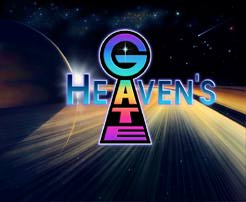
(Lesson from Marshall Applewhite: if you're gonna start a cult, pick a logo that's slightly more timeless)

Once the comet hits, much of the writing oscillates between a sort of Crichton-paced action adventure Doomsday book and a very clever post-apocalyptic thriller. Some scenes just stand out more, and are usually isolated and short, but the one that jumps out to me the most is the diabetic scientist from JPL, Dr. Forrester, bagging his entire library, each book in several sets of Ziploc bags, and stashing them away for safe keeping after society is completely destroyed. It was almost as if he had read all of the same post-apocalyptic books that I have read and did what I thought I would do in that situation.

(Illustration from the book? Nope. Harold Camping's fucking people.)

As society really falls apart, with looting leading to survivalist campaigns of hostile cannibals – another post-apocalyptic touch I really appreciated – a Senator with a ranch and hot daughter look to save the day for everyone in the Southern California area (the focus of virtually all the action). Things go well for this society until they inevitably have to deal with the cannibals, and if not for the saving grace of science, which is complemented by people saving science in the battle of the nuclear powerplant (a great mirroring of our relationship with science), things would get even more gruesome than they do. Which would have been fun, of course, but I’m happy with how things turned out.

This book had just about everything I need: end of world, cannibals, scientists being badasses, shit-hits-the-fan scenarios and people’s planning around the apocalypse (i.e. guns, food, water; always something to learn), religious cukes and a cult-like mentality, babes, a cameo by a Dodge Dart, Russians, inappropriate relationships between Scout leaders and girl scouts (and underage boys and underage girls, for that matter) and more cannibals.

To say this book is a good time is an understatement. 

Tuesday, August 28, 2012

The Waste Lands - The Dark Tower: Book Three


Book III picks up essentially where Book II leaves off, plus an intro by Mr. King really recaps everything that has happened in the first two books well. We start out with Eddie Dean, Detta/Odetta-now-Susannah/Mrs. Eddie Dean, and the hero Roland as they reach the forest and have moved away from the coast lines with giant evil fucking lobsters. Now their diet consists of deer meat rather than lobster meat. So good for them.

The pace of this book is entertaining for me. It starts out with a brief “here we are now, moved on from the lobstrocities,” and then enters the “Holy shit, a hostile giant grizzly robot bear with a parasitic disease, headed right for Eddie!” This happens, of course when Susannah is learning to Gunsling (I’ll note here that both her and Eddie learn the craft) and she ends up being able to shoot the fucker right in its fucking robot antenna. Cool shit.

From here the book continues with Roland being haunted by a new take on alternate realities, which can sort of be compared to time travel paradoxes. Being a huge, huge nerd for time travel paradoxes, it’s cool to see how this variant unfolds. Roland met the boy Jake in Book I, and he and Jake bonded a close relationship up until the kid, terrified of being left for dead in that world, basically said “ah fuck it, I can tell the Tower means more to you than this. Go on.” Since then Roland had felt very guilty. But the moment Jake left his current world (which is essentially our world circa 1987) for whatever fucked up place he met Roland, he was dead. Dead because the Man in Black or Jack Mort pushed him into a car on the streets of New York and he came to, post-mortem, alive and well (somehow), to meet the Gunslinger and hunt down The Man in Black. Confusing, I know, but when you are reading Book III it all makes sense.

Anyway, what’s cool is how haunted and mind-blowingly mind-fucked Roland now is. He explains that when he was in control of Jack Mort (in Book II), he saw him about to commit the act of pushing Jake in front of the car and thus, killing him, which sends him to meet Roland back in Book I. But since Roland saved him from this fate, meaning he did not die there, he never technically got sent to Roland’s world; meaning they technically never met. So his mind splits between a reality that says “the boy was saved, of course he never died and went to your world” and another that says “but you met him, he was there.”


Roland tripping balls on this helps add to the nightmare landscape King creates in this book. Dreams, both crazy nightmarish and important event-foreshadowing-signals dreams, are involved in making the book read like a scene from a Freddy Kruger nightmare world in which the landscapes and monsters seem just as impossible as the notion of escape. I was really digging it. Then Jake came into the story, as he suffers from not only the same paradox as Roland, but much worse because his involves himself being killed, blood and trauma and all. This not only makes things interesting for me, but the pace continues, all the way up until we all cheer Jake onto the gate that brings him into the Gunglingers’ world; every one antsy, giddy and hollering for the little fucker to escape the monster made of plaster (I also had trouble envisioning it, don’t worry) and Susannah fucking a demon.

The demon fucking is actually what I use as the turning point. That is about where things got weird. Once they are all together, things get a little slower paced. The city and the bridge and the people and villains they stumble upon, from here on out, are not really from the genre the story seemed to be carrying me. There are post-apocalyptic settings, with worlds and universes mixed together like Jake mixing in with Roland in Book I, and that’s all great, don’t get me wrong. But something about the sophisticated fallout shelter and the hyper advanced train co-mingling with idiots who murder each other every hour and our Clint Eastwood figure gunslinging seemed to branch out in too many directions. Plus I wasn’t as excited to see Roland with a six-shooter blasting people in a fallout shelter and running for a monorail as it electrocutes people in front of him as I thought I was.

The book ends with them headed through the real Waste Lands, which are one of the most nightmarish environments ever imagined. I really respect the way he creates the world that is passing underneath the gang as they travel on a super evil, badass monorail.

What I liked most about this book is not just his ability to talk about nightmares and nightmarish worlds, though. It was two other important things:

  1. The ability to relate to characters that are kids, and make you feel the same emotions you felt when you were a kid, whether it be petrified fear of something that scared the bajesus out of you, or that awkward feeling of being near people who are complete assholes and you were unable to understand a world of such blatant assholery.
  2. The snark, the comic relief, the King-humour. It is that little, tiny bit of dirty charm he offers and it works really well in this story.


Sometimes it is too cheesy, sometimes it adds nothing to his novels, but in this book it just works. The subtle humour that is worthy of a reader’s smirk is a good quality, and it makes him a great, cynical ass. As opposed to a cynical assHOLE, like me.

Interestingly enough, Stephen King’s Dark Tower series seems to coincide with shit that happens in real life that makes me think, “if Ibelieved in coincidences, this wouldn’t mean shit, but since I don’t, this is pretty weird.” So as the book concludes with Blane the Mono taking them over some weird ass freaky world, a friend (not a reader, I might add, and certainly I don’t keep people up on what I’m reading, so this is out of the blue) posted this on my Fbook wall:


Creepy? Yup.

I would say overall it was very good until things went downhill from the point they brought the other one into the world. The Demon fucking, which I later told a friend I referred to as the gift that keeps on giving, since it happened in the first one and also since Susanna was certain she was pregnant around the same time (weird, isn’t it?), was difficult. Not difficult in terms of “handling it,” – which it was, that demon was packing – but difficult to follow in a world that worked. This just did not seem like something that belonged. Seemed more like the Stephen King I have come to know and like only a little bit.

The book generally had a downhill cheesiness from there for me; but again, because I enjoyed the first half so much, I would still say it is a very enjoyable read. Just don’t get your hopes up after the first half. The momentum and general awesomeness does not maintain its thrilling pace.

Wednesday, August 15, 2012

Invitation to a Beheading


 [Editor’s Note: Do not forget, I created this blog with an epiphany whilst reading a Nabokov book, so if it seems like I like this book too much simply because it is Nabokovian, then I apologise. It probably isn’t a great book, and will not make it on anyone’s top 10 lists; as anyone who is not particularly well read will not understand it, and those who are well read have certainly read similar stories of much greater depth and with clearer, more sensical settings]

Oh those tricky Russians. Their creativity and vivid descriptions of human nature, mapping out people’s emotions and thought processes as easily as a cartographer plots his homeland, never ceases to amaze me.

I honestly did not know what to expect when I began reading Invitation to a Beheading. I knew it was about an execution in a nonsensical universe, but why? And what was he trying to say? More suppressed Russian artistry coming out from under the veil of the Iron Curtain? Not exactly.

Cincinnatus C. is being held for a crime I will hereby reference much as my life moves along, that of gnostical turpitude, which is undefined in the book and may be equally as nonsensical to the common reader as the characters working within the prison itself. But if you read much, you can maybe link the phrase gnostical turpitude to another: moral depravity, as a sort of loose translation. The crime has to do with Cincinnatus feeling like he does not belong in his society, and carries a certain opacity as a defense mechanism. That is to say, everyone is completely transparent, and though the details of the society and its functions, both leisurely and occupationally, remain a big mystery outside of Cincinnatus’s life, it paints a picture to a society similar to Huxley’s Brave New World or Bradbury’s Fahrenheit 451. He has a quest for individuality that is considered obscene, and no one can quite work out why he wishes to talk about the things he wishes to talk about.

The trivial, annoying nature and the lack of concern for seemingly important matters amongst the facility’s director, the guards and executioner, whose entire character and appearance/influence in the story is brilliant, I might add, make the world seem very nightmarish. The spider in the room that is fed by the guard doesn’t help, either. It seems Cincinnatus is losing his mind, and nobody loves him, not even his cheating wife or children who are not his. The relationship with his wife actually may have been my favourite part of this book. It was wrong, vile, vulgar, and yet beautiful in a completely indecent and lovely animalistic sort of way. The description of him walking in on her swallowing a uhh….spurting peach?...yeah, I simply cannot do his writing justice by talking about it. It is artistry at its highest, most sexually provocative level.

If you are not into that, the dream world is really fucked up and will keep you engaged and force to you wear your thinking cap as you read it. Not in a troublesome way, either, at least not for me and remember: I am an idiot. So it is not like you have to be an intellectual snob to realize the humour and struggle of dealing with the people and environment Cincinnatus C. has to put up with.

This is the second to last book of the Second bookclub list to which I belong, and it is a favourite of mine (amongst several others this list). Next up: Lucifer’s Hammer. If you have already read it, no spoilers. If you have not, join me. Either way, do read Invitation to a Beheading and get ready for some fun, weird shit.

Friday, August 10, 2012

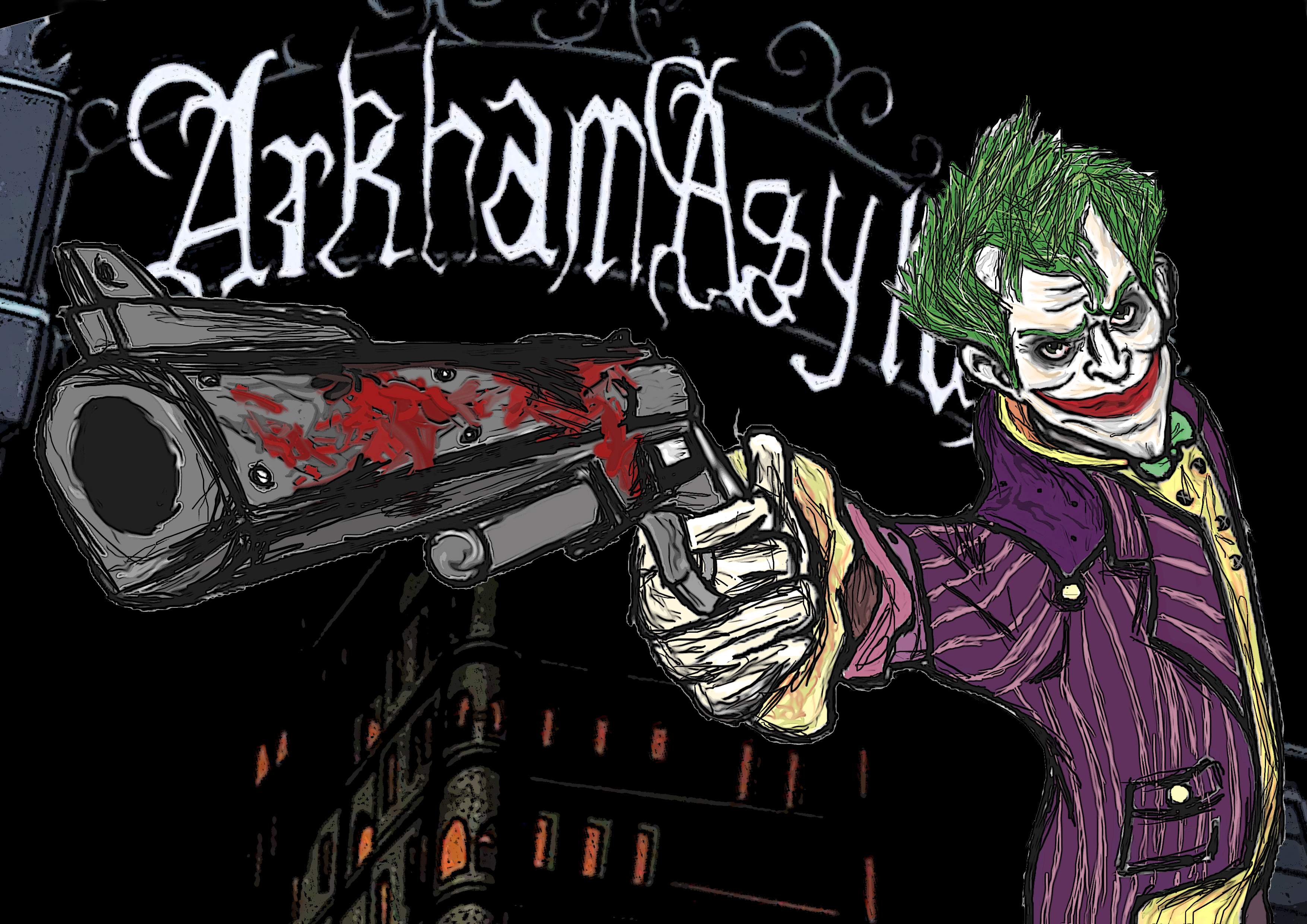
Arkham Asylum


Batman! Oh yes, my favourite superhero (we’re not going to get into a human/superhuman hero/superhero discussion here) in the form of Grant Morrison’s graphic novel. Because the events of the environmentally, congressionally, and constitutionally confused state of Colorado and city of Aurora have me in a state of fear and keep me from viewing Christopher Nolan’s latest masterpiece (at least until I am assured Batman will save us in the event of a theatre shooting) The Dark Knight Rises, I chose to settle down and read this gem.

Now the Arkham Asylum line of recent Batman video games were fantastic, the control and movements were unlike any suphero video game based on a legendary comic book character. Furthermore, the fact that they didn't release it along with movie and with a movie titled with (- The Game) stamped on at the end is a definite plus. Let's us know they have a quality product and they are not just trying to ride the coat tails of a popular film.


The demand for Batman saving the day is always high, especially from me, but the demand for a creepy thriller of a story that has a halloween-like atmosphere and features many villains within Arkham and Batman needing to enter the darkness to fight them all, is not very high. I think that puts this book at a bit of a disadvantage, it sort of fits into its own category of Batman action and it is not what I crave.

Do not get me wrong though, that takes away nothing from the enjoyment. It is a very unique idea with a very creepy story and even creepier artwork. Dr. Arkham and his mother's lunacy driving him to use the old house as a treatment facility for the criminally insane sets everything up beautifully. Tragedy, and tragedy from a character I knew nothing about going into the story, really creates a tension that keeps me engaged.

As much as I love to see the Dark Knight bashing baddies, I really enjoyed reading about Arkham's history and his mind. You feel more like the story is about him with each scene, and Batman is just a reflection of the insanity that ripples through the surface within the halls of the Asylum, becoming mad himself almost by osmosis. Of course, this gives us something to cheer about, but rather than it being a physical villain (which, there are those too), it is his mind.

Of course, the graphic novel is short, almost too short. But short and sweet make it a worthy read in an evening for any hardcore Batman fans. Probably wouldn't recommend it to the casual Batman fans out there though.